Décembre 2023. Google publie un article qui fait trembler la communauté crypto : leur puce quantique Willow a franchi un cap décisif. Sur les forums, on lit déjà que « Bitcoin est mort », que « les ordinateurs quantiques vont tout casser ». Certains parlent même de vendre leurs cryptos avant qu'il ne soit trop tard.
Prenons un instant pour démêler le vrai du faux. Oui, le quantum computing menace Bitcoin sécurité de manière tangible. Non, vos bitcoins ne vont pas disparaître demain matin. Mais entre panique injustifiée et déni confortable, il existe une réalité technique qu'il faut comprendre — notamment l'émergence de la post-quantum cryptography et les bitcoin security risks associés aux avancées quantiques.
Alors, que se passe-t-il vraiment ? Quels sont les risques concrets ? Et surtout, comment l'écosystème crypto se prépare-t-il déjà à cette révolution technologique ?
Pourquoi le quantum computing menace-t-il la cryptographie Bitcoin ?
Pour comprendre la menace, revenons aux bases. Bitcoin et la plupart des blockchains utilisent une méthode de sécurité appelée cryptographie à clé publique, notamment l'algorithme secp256k1. Imaginez que vous ayez un coffre-fort ultra-sécurisé : tout le monde peut voir l'adresse du coffre (votre clé publique), mais seul vous possédez la combinaison pour l'ouvrir (votre clé privée).
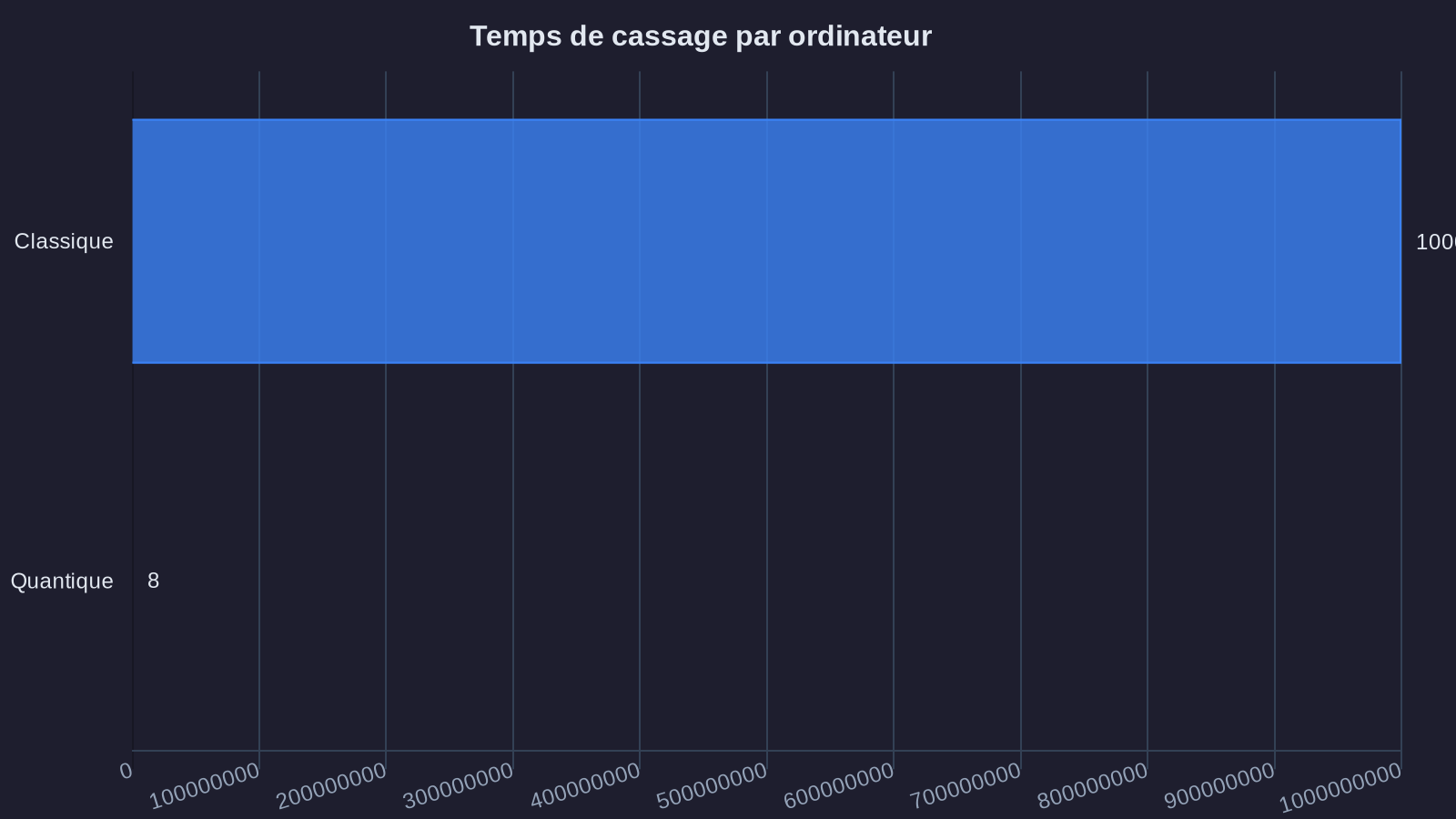
La sécurité de ce système repose sur un principe mathématique : il est facile de multiplier deux grands nombres premiers entre eux, mais extrêmement difficile de retrouver ces nombres à partir du résultat. Avec un ordinateur classique, même le plus puissant, il faudrait des millions d'années pour « casser » une clé Bitcoin par force brute.
C'est là qu'interviennent les ordinateurs quantiques. Contrairement aux ordinateurs traditionnels qui manipulent des bits (0 ou 1), les machines quantiques utilisent des qubits qui peuvent être dans plusieurs états simultanément. Cette propriété, appelée superposition, leur permet d'explorer un nombre astronomique de possibilités en parallèle.
L'analogie de Nora : Imaginez que vous cherchez une clé perdue dans une immense bibliothèque. Un ordinateur classique ouvrirait les livres un par un. Un ordinateur quantique pourrait feuilleter tous les livres en même temps.
En théorie, un ordinateur quantique suffisamment puissant pourrait utiliser l'algorithme de Shor pour factoriser rapidement ces grands nombres et ainsi retrouver votre clé privée à partir de votre clé publique. Le coffre-fort deviendrait transparent. C'est là que se situent les principaux bitcoin security risks.
Où en est vraiment la menace quantique sur Bitcoin ?
Passons maintenant aux chiffres concrets. La puce Willow de Google dispose de 105 qubits et a résolu en quelques minutes un problème qui prendrait 10 septillions d'années à un supercalculateur classique. Impressionnant, non ?
Sauf que... casser une clé Bitcoin nécessiterait environ 13 millions de qubits stables. Pas 105. Treize millions. Et pas n'importe quels qubits : des qubits capables de maintenir leur état quantique suffisamment longtemps pour effectuer les calculs complexes requis.
Les qubits actuels sont extrêmement fragiles. Ils perdent leur état quantique en quelques microsecondes, un phénomène appelé décohérence. C'est comme essayer de construire un château de cartes pendant un tremblement de terre : la moindre perturbation détruit tout.
La percée de Willow concerne justement la correction d'erreurs quantiques. Google a réussi à réduire le taux d'erreur en augmentant le nombre de qubits, ce qui est contre-intuitif. Habituellement, plus on ajoute de qubits, plus le système devient instable. Cette avancée est significative, mais on reste très loin du compte.
Les experts estiment qu'il faudra encore 10 à 20 ans avant qu'un ordinateur quantique ne puisse réellement menacer Bitcoin. Certains parlent même de 30 ans. Ce n'est pas une menace pour demain, mais ce n'est pas non plus de la science-fiction lointaine.
Comment les blockchains adoptent la post-quantum cryptography ?
Heureusement, l'industrie crypto ne reste pas les bras croisés. Plusieurs approches se développent en parallèle pour préparer l'ère post-quantique et créer des quantum resistant blockchain.
La cryptographie résistante au quantique
Des cryptographes travaillent depuis des années sur des algorithmes de post-quantum cryptography qui résisteraient même à un ordinateur quantique. Le NIST (National Institute of Standards and Technology) américain a récemment standardisé plusieurs algorithmes post-quantiques, testés et validés par la communauté scientifique mondiale.
Ces nouveaux systèmes utilisent des problèmes mathématiques différents, basés sur des structures en réseau ou des codes de correction d'erreurs, que même les ordinateurs quantiques auraient du mal à résoudre efficacement.
Ethereum, par exemple, étudie déjà comment intégrer ces nouvelles méthodes de cryptographie. La transition ne se fera pas du jour au lendemain : il faudra modifier les protocoles, mettre à jour les wallets, migrer les fonds. Mais le travail préparatoire avance. Cette évolution rappelle les défis de sécurisation des portefeuilles crypto face aux vulnérabilités matérielles.
Les architectures hybrides quantum resistant
D'autres projets adoptent une approche différente. Prenons l'exemple de Naoris Protocol, une blockchain qui intègre dès sa conception une architecture hybride mêlant cryptographie classique et post-quantique.
L'idée ? Ne pas attendre la menace pour réagir, mais construire directement un système capable de résister aux attaques quantiques futures. C'est comme installer une porte blindée avant qu'il y ait des cambriolages dans le quartier, plutôt que d'attendre d'être la première victime.
Cette approche présente un avantage : elle évite la période de vulnérabilité pendant laquelle il faudrait migrer d'urgence des milliards de dollars d'actifs vers un nouveau système de sécurité.
La stratégie de Bitcoin face au quantum computing
Bitcoin lui-même bénéficie d'une protection partielle intéressante grâce à sa conception basée sur secp256k1. Tant que vous n'avez jamais dépensé vos bitcoins depuis une adresse, seule votre clé publique hachée est visible sur la blockchain. Un ordinateur quantique devrait d'abord inverser cette fonction de hachage avant même de pouvoir s'attaquer à votre clé privée.
Mais attention : dès que vous effectuez une transaction sortante, votre clé publique complète devient visible. C'est pourquoi les bonnes pratiques recommandent déjà de n'utiliser qu'une seule fois chaque adresse Bitcoin.
Lorsque la menace quantique se rapprochera, Bitcoin pourra effectuer une mise à jour majeure (un hard fork) pour migrer vers des signatures résistantes au quantique. Cela nécessitera un consensus de la communauté, mais la gouvernance de Bitcoin a déjà prouvé sa capacité à évoluer quand c'est nécessaire.
Faut-il s'inquiéter pour vos cryptos face aux bitcoin security risks ?
Revenons à la question initiale : devez-vous paniquer ? La réponse courte est non. La réponse longue mérite quelques nuances.
Le risque quantique est réel, mais il n'est pas imminent. Vous avez probablement plus de chances de perdre vos cryptos à cause d'une attaque de phishing ou d'une faille DeFi, d'un mot de passe faible ou d'un exchange peu fiable que d'une attaque quantique dans les dix prochaines années.
Cela dit, la cryptographie quantique soulève une question plus large sur la sécurité à long terme. Certains spécialistes évoquent le scénario « harvest now, decrypt later » : des acteurs malveillants pourraient enregistrer dès aujourd'hui des transactions chiffrées pour les déchiffrer dans 15 ans, quand ils disposeront d'ordinateurs quantiques suffisamment puissants.
Pour les détenteurs de cryptos, cela signifie deux choses. D'abord, continuez à appliquer les bonnes pratiques de sécurité : hardware wallets, phrases de récupération stockées en sécurité, utilisation d'adresses uniques. Ensuite, suivez l'évolution des blockchains que vous utilisez : sont-elles en train de préparer la transition vers une architecture quantum resistant blockchain ?
Les projets sérieux communiquent sur leur feuille de route en matière de résistance quantique. C'est devenu un critère de choix, au même titre que la décentralisation ou la scalabilité.
L'ère post-quantique, un défi pour toute la sécurité numérique
Terminons en élargissant la perspective. Si Bitcoin et les cryptos doivent se préparer aux ordinateurs quantiques, ils ne sont pas les seuls concernés.
Tout notre système bancaire actuel repose sur la même cryptographie à clé publique. Les communications sécurisées (HTTPS), les signatures électroniques, l'authentification des cartes bancaires : tout cela devra migrer vers des solutions post-quantiques.
Paradoxalement, l'écosystème crypto pourrait même se retrouver en avance sur le système financier traditionnel. Les blockchains ont l'habitude des mises à jour coordonnées, des hard forks, des migrations technologiques. Elles sont nées dans une culture de l'amélioration continue et de la résilience face aux menaces.
Les banques centrales, elles, devront moderniser des infrastructures vieilles de plusieurs décennies, avec des systèmes legacy profondément ancrés. La transition sera probablement plus longue et plus complexe.
Ce qu'il faut retenir sur quantum computing menace bitcoin sécurité :
- Les ordinateurs quantiques représentent une menace réelle mais non imminente pour la cryptographie actuelle (horizon 10-20 ans minimum)
- L'écosystème crypto se prépare activement avec des algorithmes de post-quantum cryptography déjà en développement et standardisés par le NIST
- La sécurité de vos cryptos dépend aujourd'hui bien plus de vos pratiques personnelles que d'une hypothétique attaque quantique future
- Les projets blockchain travaillent sur des architectures quantum resistant pour anticiper la menace
La question n'est pas de savoir si l'informatique quantique va bouleverser la sécurité numérique, mais comment nous allons collectivement nous y préparer. Les cryptos, par leur nature décentralisée et leur culture de l'innovation, sont probablement mieux armées qu'on ne le pense pour relever ce défi.
Maintenant que vous comprenez la menace quantique, découvrez comment fonctionnent concrètement les algorithmes de chiffrement qui protègent aujourd'hui vos cryptos.