
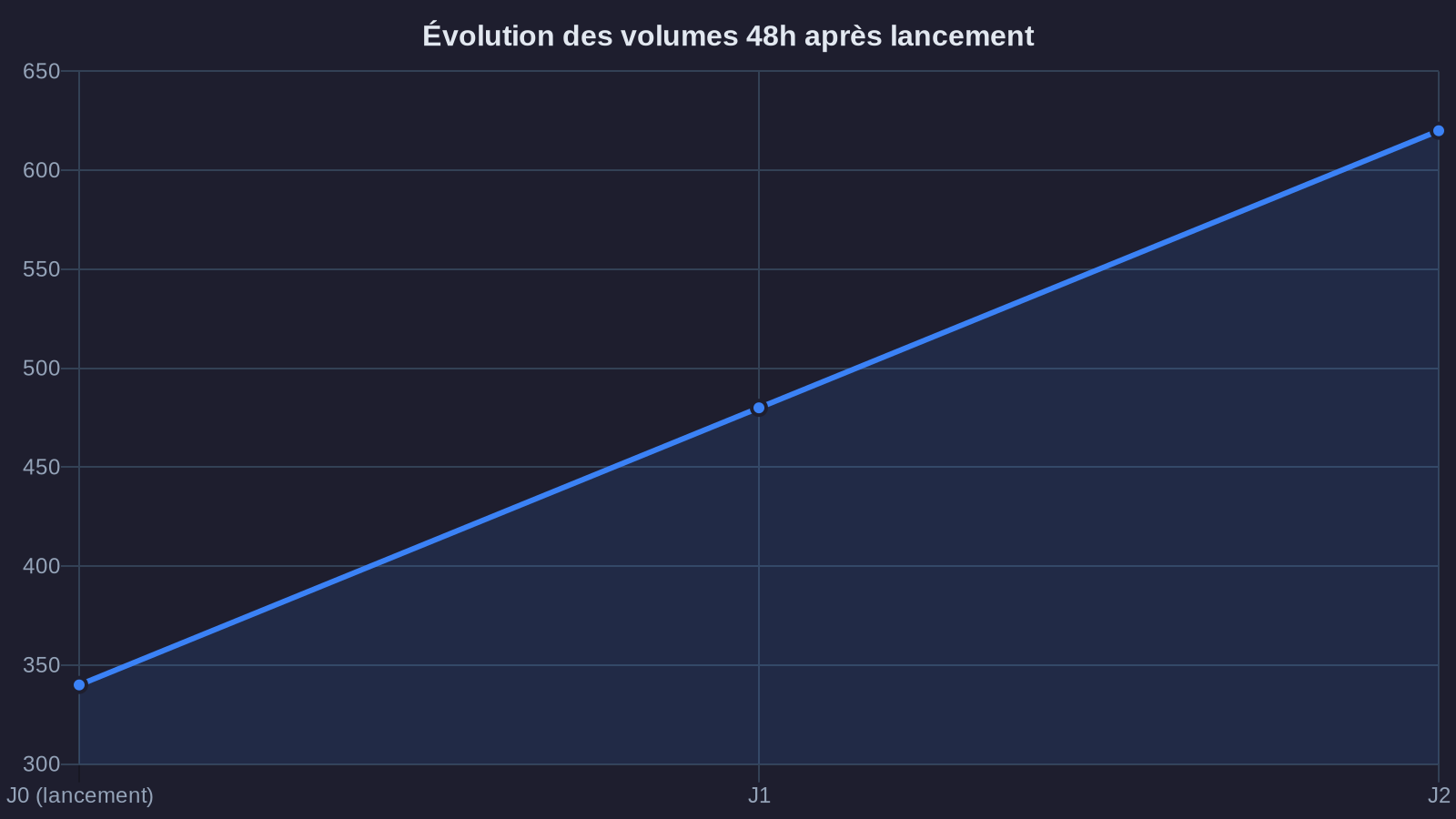
Hyperliquid reached a milestone on March 12, 2026: the decentralized platform now offers perpetual contracts on WTI crude oil, silver, the S&P 500, and a dozen other traditional assets. In 48 hours, volumes surged from $340 million to over $620 million.
What stands out is that these traditional markets are now accessible with the same characteristics as cryptocurrencies: 24/7 trading, instant settlement, no bank intermediaries. For investors accustomed to CME closing hours or settlement delays from traditional brokers, the paradigm shift is clear. This evolution in crypto-asset trading opens new diversification opportunities.
Traditional assets, decentralized infrastructure
Unlike centralized platforms like Binance or Bybit that already offer perpetuals on stocks or commodities, Hyperliquid operates entirely on-chain. No bank account to open, no KYC verification needed to start trading. You connect your wallet, deposit USDC, and trade.
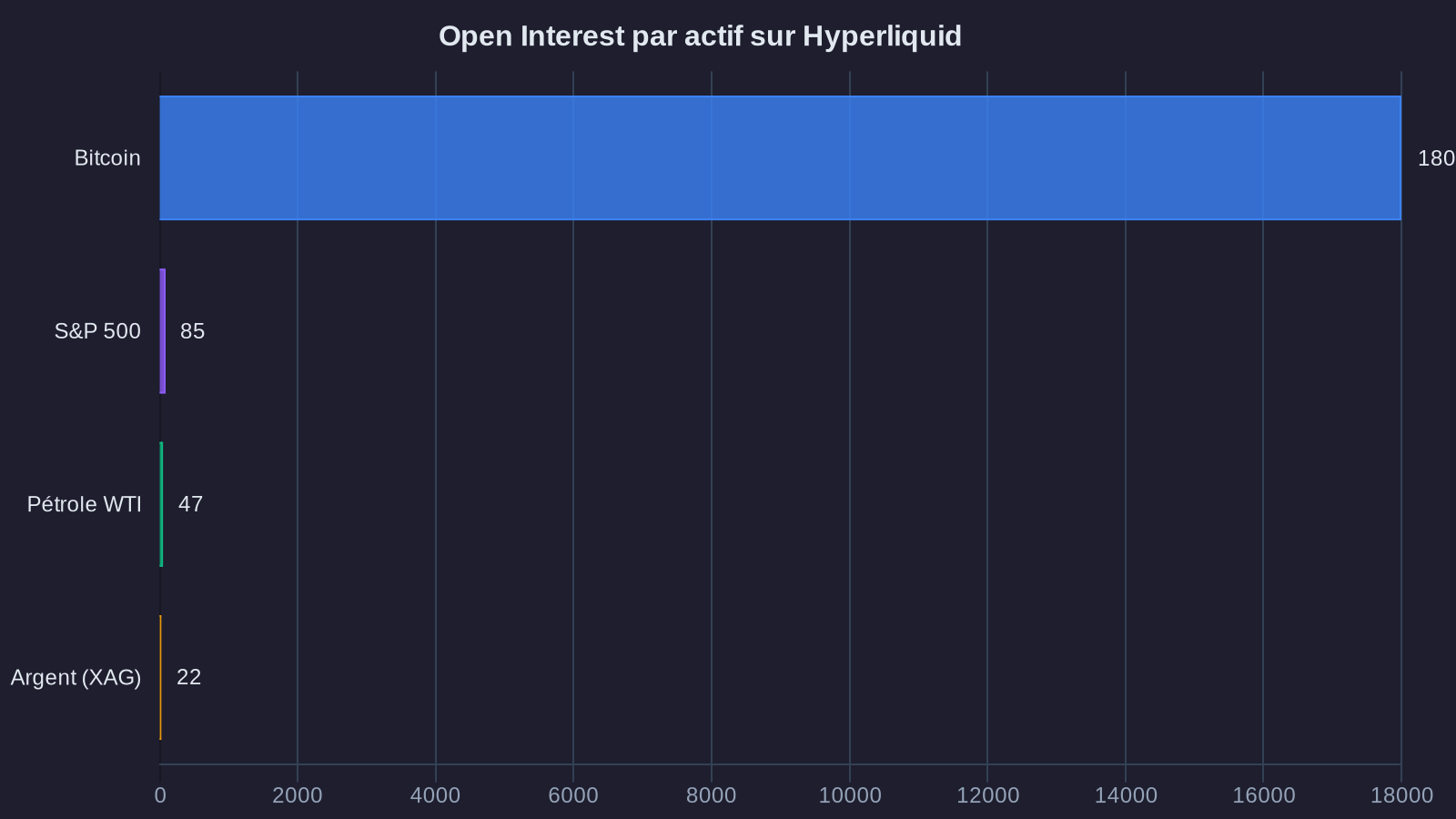
Perpetual contracts on WTI (West Texas Intermediate crude oil) currently show $47 million in open interest, with an average spread of 0.03%. Silver (XAG/USD) represents $22 million. The S&P 500, launched five days ago, already exceeds $85 million in open interest. These figures remain modest compared to Bitcoin's $18 billion open interest on Hyperliquid, but growth is rapid.
The pricing mechanism relies on Pyth Network oracles, which aggregate data from dozens of traditional sources. Price updates arrive every 400 milliseconds on average, limiting manipulation risk but exposing the platform to discrepancies during volatility spikes. On March 15, following the Fed's surprise announcement on rates, the gap between the oracle price and the spot price of the S&P 500 reached 0.8% for 12 seconds before tightening.
Why trade commodities on a crypto DEX
The legitimate question: why use Hyperliquid instead of a traditional broker or centralized platform? Three main reasons emerge from real-world feedback.
First, geographic accessibility. Many countries restrict retail access to commodity derivative products. Hyperliquid requires no residency verification, no risk acknowledgment forms. You manage your exposure yourself. This clearly presents risks for inexperienced users, but offers genuine flexibility for those who know what they're doing.
Second, temporal availability. Traditional markets close. The CME stops trading oil contracts between 5 PM and 6 PM New York time. European indices shut down at 5:30 PM CET. Hyperliquid runs continuously. If a geopolitical event erupts on Sunday at 3 AM, you can adjust your positions immediately, without waiting for markets to open.
Finally, composability with other crypto strategies. You can use the same USDC collateral to hedge a BTC/USD position with a long gold exposure, or arbitrage between Ethereum's price and the Nasdaq. This capital management flexibility doesn't exist on siloed traditional platforms, unlike more conventional crypto investment strategies.
Fees and leverage on Hyperliquid perpetuals
Maker fees are 0.02%, taker fees are 0.05%. This is competitive against the 0.04-0.06% of centralized platforms, but significantly higher than CME's 0.005-0.015% for institutional players. Maximum leverage varies by asset: x50 on oil and silver, x20 on the S&P 500, x25 on the Nasdaq. These levels remain high and expose traders to rapid liquidations in case of sharp moves.
On March 14, during a 2.3% WTI flash crash in under four minutes, 340 positions were liquidated for a total of $4.2 million. Hyperliquid's auction-based liquidation system was able to absorb these positions without creating bad debt, but affected traders lost their collateral.
ForYield's perspective
At ForYield, we've been tracking Hyperliquid's evolution since its launch. The arrival of traditional assets opens interesting diversification possibilities, but with significant reservations about infrastructure maturity.
We currently use the platform for short-term tactical hedges on indices, particularly the S&P 500, when our crypto positions show temporary high correlation with equity markets. On March 18, facing an anticipated Nasdaq correction, we opened a protective short position that helped cushion a 4% decline on our SOL and AVAX positions.
However, we don't use Hyperliquid for long-term commodity exposures. Market depth remains insufficient for sizeable orders, and slippage risk during sharp moves doesn't justify the fee savings compared to CME futures contracts accessible through our institutional accounts.
The real opportunity lies in unified collateral management. Being able to adjust a BTC exposure, an S&P hedge, and a tactical silver position simultaneously from the same interface, with the same liquidity pool, significantly simplifies execution. This reduces the need to split capital across multiple platforms and minimizes transfer delays.
The risks of onchain perps on traditional assets
Enthusiasm around these new markets shouldn't obscure structural limitations. Hyperliquid has no deposit insurance, no regulator, no recourse in case of smart contract bugs. On February 9, a bug in the matching engine caused 180 orders on ETH to be cancelled for 6 seconds. The protocol compensated affected users, but nothing guarantees this approach in the future.
Liquidity remains concentrated among a few market makers. According to on-chain data, three addresses represent 68% of maker volume on WTI perpetuals. If these players withdraw abruptly, spreads can explode. This is what happened on March 16 with silver: the spread jumped from 0.04% to 1.2% for 40 minutes, following temporary withdrawal by a market maker representing 45% of volume.
Finally, the regulatory compliance question remains open. Several jurisdictions treat perpetuals on traditional assets as derivatives requiring authorization. Hyperliquid operates in a gray zone, exposing users to risks of fund blocking or service shutdown without notice. Crypto fund security remains an absolute priority.
This week's action item
If you want to test Hyperliquid on traditional assets, start with reduced-size positions on the S&P 500, the most liquid asset. Use maximum x5 leverage, and systematically place a stop-loss at 2% from your entry point. First test the interface during low volatility periods, between 2 PM and 4 PM CET, when US markets are open and liquidity is optimal.
Monitor open interest and volumes before entering a position. If open interest on your target asset is below $20 million, wait. Market depth will likely be insufficient to exit quickly if the market reverses.
Consider Hyperliquid only as a tactical complement, not as an alternative to regulated platforms for long-term exposures or significant amounts. The 24/7 flexibility and unified collateral management justify its use, but counterparty and liquidity risks remain high.