
On December 30, 2024, Binance filed its MiCA licensing application with French authorities. A mandatory step to continue serving the European market after July 1, 2026. But according to multiple credible sources, including Reuters and CoinDesk, the chances of obtaining this European crypto license are slim. Very slim, in fact.
This isn't corridor gossip. It's the result of years of disputes with European and American regulators, massive fines (4.3 billion dollars in the United States in 2023), and a compliance track record that's anything but clean. The MiCA Regulation — Markets in Crypto-Assets — doesn't forgive this kind of history.
For you, a French investor using Binance, the question is no longer theoretical. It's strategic. If Binance doesn't get its license, access to the platform from the European Union will be cut off. Your positions, your yield farming strategies, your arbitrage opportunities: everything will need to be reconsidered. Not in five years. Within eighteen months. Institutional adoption of crypto now demands compliance standards that not all players can meet.
Why losing MiCA approval seems inevitable for Binance
The MiCA Regulation, in effect since December 30, 2024, imposes strict compliance requirements on crypto asset trading platforms. Three structural pillars: minimum capital of 150,000 euros (potentially rising to 2 million depending on activity), enhanced KYC procedures, and above all, an impeccable compliance history. It's on this last point that Binance stumbles.
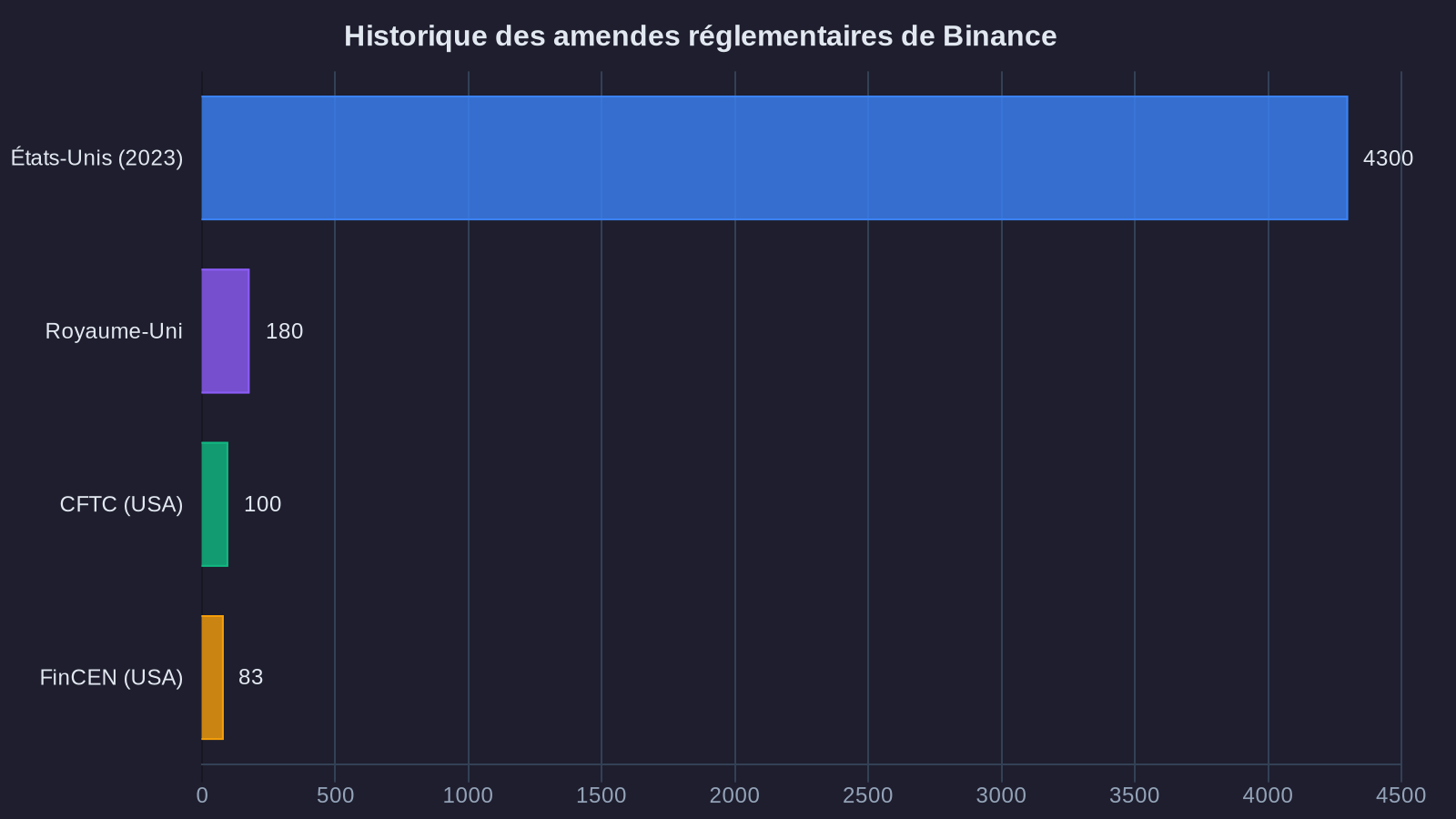
In November 2023, the platform pleaded guilty in U.S. court to massive violations of anti-money laundering rules. The fine amount — 4.3 billion dollars — remains the highest ever imposed in the crypto sector. But beyond the amount, it's the nature of the violations that's problematic: facilitation of illicit transactions, systemic failures in KYC controls, operations in sanctions-subject jurisdictions.
The French Financial Markets Authority (AMF), which is reviewing Binance's licensing application, has access to these details. It can even coordinate with its American and European counterparts. Yet Article 62 of the MiCA Regulation is unambiguous: the competent authority must refuse licensing if it determines that the applicant does not have "adequate governance arrangements and internal control mechanisms." Translation: if your past shows you don't respect the rules, you don't get a free pass to the European market.
Another major issue: Binance's corporate structure. The company operates through a complex network of offshore entities, without a clearly identified headquarters until recently. MiCA demands, conversely, complete transparency on governance, shareholding, and business location. Binance has indeed made efforts — appointing a French CEO, opening offices in Europe — but the baggage remains substantial.
The implications of European regulation in 2026 for French users
If Binance doesn't receive MiCA approval, three phases are likely. Each with concrete implications for your assets and your ability to trade.
Phase 1: Ban on acquiring new customers (July 2026)
From July 1, 2026, any unlicensed MiCA platform will no longer be able to accept new European users. Binance could theoretically continue serving existing customers, but this situation wouldn't last long. The AMF has immediate injunction powers if services are provided without proper licensing (Article L. 621-15 of the French Monetary and Financial Code). Concretely, this means Binance could be ordered to cease all activity in France under penalty of criminal sanctions.
Phase 2: Deposit blocking and gradual service shutdown
You won't be able to fund your Binance account in euros via bank transfer anymore. French and European banks will no longer process orders to the platform, in line with their due diligence obligations (Article L. 561-10 of the CMF). Binance-issued debit cards will no longer work on European territory. Staking and yield farming services will be suspended for European residents.
At this stage, you'll still be able to withdraw your assets — it's a legal requirement for Binance — but the user experience will deteriorate quickly. Historically, when a platform loses its regional licenses, withdrawal delays lengthen, customer support becomes unreachable, and fees increase.
Phase 3: Closure of European accounts
If Binance doesn't comply with AMF injunctions, the platform faces criminal prosecution. Executives risk up to three years imprisonment and 375,000 euros in fines (Article L. 621-15 of the CMF). In this context, Binance will likely choose to close access to European users itself, as it already did in 2021 in the United Kingdom.
You'll then have a timeframe — typically three to six months — to withdraw your funds. After that deadline, your assets could be frozen or transferred to escrow. This isn't fiction: this is exactly what happened with FTX in 2022, albeit under different circumstances.
Your strategic options facing Binance's non-compliance
You don't need to wait until July 2026 to take action. Here's what you can do today to prepare for this European crypto regulation scenario.
Diversify your MiCA-compliant trading platforms
Never concentrate all your positions on a single exchange, no matter its size. This is the basic rule of risk management in crypto. Several platforms have already obtained MiCA approval or are on track to do so: Coinbase, Kraken, Bitstamp. These players have solid MiCA compliance track records and transparent corporate structures. Opening an account on these platforms now will allow you to transfer your assets smoothly if Binance loses its license.
Move your assets to a personal wallet
The saying "not your keys, not your coins" has never been more relevant. If you hold significant amounts on Binance, transfer them to a hardware wallet (Ledger, Trezor) or a non-custodial wallet (MetaMask, Trust Wallet). You retain full control of your private keys, and thus your assets. Only constraint: you'll need to manage your seed phrase security yourself (the series of 12 or 24 words that give access to your wallet). Keep it offline, in a safe place, never on a computer or in the cloud.
Anticipate the tax implications of a major transfer
Transferring your crypto assets from one platform to another doesn't constitute a taxable event in France. You only pay tax when you sell (exchange for another crypto or fiat). However, withdrawing your assets to a personal wallet and then reinvesting them on another platform can complicate your tax traceability. Keep precise records of all your transactions: dates, amounts, wallet addresses. In case of a tax audit, it's up to you to prove you haven't realized taxable gains. If you can't reconstruct your history, the tax authorities will by default tax the entire amount withdrawn, which can be catastrophic. To better understand these issues, consult our guide on tax compliance for crypto investments.
What MiCA regulation tells us about the future of the European crypto market
The Binance case isn't a side issue. It's a symptom of a structural shift in the European crypto market. For years, exchanges operated in a regulatory vacuum, juggling compliant jurisdictions and overwhelmed regulators. MiCA puts an end to that era.
Now, only players capable of meeting traditional banking standards — capital requirements, governance, reporting — will be able to serve the European market. This is sector consolidation. Small platforms will disappear or be absorbed. The big ones must choose: comply or leave. Crypto market consolidation is accelerating globally.
For you, this is good news in the medium term. MiCA brings enhanced protection: your funds will be better segregated, withdrawal procedures regulated, dispute resolution clarified. But in the short term, it's a source of friction. Compliant platforms will likely have higher fees, heavier KYC processes, and a more limited product offering (goodbye exotic tokens and 125x leverage).
The European crypto market is normalizing. It's coming of age. This is a positive signal for institutional adoption — family offices and investment funds are waiting precisely for this framework to enter the market in force. But it's also the end of a certain operational freedom that many retail investors had grown accustomed to.
Key watchpoints on exchange compliance
Don't underestimate the brutality of a platform shutdown. When Binance lost its UK license in 2021, thousands of users found themselves stuck for weeks, unable to withdraw their funds due to outdated KYC documentation. When a platform comes under regulatory pressure, its teams focus on company survival, not customer service. Your emails will go unanswered. Your support tickets will be auto-closed. You'll be on your own.
If you have more than 10,000 euros on Binance, act now. Diversify your exchanges. Move some of your assets to a personal wallet. Update your KYC documentation on all your platforms. And above all, keep precise records of all your transactions. In case of a tax audit, it's your only insurance.
Immediate action checklist to prepare for 2026 regulation
- Open an account on a MiCA-licensed platform (Coinbase, Kraken, Bitstamp) and complete KYC immediately.
- Transfer 30 to 50% of your assets out of Binance to this new account or to a personal wallet.
- Verify that your Binance KYC is up to date (valid ID, recent proof of address). If closure occurs, only compliant accounts can withdraw quickly.
- Download your complete transaction history from Binance (CSV format) and save it offline. You'll need it for your tax return.
- Set up alerts on MiCA and Binance news. The AMF decision will likely come between March and June 2026. You'll need to react fast.
- If you use staking or yield farming services on Binance, calculate the opportunity cost of early withdrawal. Better to miss a few months of returns than get locked out.
The MiCA Regulation isn't the enemy of crypto investors. It's a protection tool. But like any regulatory transition, it creates friction zones. Binance is the most visible symbol. Don't be caught off guard. You have eighteen months to prepare. Use them.