January 2026. Grayscale and Bitwise, two heavyweight crypto asset managers, announce the launch of ETFs on Hyperliquid. For many traditional investors, this name still means little. For those closely following DeFi, it's a major turning point: the largest decentralized exchange for perpetual futures becomes accessible through regulated products, tradable from a standard brokerage account.
This development tells a bigger story: DeFi breaking out of its technical niche to join traditional financial infrastructure. But to understand what's really at stake with these Hyperliquid ETFs, you first need to grasp what this platform is, why institutional investors care so much about perpetual futures, and what these new products concretely change for you.
Hyperliquid: the decentralized betting ledger at scale
Imagine a massive order book, visible to all, where people bet on the future price of Bitcoin, Ethereum, or dozens of other cryptocurrencies. This order book exists in multiple perfectly identical copies, distributed across thousands of computers. No one can falsify it, no one can shut it down. That's Hyperliquid.
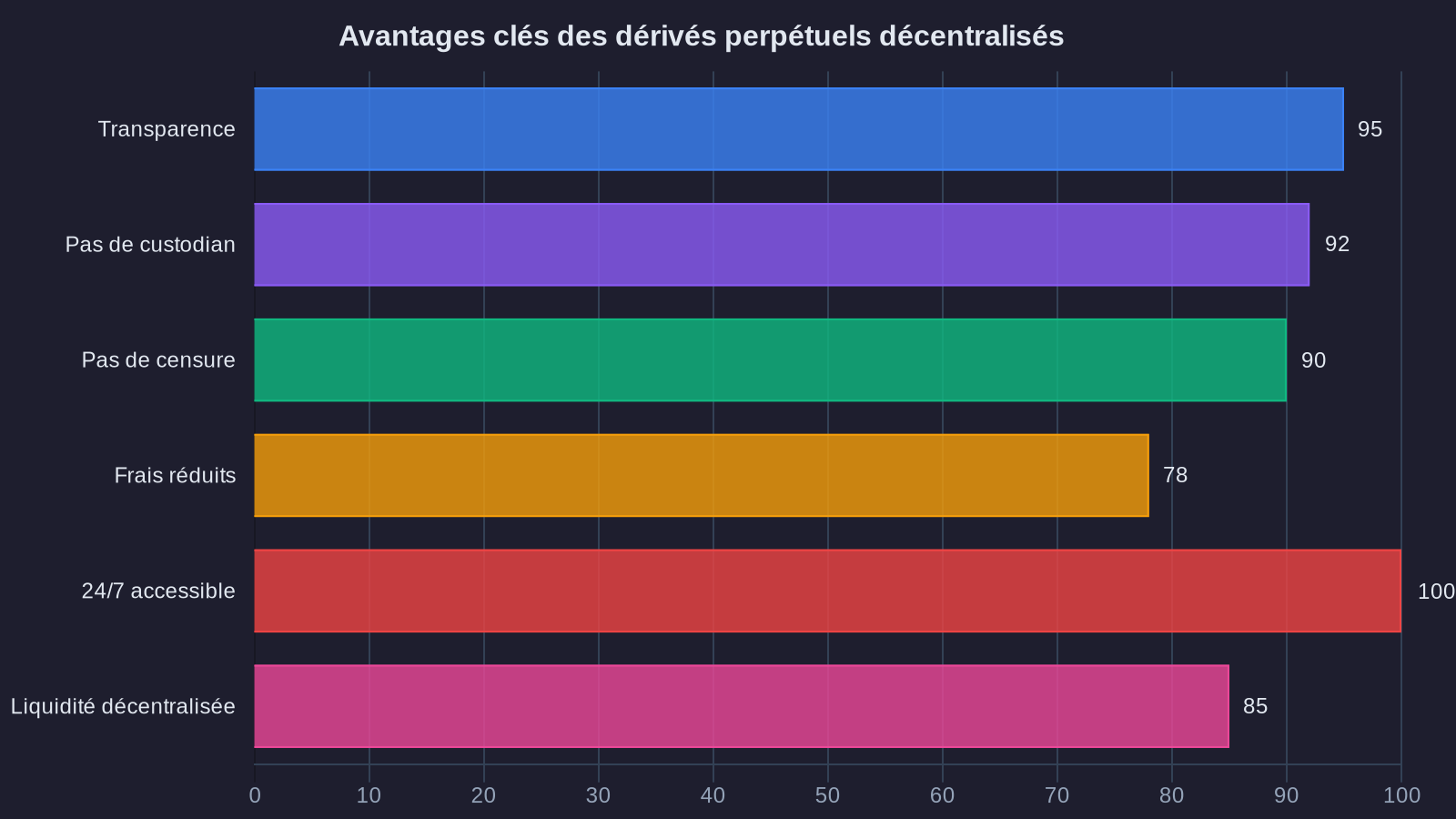
Unlike centralized exchanges like Binance or Coinbase (where one company manages everything, from your account to order execution), Hyperliquid operates without a central intermediary. Transactions execute directly between users, through smart contracts (those automatic programs that enforce rules without human intervention). You retain control of your funds until the precise moment of exchange.
But Hyperliquid doesn't let you buy Bitcoin the way you'd buy a stock. It lets you bet on its price movement, through what's called perpetual derivatives.
Nora's analogy
It's like a flea market where nobody runs the central till. Each stall displays its prices, buyers and sellers agree directly with each other, and a large electronic board records every transaction so everyone can verify it. If the market manager disappears, the stalls keep operating.
Crypto perpetual derivatives: betting with no expiry date
In traditional finance, when you want to bet on an asset's future price, you buy a futures contract. This contract has an expiration date: in three months, you'll settle up, whether you've won or lost your bet. It's constraining.
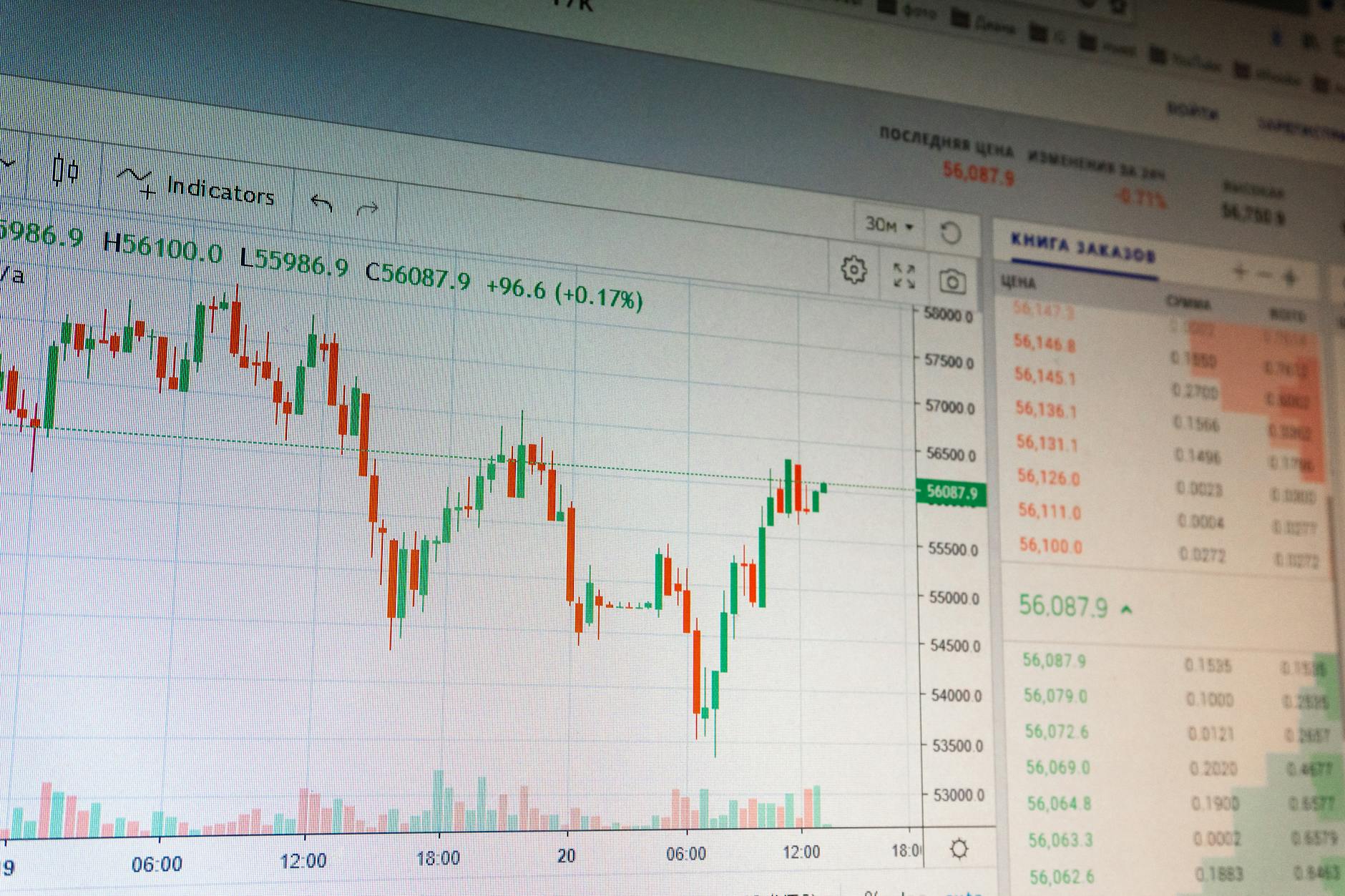
Perpetual derivatives, invented in the crypto world, have no expiration date. You can keep your position open as long as you want. Imagine you bet that Bitcoin will rise: you open a "long" position. If the price actually rises, you win. If it falls, you lose. But you decide when to close your position, with no calendar constraint.
The mechanism that makes this work is called the funding rate. It's a small periodic payment between those betting upside and those betting downside, to balance the market and keep the derivative's price close to the actual asset's price. If too many people bet upside, the "longs" pay the "shorts" a bit to rebalance. It's like an automatic tax that prevents the system from going haywire.
Hyperliquid built its reputation on the quality of its order book, its deep liquidity (you can buy or sell without excessively moving prices), and its execution speed. In 2025, the platform regularly processed over $2 billion in daily volume, rivaling some major centralized players.
Why Hyperliquid ETFs now?
Bitcoin and Ethereum ETFs paved the way in 2024. These products allowed institutional investors (pension funds, family offices, wealth managers) to gain exposure to cryptocurrencies without managing wallets, private keys, or obscure platforms. The success was immediate: tens of billions of dollars flowed in.
But these ETFs only provide access to the cryptocurrencies themselves, not to the yield opportunities generated by the DeFi ecosystem. Many institutions now seek access to more sophisticated strategies: derivatives trading, arbitrage across protocols, passive yield generation.
The Hyperliquid ETFs launched by Grayscale and Bitwise answer this demand. They provide exposure to the platform's native token (HYPE) or baskets of perpetual derivatives positions, without ever directly interacting with the blockchain. Concretely, Grayscale and Bitwise buy and manage the underlying assets, execute trading strategies, and you simply buy ETF shares through your regular broker.
This evolution marks a symbolic milestone: DeFi is no longer a playground reserved for early adopters who master MetaMask and slippage. It becomes an allocation asset, just like bonds or stocks.
What this changes for investors
For an individual or institutional investor who's never touched DeFi, these ETFs remove several major barriers.
First, technical complexity. No need to create a wallet, buy ETH to pay transaction fees (what's called gas), understand how to approve a smart contract, or navigate often austere interfaces. You buy the ETF like you'd buy Apple stock.
Next, security and regulation. DeFi platform hacks regularly make headlines. Smart contracts can have vulnerabilities, protocols can be attacked. With an ETF, you delegate this to a professional who assumes asset custody, applies strict security procedures, and operates under regulatory oversight. If something goes wrong, there's a legal recourse.
Finally, taxation. In many jurisdictions, gains realized through ETFs benefit from more favorable or simpler tax treatment than capital gains from directly trading cryptocurrencies. The ETF centralizes reporting and simplifies tracking.
But this convenience comes at a cost: annual management fees (typically between 1% and 2.5% for this type of product), and indirect exposure. You don't directly control the assets, you can't finely adjust your strategy, and you depend on the manager's choices.
Key takeaways
- Hyperliquid is the largest DEX for perpetual derivatives, allowing you to bet on crypto prices without a central intermediary or expiration date.
- Grayscale and Bitwise ETFs provide access to this ecosystem through regulated products, with no technical complexity or wallet management.
- This evolution marks the institutionalization of DeFi: what was once for insiders becomes a standard allocation asset.
Open questions about Hyperliquid ETFs
The arrival of these ETFs also raises strategic questions. The first concerns the very nature of decentralization. If most of Hyperliquid's value now flows through centralized vehicles managed by regulated actors, doesn't the original promise (a disintermediated, censorship-resistant financial system) lose some of its meaning?
The second question involves HYPE token valuation. Like many DeFi protocol tokens, its value depends on both actual platform usage and speculation. The influx of institutional capital through ETFs can create artificial upward pressure, disconnected from fundamentals. Conversely, if institutions withdraw massively, liquidity can evaporate rapidly.
Finally, there's a governance question. HYPE holders participate in decisions about the protocol's evolution (adding new markets, adjusting risk parameters, treasury allocation). If an increasing share of tokens is held through ETFs, who actually votes? Can ETF managers influence Hyperliquid's strategic direction? These questions, already posed for other protocols, become central as DeFi financializes.
A bridge, not a destination
Hyperliquid ETFs aren't an end in themselves. They're a bridge: a way for investors accustomed to traditional products to discover a segment of finance that remains, for many, opaque and intimidating. For some, it will be a first exposure to crypto perpetual derivatives trading, which could later lead to direct protocol use. For others, it will be a convenient allocation tool, with no intention to go further.
What's certain is that this evolution validates a cycle: innovations born at the margins eventually get absorbed by the existing system. It happened with the internet, with cloud computing, with mobile payments. It's happening now with DeFi. The debate is no longer whether this technology belongs in institutional finance, but how it integrates.
The real question for you is this: is this bridge enough for you, or do you want to see what's on the other side? Because beyond the neatly packaged ETF in your investment account, there's an ecosystem in constant motion, with its risks, opportunities, and ongoing experiments. ETFs provide access to a packaged and secured version of this universe. But like any packaged version, it only shows part of the landscape.