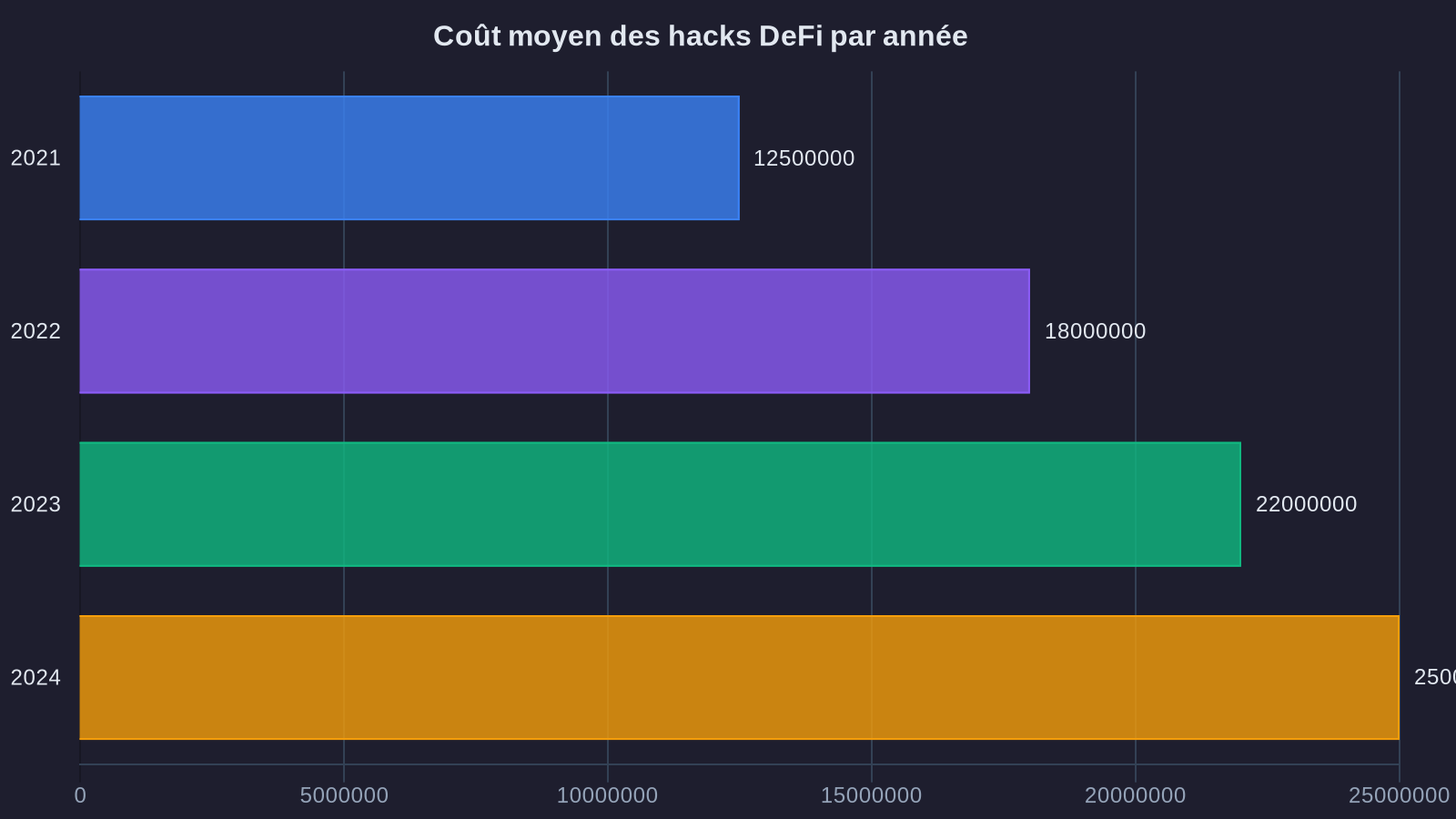
Imagine entrusting your savings to a cutting-edge, fully automated bank with no tellers. Doors open according to programmed rules, transfers happen instantly, and everything runs 24/7. Except one day, someone discovers a flaw in the electronic lock's code. Within hours, $25 million vanishes. That's exactly the average amount stolen per successful hack on DeFi protocols in 2024, according to the Immunefi report.
This figure doesn't come out of thin air. It reflects a reality many prefer to ignore: decentralized finance, as promising as it may be, remains a landscape where security risks and exploits are very real. Yet understanding these risks doesn't mean abandoning DeFi. It means investing with full knowledge and a proper risk management strategy.
Why are DeFi hacks so expensive?
First, understand that DeFi has nothing in common with traditional banking. In a conventional bank, your money is insured, monitored by security teams, and protected by regulations. If someone steals funds, there are procedures to recover the money or compensate you.
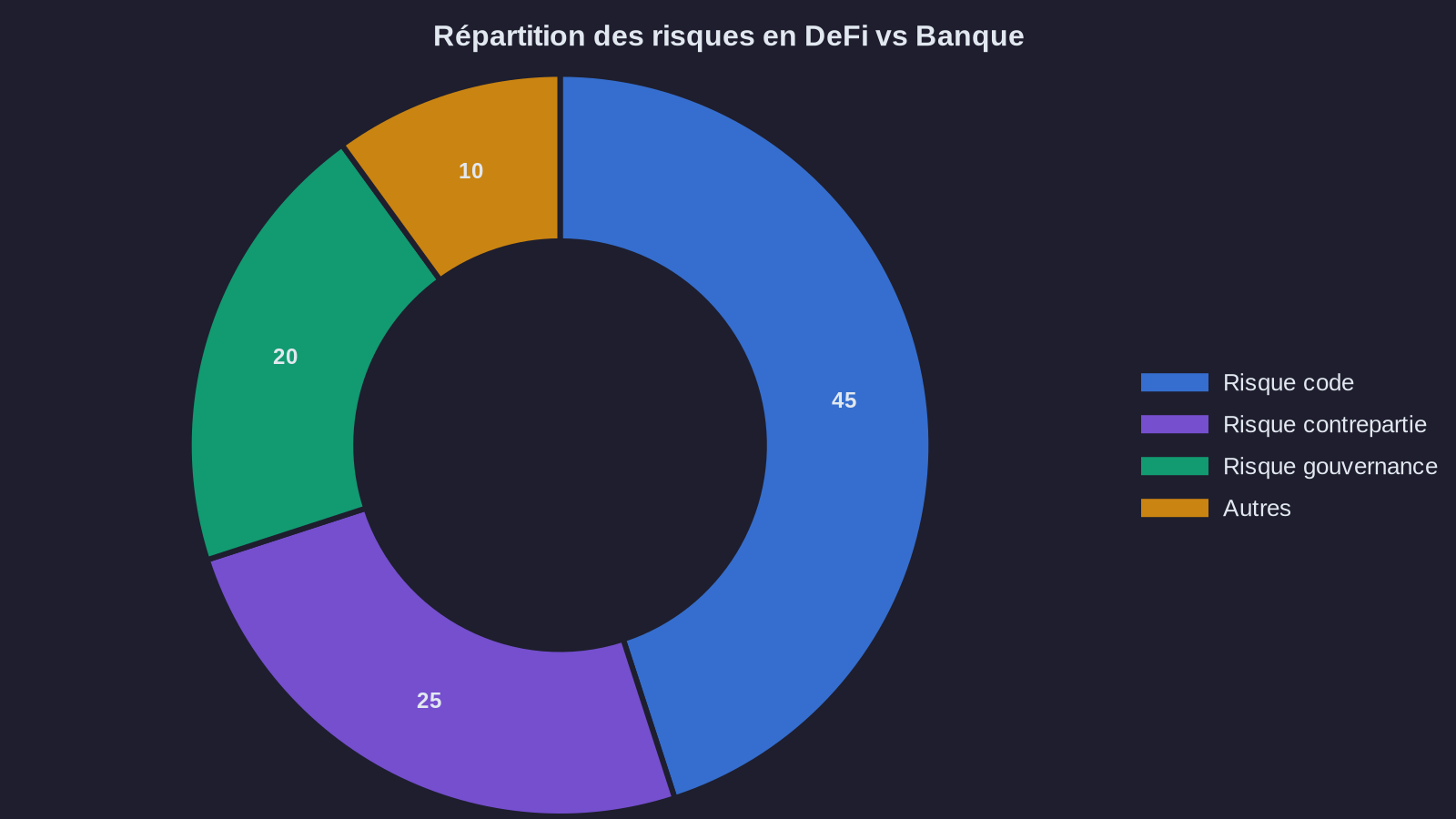
In DeFi, your money rests on computer code: smart contracts, programs that automatically execute financial operations based on predefined rules. It's as if your ATM worked without a bank behind it. Very convenient, very fast, but if someone discovers a flaw in the mechanism, they can drain the entire machine.
A smart contract is like a recipe posted publicly. Anyone can read it and use it. But if you forget to write "turn off the oven after cooking," someone could leave it running… or worse, take everything that's cooking inside.
The 2025 Immunefi report reveals that the average amount stolen per attack has reached $25 million. It's not because hackers have gotten greedier. It's because DeFi protocols now manage massive sums. The more popular a protocol, the more liquidity it attracts, and the more attractive a target it becomes.
Another aggravating factor: unlike banks, there's no real "safety net" in DeFi. No deposit insurance, no guaranteed recovery mechanism. When money disappears, it's gone for good. This is precisely what makes every security flaw so costly—a scenario perfectly illustrated by the $23 million Resolv hack.
The most common vulnerabilities: where do the dangers hide?
If you want to understand how to protect your investments, you first need to understand where attacks come from. The Immunefi report identifies several types of vulnerabilities that keep recurring.
Logic errors in smart contracts
Most hacks exploit programming mistakes. A smart contract is code written by humans. And humans make mistakes. Sometimes a single miswritten line can let an attacker withdraw more money than they deposited, or bypass security checks.
Imagine a poorly worded game rule in a board game: "You can draw as many cards as you have points." If you find a way to generate infinite points, you empty the deck. In DeFi, this kind of flaw can drain an entire protocol in a few transactions.
Manipulated oracles
An oracle is a service that provides real-world information to smart contracts (like the price of a cryptocurrency). It's like a thermometer that tells your heating system what the outside temperature is.
The problem? If someone manages to fake the thermometer, your heating system will behave erratically. In DeFi, manipulating an oracle can make it seem like an asset is worth much more (or much less) than it actually is, allowing attackers to borrow or withdraw unauthorized amounts.
Compromised private keys
Some DeFi protocols, particularly newer ones, still operate with centralized governance systems where a few people hold privileged access keys. If these keys fall into the wrong hands (through phishing, hacking, or even physical threats), an attacker can take complete control of the protocol.
It's like a bank manager keeping the vault codes on a sticky note under their keyboard. No matter how good the vault is if the codes are accessible.
How to manage risk when investing in DeFi?
So should you flee DeFi? No. But you need to do it methodically. Risk management in DeFi is a bit like driving a sports car: thrilling, but it requires caution and experience.
Diversify across multiple protocols
Never put all your funds on a single protocol, no matter how attractive. Spreading your capital across multiple platforms mechanically reduces the impact of a potential hack. If one protocol is compromised, you lose only part of your investment, not everything.
Think of it like your savings: you don't put everything into one account at a single bank. You diversify. Established protocols like Aave, which continuously strengthens its security, can form a solid foundation for this diversification.
Prioritize audited protocols
A blockchain security audit is when independent experts thoroughly examine a protocol's code to find flaws. It's not an absolute guarantee (some audited protocols have still been hacked), but it's an essential filter.
Before investing in a DeFi protocol, check if it's been audited by recognized firms (Certik, Trail of Bits, OpenZeppelin, etc.). It's like verifying that a building has passed safety inspections before renting an apartment there.
Monitor liquidity and track record
A protocol that's been around for several years, managing billions of dollars without major incidents, and used by thousands of people statistically presents fewer risks than a protocol launched last week with $100,000 in liquidity.
This doesn't mean you should ignore new projects. But if you invest in them, do so with a small portion of your capital—an amount you can afford to lose without affecting your financial situation.
Use monitoring and alert tools
Platforms like Immunefi, DeFiLlama, or CertiK Alert let you track security incidents in real time. If a protocol you've invested in suffers an attack, you can react quickly to limit your losses.
It's like having a smoke detector at home. It won't prevent a fire, but it lets you respond before it's too late. DeFi circuit breakers represent exactly this new generation of automatic protections.
- Each DeFi hack costs an average of $25 million, primarily due to flaws in smart contract code
- Risks can be reduced by diversifying, choosing audited protocols, and monitoring security history
- Investing in DeFi means accepting a higher level of risk than traditional finance, but with proper methodology, these risks become manageable
Toward more mature DeFi?
The Immunefi report's figures are alarming, but they also tell a story of continuous improvement. The most serious DeFi protocols are investing heavily in security: regular audits, bug bounty programs (rewards for finding flaws), decentralized insurance systems…
We're also seeing security standards emerge, best practices shared across the industry. It's somewhat like aviation in the 1950s: there were accidents, sometimes serious ones, but each incident helped improve safety protocols. Today, flying is one of the safest forms of transportation.
DeFi is following a similar path. Each hack, no matter how costly, helps identify new vulnerabilities and strengthen defenses. The protocols that survive are those that learn, adapt, and put security at the heart of their design.
For you as an investor, this means one thing: DeFi is no longer a Wild West where anything goes. It's an ecosystem that's maturing, where serious players are progressively distinguishing themselves from opportunistic projects. It's up to you to sort through them with rigor and clarity.
Now that you understand the risks of DeFi hacks, discover how smart contracts work—the programs at the heart of all decentralized protocols.
```