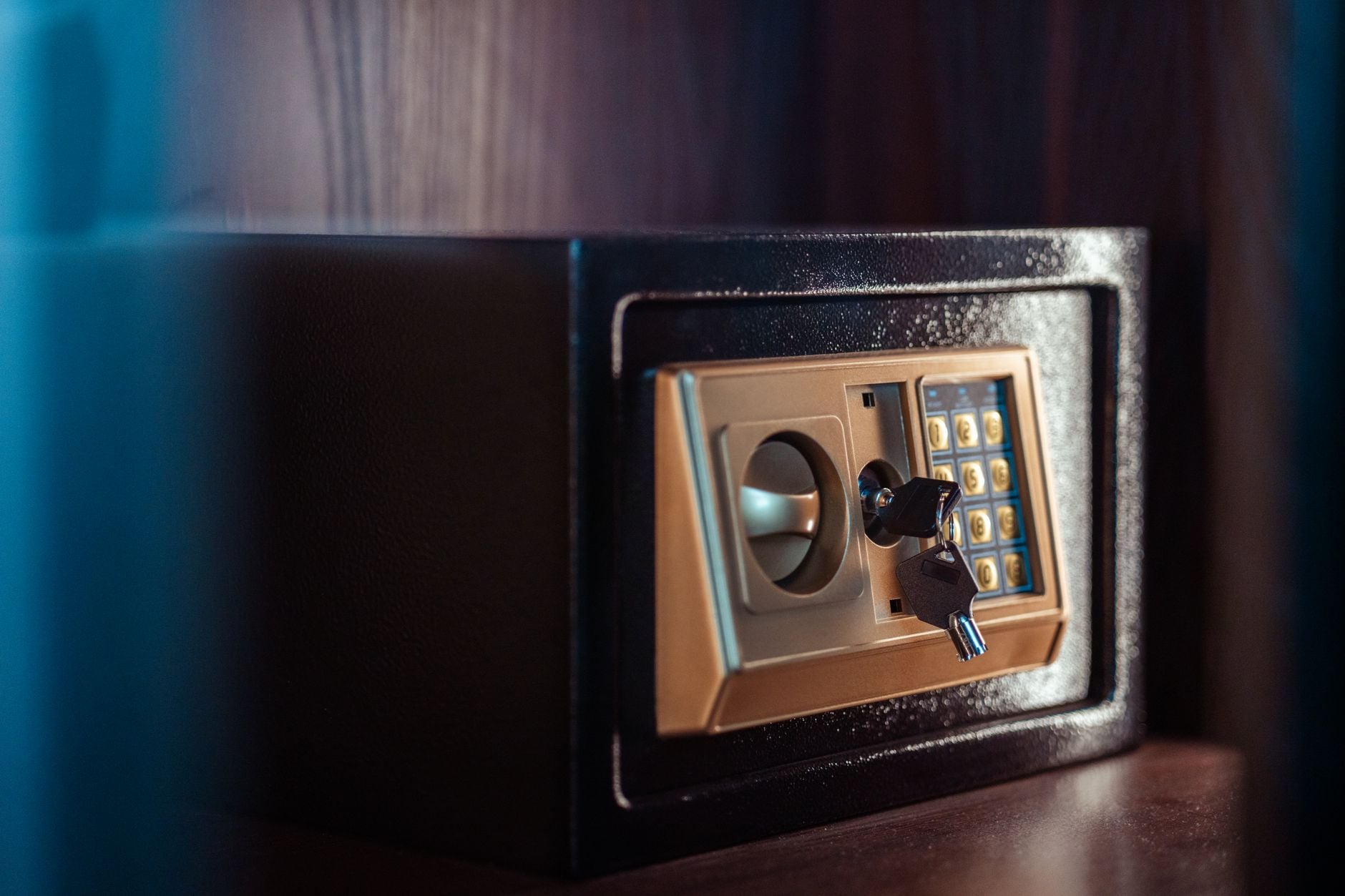
You entrust your euros or crypto-assets to a service provider. A few weeks later, they file for bankruptcy. Is your money lost? The answer depends on a technical detail that makes all the difference: were your assets segregated?
This question is far from abstract. In 2022, the collapse of FTX caused hundreds of thousands of users to lose several billion dollars. Why? Their crypto-assets were not isolated from the platform's assets. When the company went under, customers went under with it. By contrast, when Voyager Digital went bankrupt that same year, customers whose segregated assets were properly identified were able to recover their holdings—with delays and fees, certainly, but without total loss.
The MiCA Regulation, which now governs crypto-asset service providers in Europe, mandates the segregation of customer assets. Concretely, this means your crypto-assets or euros must be isolated from the service provider's assets, held by an independent third party, and clearly identifiable as belonging to you. Article 70 of the MiCA Regulation establishes the principle: service providers must "take appropriate measures to protect the property rights of customers."
But this protection has clear limits. It doesn't shield you from all risks, particularly capital loss risk. Understanding what it covers—and what it doesn't—allows you to ask the right questions before entrusting your money.
What segregation protects: your money against service provider insolvency
Asset segregation rests on a simple principle: your assets must never be mixed with those of the service provider. If the provider becomes insolvent, your assets don't fall into the liquidation estate. They remain yours. In theory, you can recover them without waiting for creditors to divvy up the leftovers.
For this protection to work, three conditions must be met. First, your assets must be deposited with a separate, regulated, and independent custodian. This third party—often a deposit bank for euros, a regulated custodian for crypto-assets—has no capital ties to the service provider acting as your interface. Second, these assets must be registered in your name or in a collective account clearly identified as belonging to customers. Finally, the service provider cannot use your assets to finance its own operations: no unauthorized lending, no speculation with your money.
Article 70 of the MiCA Regulation imposes this strict separation. A crypto-asset service provider licensed in Europe cannot "use customers' crypto-assets or funds for its own account." This rule is the bulwark against what happened at FTX: the massive use of customer deposits to cover the firm's reckless bets.
Concretely, if the service provider goes bankrupt, your assets are not seized by the liquidator. You enter a restitution procedure. This procedure can take time—several months or even more than a year in some cases—but it doesn't call into question your ownership rights. You recover what belongs to you, even if the service provider has no cash left.
This is exactly what happened for Voyager Digital customers whose assets were properly segregated. The process was lengthy and costly, but restitution occurred. By contrast, FTX customers, whose funds were commingled with company assets, had to settle for a claim in bankruptcy, with very uncertain recovery prospects. This difference illustrates why verifying a platform's soundness begins with understanding its custody arrangements.
What segregation doesn't protect: the value of your assets
Segregation protects your ownership right. It doesn't protect the value of what you own. If you hold 1 ETH, you'll recover 1 ETH, even if its value has dropped 50% in the meantime. This distinction is critical.
Take a concrete example. You entrust €10,000 in stablecoins to a service provider. These stablecoins are segregated with an independent custodian. A few weeks later, the stablecoin loses its peg and plummets to €0.70. The service provider goes bankrupt in the aftermath. You recover your 10,000 stablecoins intact, but they're now worth only €7,000. Segregation protected you against provider failure, not against the asset's depreciation—capital loss risk remains.
This limitation applies to all risky assets. A bitcoin stays a bitcoin, a token stays a token. Market volatility, counterparty risk on a stablecoin, the failure of a DeFi protocol: none of this is covered by segregation. You retain your ownership right, but capital loss risk remains entirely intact.
This is why it's imperative to understand the nature of the assets you entrust. An algorithmic stablecoin doesn't have the same risk profile as one backed by audited reserves. A governance token from an experimental protocol is nothing like exposure to an established cryptocurrency. Segregation protects you from the service provider, not from the asset.
Another limitation: segregation doesn't protect you against technical errors or cyberattacks targeting the custodian itself. If the custody provider is hacked and loses private keys, your assets can disappear despite segregation. This is why choosing your custodian matters as much as choosing your service provider. A regulated, audited custodian with robust security measures (distributed keys, cold storage, theft insurance) provides an additional layer of protection. But zero risk doesn't exist.
How to verify that your assets are truly segregated
Segregation isn't proclaimed; it's verified. Here are the questions to ask before entrusting your euros or crypto-assets to a service provider.
First question: who holds my assets? The service provider must tell you the name of the custodian or depository. If this information isn't public, that's a red flag. A reputable service provider communicates openly about its custody arrangements. You should be able to verify that this third party is properly regulated—by the ACPR for a deposit bank in France, by an equivalent authority in another European country for a crypto-asset custodian.
Second question: are my assets registered in my name? In some arrangements, assets are deposited in a collective account ("omnibus account"). This isn't inherently problematic, provided the service provider maintains rigorous subsidiary accounting that precisely records what belongs to you. This accounting must be regularly audited by an independent third party. Ask whether these audits are published and how frequently. Proof of reserves completes this verification by confirming that the service provider actually holds the assets it claims to maintain.
Third question: can the service provider use my assets? Review the terms and conditions carefully. Some platforms reserve the right to lend your crypto-assets or use them for liquidity operations. If so, your assets aren't segregated in the strict sense. The service provider has access to them, even temporarily. This mechanically increases risk: if the service provider lends your assets and the borrower defaults, you absorb the loss.
Fourth question: what's the procedure in case of failure? A transparent service provider must clearly spell out the restitution procedure in case of bankruptcy. Who takes over? Within what timeline? With what potential fees? This information must be in your contractual documents. If it's absent or vague, that's cause for caution.
Finally, verify the service provider's regulatory status. Since the MiCA Regulation took effect, any crypto-asset service provider operating in Europe must be licensed or in the process of obtaining a license from its national authority. In France, that's the AMF. A service provider that's unlicensed and doesn't display its PSAN or PSCA status is operating outside the regulatory framework. The segregation it claims to offer has no legal standing. To make sure a platform isn't misleading you about its status, consult our AMF verification guide.
The watchpoint
Asset segregation is real protection and mandatory under MiCA. It shields you from service provider failure, but it doesn't immunize you against market risk, underlying asset risk, or technical risk.
Before entrusting your euros or crypto-assets, ask these four questions: who holds them, how is what belongs to me recorded, can the service provider use them, and what's the procedure if everything collapses. If the answers are clear, sourced, and verifiable, you're on solid ground. If they're vague, contradictory, or missing, walk away.
Disintermediated finance opens interesting prospects for putting your money to work. But it comes with capital loss risk. Segregation limits this risk; it doesn't eliminate it. Knowing what it protects—and what it doesn't—allows you to make an informed decision.