CoinEx has just announced the cessation of operations after nine years in business. For the 500,000 users affected, the news hits hard. Some discovered this morning that they can no longer access their holdings. Others are wondering about the procedures for recovering their funds. This crypto exchange shutdown illustrates the persistent risks of the crypto ecosystem.
This closure is not an isolated event in the crypto world. It's part of a series of exchange failures that, since FTX's collapse in 2022, raises serious questions about the real robustness of crypto trading infrastructure. For companies that have allocated part of their treasury to these platforms, it's an opportunity to seriously reassess the exchange selection criteria and the actual counterparty risk of each trading partner.
Anatomy of a shutdown that shouldn't surprise careful observers
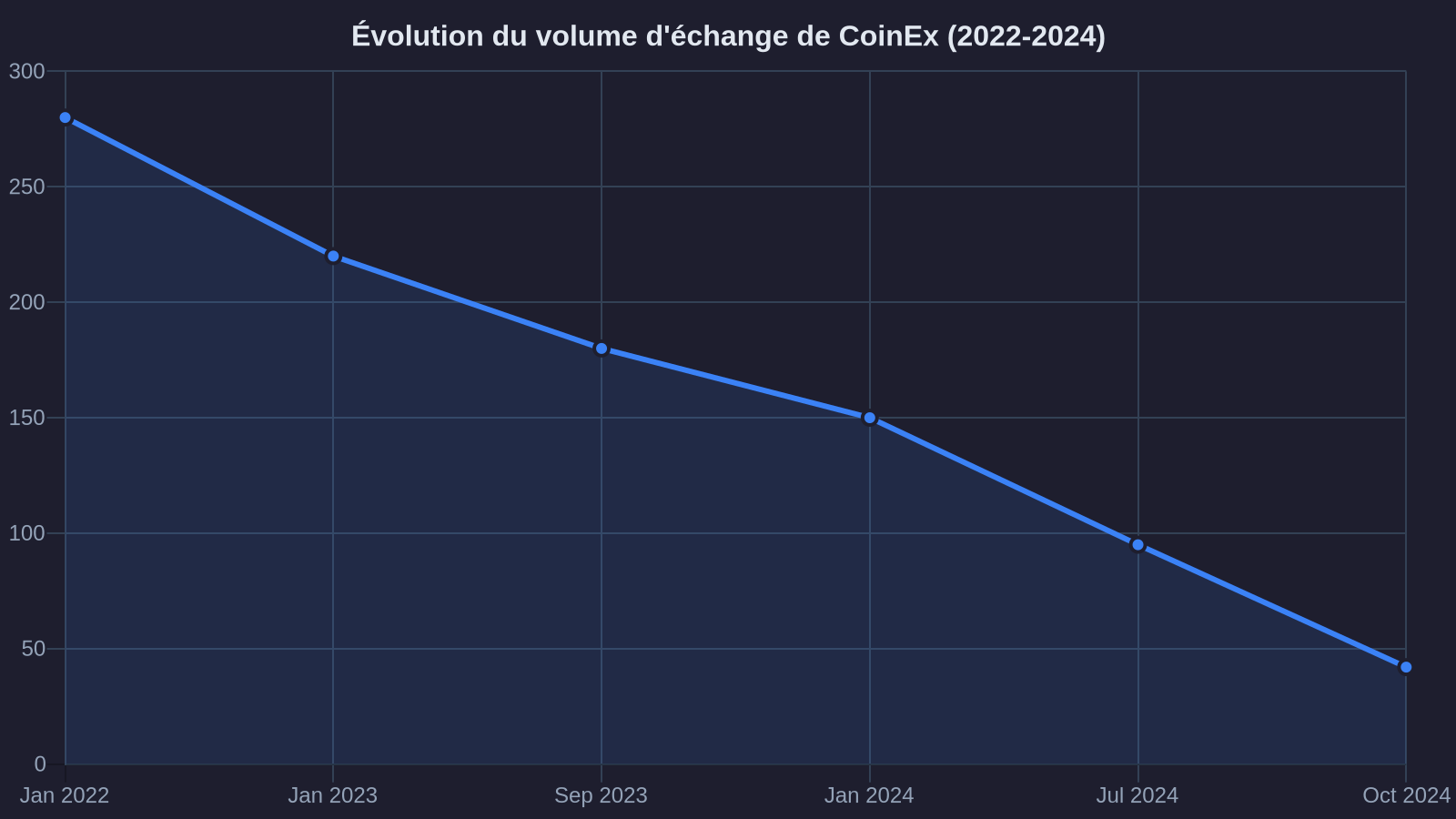
CoinEx was showing daily trading volumes of $150 million in early 2024. A respectable figure on the surface, but one that masked a progressive erosion of its active user base. Warning signs multiplied over the past six months: slower withdrawals, increasingly unresponsive customer support, no communication about reserves.
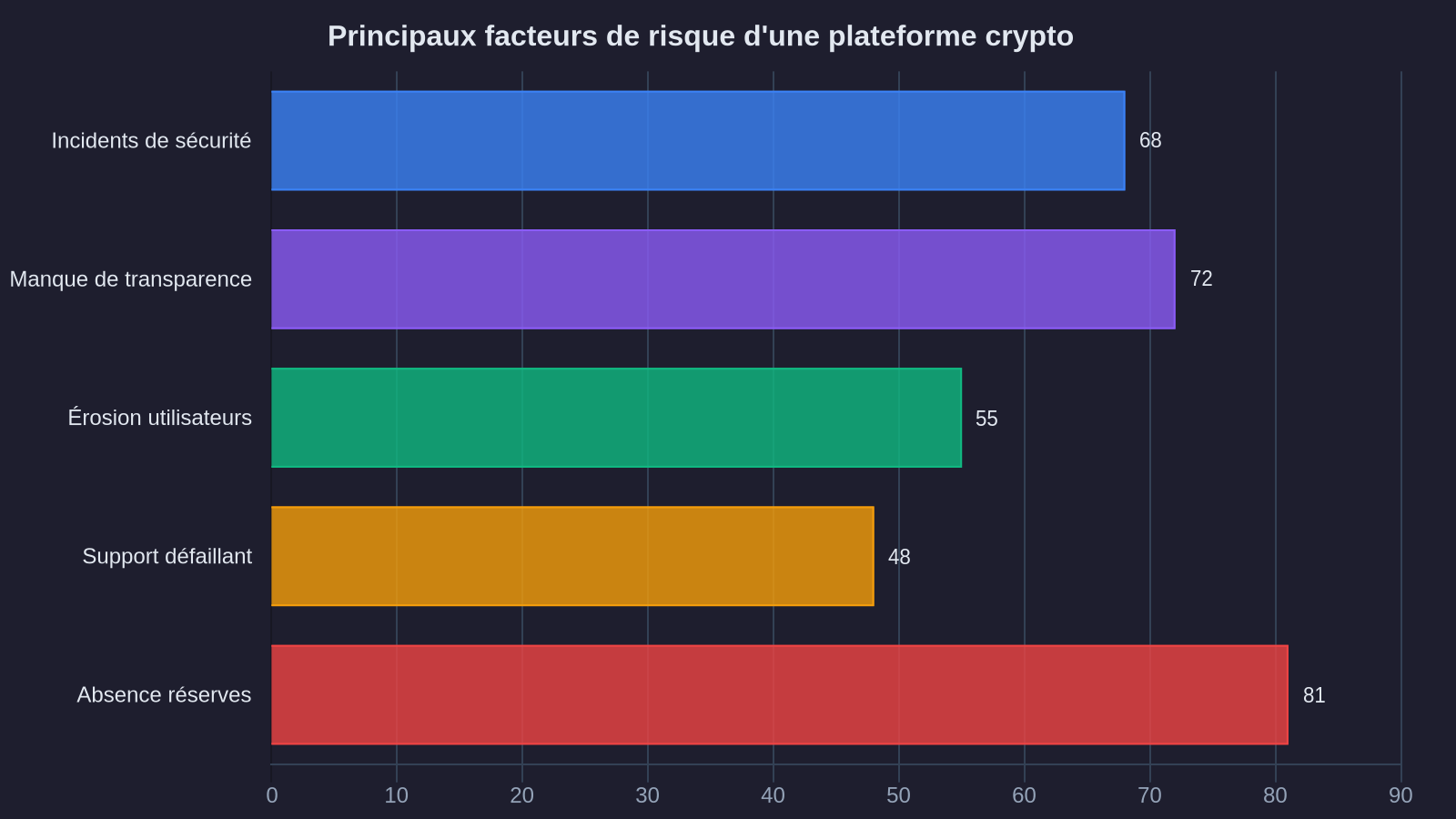
The September 2023 hack, in which the platform lost $70 million in customer funds, should have been a major red flag. CoinEx had communicated about full reimbursement to victims, but transparency about the source of compensation funds remained vague. No verifiable proof of reserves was published afterward.
This pattern echoes what was seen before the collapse of Celsius, then FTX: silent erosion of confidence, compensated by aggressive marketing communication, until the breaking point where massive withdrawal requests make the situation unsustainable. In CoinEx's case, withdrawal requests quadrupled between January and March 2025, progressively draining available reserves. A situation reminiscent of the market manipulations revealed by ZachXBT, where the opacity of financial flows masks structural weaknesses.
Lessons for companies exposed on exchanges
For a financial director, CoinEx's closure raises an immediate question: how do you assess the real soundness of a crypto exchange platform before placing assets there? Marketing labels and commercial promises clearly aren't enough.
Consider the case of a small company that diversified €100,000 of its treasury in stablecoins, spread across three platforms including CoinEx for €30,000. If this company didn't anticipate counterparty risk, it now finds itself in a liquidation proceeding whose outcome remains uncertain. CoinEx creditors risk recovering, at best, between 20 and 40% of their holdings, with an average timeline of 18 to 24 months observed from previous sector bankruptcies.
The first lesson concerns proof of reserves. Since the MiCA regulation came into force in June 2024, exchanges operating in the European Union must theoretically publish regular attestations of their reserves. CoinEx, based in Hong Kong, was exempt from this requirement. This is a key differentiator: a French company seeking to secure its position should favor platforms subject to MiCA, even if it means accepting slightly higher fees.
The second lesson concerns counterparty diversification. Concentrating your entire crypto position on a single exchange, even a reputable one, amounts to taking a disproportionate counterparty risk. A prudent approach consists of spreading holdings across at least three distinct platforms, favoring those that hold a European license and publish proof of reserves audited monthly.
What to do if you're affected by the CoinEx shutdown: the funds withdrawal process
French CoinEx users face a complex situation. The platform has opened a claims procedure, but the funds withdrawal process promises to be lengthy and its outcome uncertain. Here are the concrete steps to take in order of priority.
First, gather all your documentation: transaction history, screenshots of your balances at the time of shutdown, proof of deposits, correspondence with support. These documents will form the basis of your claim. CoinEx indicated that claims must be submitted before June 15, 2025, with a form available on their liquidation website.
Next, evaluate the opportunity for early tax reporting. In France, loss of access to crypto-assets due to an exchange's bankruptcy can be treated as a realized loss, deductible from crypto gains in the current year or the five following years. This interpretation is debated, but several specialized firms recommend documenting the loss now, with assistance from a tax attorney if amounts exceed €50,000.
For companies, the accounting situation requires particular attention. A claim against CoinEx should be provisioned at 60% at minimum in the current fiscal year, or fully impaired if the accountant believes recovery chances are low. This impairment will impact the year's results, with consequences for corporate income tax and potentially the company's borrowing capacity.
Securing crypto positions: the exchange selection criteria that really matter
CoinEx's closure should prompt a review of crypto asset management practices in companies. Exchanges are not custodians in the banking sense, and the risk of total loss always exists.
To minimize this risk, three areas of vigilance stand out. First, favor platforms regulated under MiCA that publish audited proof of reserves. Kraken, Bitstamp, or Coinbase Europe fall into this category. These exchanges bear high compliance costs, passed partly on to transaction fees, but offer a higher level of legal security. This approach aligns with the movement toward professionalization of crypto payment infrastructure.
Next, limit the portion of assets held on exchange to what's strictly necessary for immediate liquidity needs. For a company using stablecoins for international payments, this means keeping on platform only amounts intended for transactions in the coming thirty days. The remainder should be transferred to a cold storage arrangement, such as a professional hardware wallet or institutional custody solution.
Finally, rigorously document every transaction. In case of exchange failure, the ability to prove ownership and amount of holdings makes all the difference in the claims procedure. A monthly position tracking sheet with dated screenshots and secure archiving constitutes a basic discipline every finance department should implement.
Sector consolidation continues, with or without you
CoinEx's bankruptcy fits into a market consolidation movement for exchanges that began with FTX's collapse and is far from over. An estimated thirty medium-sized platforms, those showing between $50 million and $500 million in daily volume, are currently weakened by competition from regulated leaders and by increasing compliance costs.
For French companies, this consolidation paradoxically simplifies choices. The number of truly reliable exchange partners shrinks to about a dozen names, all subject to strengthened transparency obligations. This constraint becomes an advantage: less dispersion, more clarity. The impact is also felt in wealth diversification strategies, where rigorous counterparty selection becomes a decisive criterion.
One question remains that every executive must ask themselves: what portion of treasury can reasonably be exposed to crypto counterparty risk, even on the best-regulated platforms? The answer varies depending on company size and risk tolerance, but a limit of 5 to 10% of available treasury appears to be a prudent ceiling. Beyond that, the risk of capital loss, whether linked to asset volatility or intermediary failure, becomes disproportionate compared to expected benefits.
CoinEx joins the long list of failed exchanges. For those who held funds there, it's a real financial loss and an expensive lesson on the importance of counterparty selection. For others, it's a timely reminder: in the crypto universe, prudence doesn't mean avoiding all risk, but taking only those you can genuinely measure and control.