In March 2024, a Hong Kong business executive receives a video call from his CFO based in London. The voice, the face, the intonations: everything matches. The CFO asks him to validate an urgent transfer of 25 million dollars. The transaction goes through. Two hours later, the real CFO calls, bewildered. He never made that call. The company has just fallen victim to an AI voice deepfake scam of unprecedented sophistication.
What's alarming here is how technically straightforward it is. The scammers needed only a few seconds of voice recording — likely sourced from a public presentation — to generate a perfectly convincing clone. In the crypto ecosystem, where transactions are irreversible and amounts exchanged can reach millions in just a few clicks, this threat of crypto fraud via voice deepfake takes on a particularly concerning dimension.
The mechanics of AI voice scams: from cloning to theft in four steps
Unlike traditional crypto scams that rely on greed or manufactured urgency, voice deepfakes exploit our trust in what we consider irrefutable proof: the voice and image of someone we know.
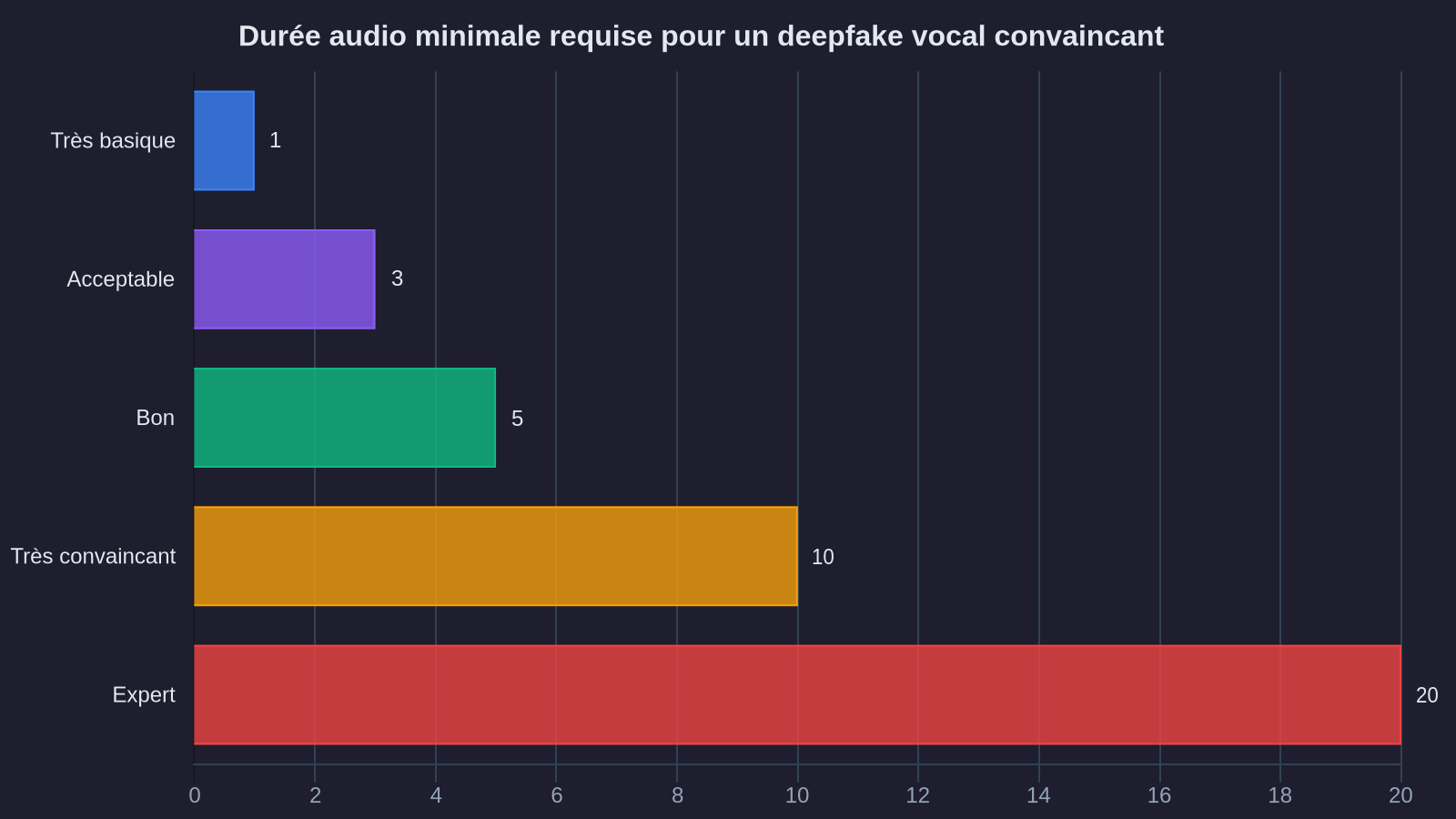
The operational chain is now standardized. First step: audio collection. Scammers gather voice samples from podcasts, interviews, conference videos, even intercepted WhatsApp voice messages. Just three seconds of quality audio is enough for current tools to generate an exploitable voice model.
Second step: synthesis. Services like ElevenLabs, Resemble AI, or Play.ht — legitimate in origin — allow voice cloning with troubling precision. Some cybercriminals use pirated versions or open-source alternatives like RVC (Retrieval-based Voice Conversion) to avoid any traceability.
Third step: staging. The scammer doesn't just call at random. He studies the context: the victim's professional relationships, communication habits, ongoing projects. Social media and LinkedIn provide a wealth of information to make the call credible. In the crypto sector, this information sometimes circulates openly: partnership announcements, Twitter threads detailing an investment strategy, participation in DAOs where members know each other.
Fourth step: execution. The call comes at a strategic moment — often outside business hours, when vigilance drops. The scenario exploits urgency ("I need quick validation for this opportunity"), confidentiality ("Don't mention this to the team yet"), and the apparent legitimacy of the caller.
The red flags that should immediately alert you to voice deepfake fraud
Faced with this threat, your first line of defense remains your ability to spot warning signs. Here are the indicators that should trigger systematic verification:
1. An unusual financial request through an unusual channel. If a partner contacts you via Signal or Telegram when they normally communicate by professional email, consider that a red flag. Similarly, if someone close to you asks you via voice message to make a crypto transfer when they've never used that method before.
2. Urgency combined with confidentiality. "We need to act now," "Don't talk about this to [anyone else]," "This opportunity disappears in an hour": these phrasings create time pressure explicitly designed to bypass your normal verification process.
3. Micro-anomalies in the voice. Current deepfakes remarkably reproduce timbre and intonation, but certain details still betray the artificial: absent or mechanical breathing, lack of natural background noise, abrupt transitions between sentences, a cadence that's slightly too regular. These anomalies are subtle, but your brain often detects them unconsciously — that feeling that "something's off" deserves to be taken seriously.
4. The inability to verify through another channel. You try to call the person back on their usual number and reach voicemail. You send a confirmation text and get no coherent response. These blocks in multi-channel verification are rarely accidental.
5. Imprecise contextual information. The scammer has public information about you and your supposed contact, but fails on internal details that only the real person would know. Ask a question only your legitimate contact would know the answer to — a project you've been working on that you haven't discussed publicly, a detail from a recent conversation.
Crypto security defense protocols: what you need to put in place
The response to this threat cannot rely solely on your ability to detect a deepfake in real time. It requires the implementation of preventive protocols, particularly if you manage significant amounts of crypto assets.
Establish a rule for systematic validation. For any crypto transaction exceeding a threshold you set (€5,000, €10,000, depending on your situation), require dual validation through two different channels. Example: a video call followed by written confirmation containing a pre-agreed code. This code must never be transmitted through the same channel as the initial request.
Some companies specializing in digital asset management have adopted a "personal security phrase" system — an expression agreed upon between collaborators, changed regularly, that only legitimate people know. If your partner cannot give you this phrase during an unusual call, you immediately stop the procedure, as recommended by best practices outlined in our article on hardware wallet security.
Limit your public voice footprint. Every podcast, interview, or YouTube video increases the attack surface available to scammers. This doesn't mean giving up all public communication, but adopting thoughtful digital hygiene. If you regularly speak at crypto conferences, consider not making certain content publicly available, or limiting access to these recordings.
For institutional investors or family offices managing large crypto portfolios, some go as far as using slightly modified voices in their public communications — a subtle distortion that doesn't hinder comprehension but complicates the creation of an exploitable deepfake.
Train your regular contacts. Inform your partners, loved ones, and accountant that you will never execute a crypto transaction on a simple call, however legitimate it appears. This rule admits no exceptions. If they receive a supposedly urgent call from you, they must systematically call you back on a verified channel before taking action.
In a professional context, document this protocol in writing. A simple recap email sent to authorized fund handlers is often enough to thwart a scam attempt: the scammer cannot simulate the complete procedure if it includes verification steps they don't know about.
Use technical biometric authentication solutions. Several technologies are emerging to detect voice deepfakes. Services like Pindrop Security or Reality Defender analyze the acoustic characteristics of a call in real time and detect statistical anomalies typical of synthetic voices. These solutions remain costly and imperfect, but become relevant beyond certain asset thresholds.
At a more accessible level, applications like Truecaller now integrate voice anomaly detection features. The effectiveness is not absolute, but it adds a layer of protection.
What to do if you're a victim of voice deepfake crypto fraud
Despite all precautions, a mistake remains possible. The increasing sophistication of these attacks means that even seasoned professionals can be caught in specific circumstances — fatigue, periods of stress, emotional context.
If you realize you've made a transaction following a voice deepfake, reactivity in the first minutes is critical. Unlike traditional bank transfers, blockchain transactions are irreversible. But certain actions can limit the damage.
Immediate action #1: If the transaction is still pending confirmation (unconfirmed), immediately contact your mining pool or attempt a competing transaction with higher fees to cancel the first one (the RBF technique - Replace-By-Fee on Bitcoin, or increasing gas price on Ethereum). This window is very short — just a few minutes at most.
Immediate action #2: Identify the receiving address and launch an on-chain analysis using tools like Chainalysis, Elliptic, or Crystal. This allows you to understand whether the address is known to be associated with fraudulent activities and to trace subsequent fund movements.
Immediate action #3: File a complaint with the THESEE platform at the Ministry of Interior (for France) or equivalent in your jurisdiction. Even if recovery chances are low, this report feeds law enforcement databases and can help identify organized networks.
Immediate action #4: Contact major centralized exchange platforms (Binance, Coinbase, Kraken) to report the fraudulent address. If funds pass through these platforms, they can freeze the associated account — subject to appropriate legal proceedings.
Don't publicly disclose scam details immediately. Contrary to intuition, tweeting or posting crypto forum details about your misadventure can alert scammers and prompt them to quickly move funds, complicating any traceability effort. Report to competent authorities first, then share your experience once initial steps are underway.
The warning point: French DGSI and cybersecurity services are observing a concerning professionalization of these AI voice scam attacks. Organized groups no longer target just companies, but also individual investors with substantial crypto portfolios. If you hold over €100,000 in digital assets, you're statistically in the preferred targeting zone. It's no longer a question of if you'll be targeted, but when.
The evolution of the deepfake threat: what's coming
Voice deepfakes represent the first wave of a series of threats that will exploit artificial intelligence to bypass our trust systems. Next generations will already include real-time video deepfakes — the technology exists and is becoming accessible.
Several security research labs have demonstrated that it's now possible to generate a convincing video deepfake call with less than 30 seconds of latency. This means a scammer will soon be able to conduct an interactive video conversation impersonating someone else, in real time, responding coherently to your questions.
As this threat evolves, regulation is beginning to take shape. The European AI Regulation (AI Act) imposes transparency obligations for AI-generated content, but practical enforcement of these rules against fraudulent deepfakes remains a major challenge. Scammers operate from jurisdictions with limited cooperation and use decentralized infrastructures that are difficult to trace.
The effective response will likely come from a combination of solutions: cryptography to authenticate the identity of callers (digital signatures on calls), AI detection of synthetic content, and most importantly, modification of our validation protocols for sensitive operations. In traditional banking, no significant wire transfer occurs on a simple phone call. The crypto ecosystem must integrate this same procedural rigor, as highlighted in our analysis of address poisoning attacks.
For investors and digital asset managers, the challenge is now clear: crypto security no longer comes down to protecting your private keys or choosing a reputable hardware wallet. It also includes protecting your voice identity and implementing robust human protocols against attacks that will always exploit the weakest link — our intuitive trust in what we see and hear.
Current losses are already counted in tens of millions. Without rapid adaptation of practices, that figure will inevitably cross the billion-dollar threshold within the next two years. The question is no longer whether voice deepfake attacks will become widespread, but whether you'll have implemented the necessary safeguards before becoming a victim.