A team of security researchers has just published a disturbing discovery: using a precision laser, they successfully extracted the private key from a Tangem card. The information spread quickly through specialized circles, immediately raising the question: should we still trust physical hardware wallets? This hardware wallet vulnerability reveals the limitations of physical security against sophisticated laser attacks.
Before answering, it's important to understand precisely what happened, what the real risks are for you as a user, and how this discovery fits into the broader landscape of hardware wallet security.
The laser attack: how it actually works
The revealed attack relies on a technique called fault injection via laser. The principle is relatively straightforward to describe, but extremely complex to execute.
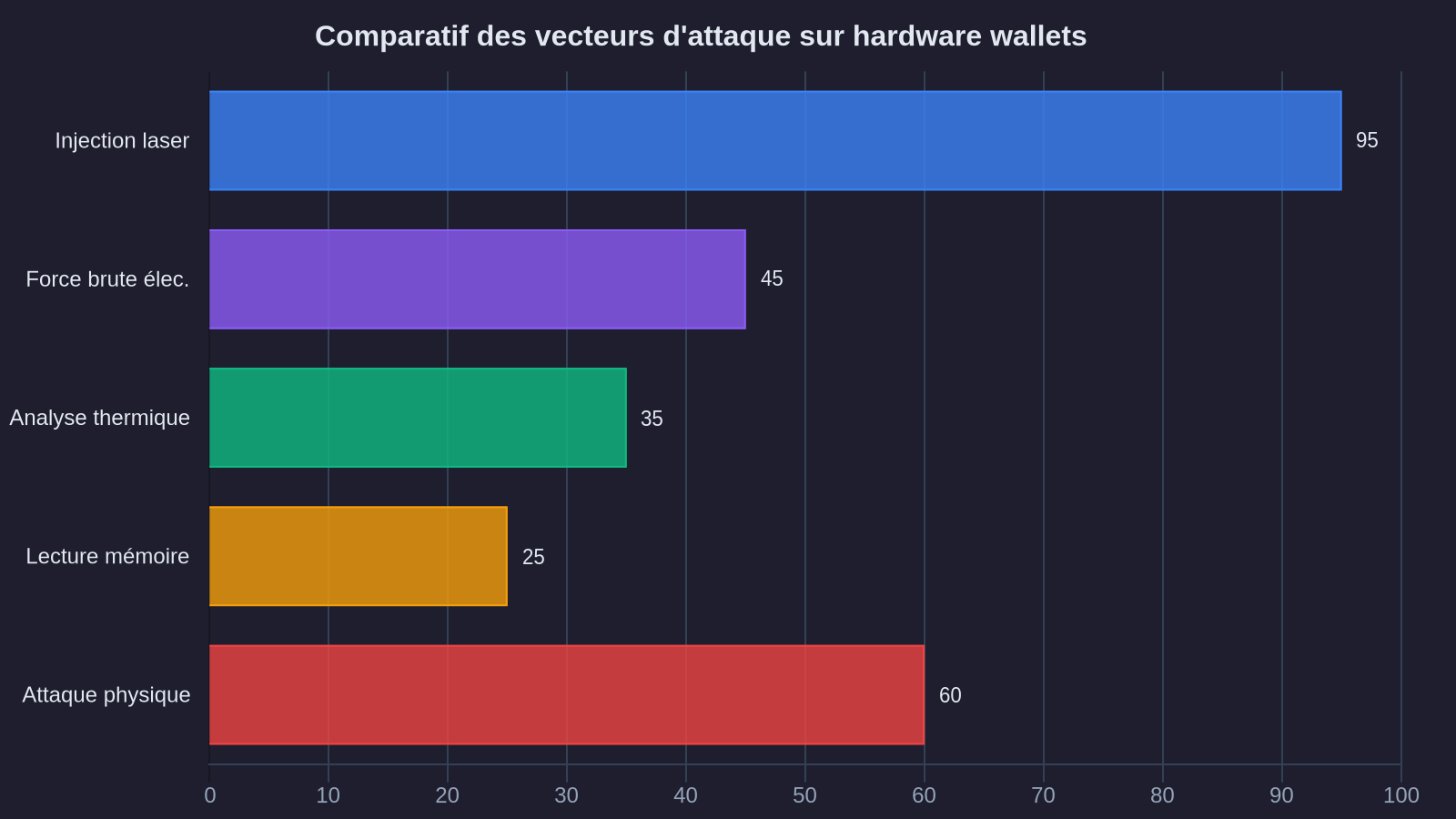
Tangem cards, like most modern hardware wallets, store your private key in a secure element chip. This chip is designed to resist extraction attempts: it's protected against electrical attacks, memory reads, and thermal analysis. In theory, even if someone steals your Tangem card, they cannot extract the key from it.
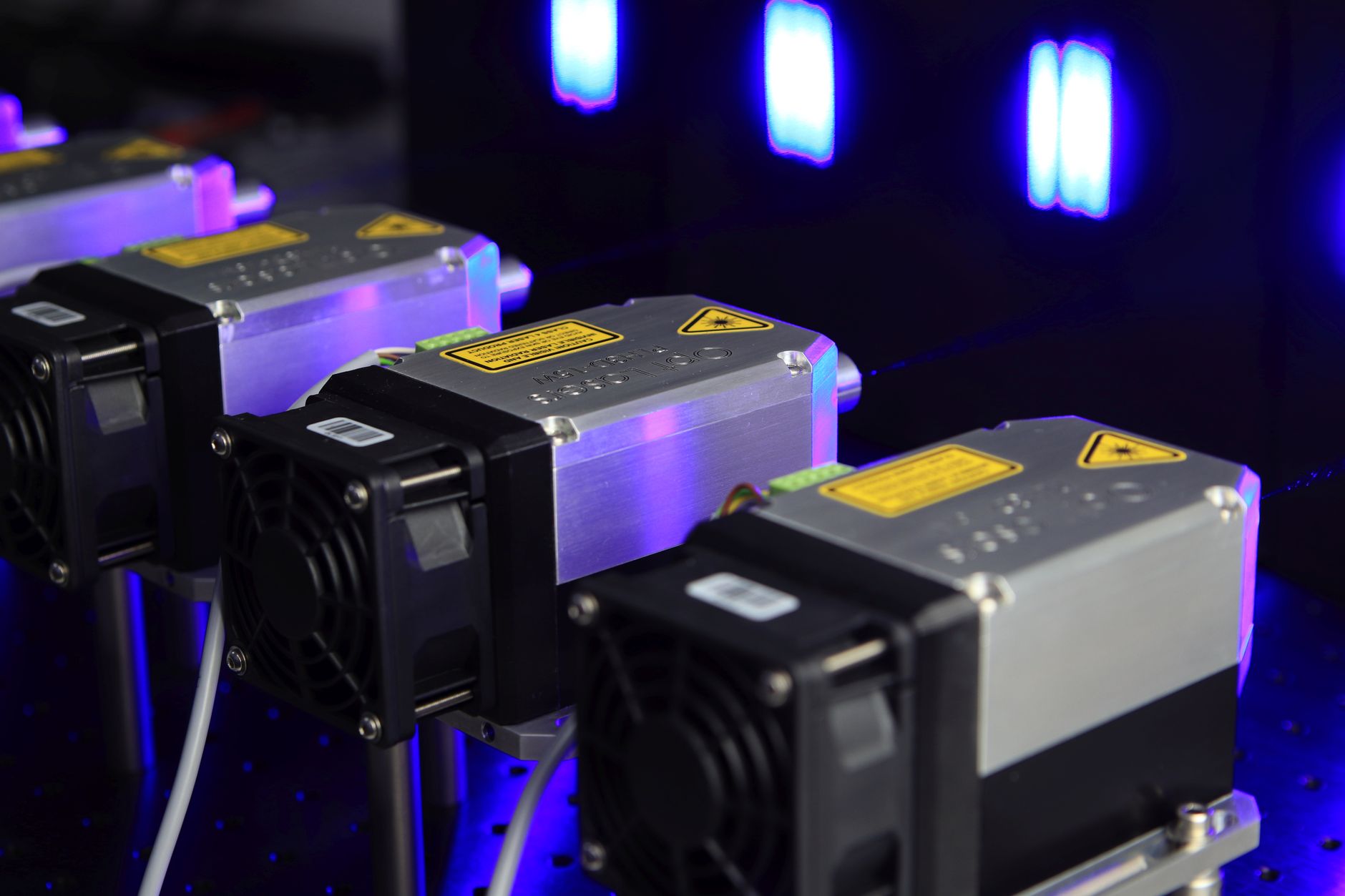
Except that researchers found a workaround. By directing an ultra-precise laser beam at a specific area of the chip during a cryptographic operation, they triggered what's called a glitch: a temporary error in the calculation. This error, cleverly exploited and repeated over thousands of operations, allowed them to gradually reconstruct the private key.
Concretely, the attack requires specialized laboratory equipment, a microscope, a tunable laser, and above all deep expertise in hardware cryptanalysis. This isn't something you improvise in your garage.
Should you throw away your Tangem cards?
The short answer: no. The long answer deserves some consideration.
This vulnerability definitely exists, and it's serious from a technical standpoint. But for it to directly affect you, several conditions must be met simultaneously.
First, the attacker must have prolonged physical access to your card. We're not talking about a few seconds to scan a QR code, but several hours in a laboratory. If your Tangem card is stolen and you don't notice for 48 hours, the risk becomes real. But in that case, you have a much more pressing problem: immediately transferring your funds to a new wallet.
Second, the attacker must possess equipment costing tens of thousands of euros and rare expertise. This isn't within reach of a pickpocket or an ordinary burglar. On the other hand, it's perfectly accessible to a state laboratory, a structured criminal organization, or a determined industrial competitor.
Third, and this is the crucial point: this attack cannot be conducted remotely. Unlike phishing, malware, or server compromise that can affect thousands of victims simultaneously, a laser attack is inherently targeted. If you're specifically targeted, it's because you already have a high-risk profile.
For the vast majority of users holding reasonable amounts (say, a few thousand to tens of thousands of euros), the risk of a laser attack remains theoretical. Your main threat remains phishing, loss of your seed phrase, or a manipulation error — as illustrated by our analysis of address poisoning attacks that exploit your habits.
The watchpoint
If you hold significant amounts (hundreds of thousands of euros or more) and you're a visible person (prominent entrepreneur, crypto influencer, known trader), this vulnerability must be taken seriously. In this case, losing or having your hardware wallet stolen justifies an immediate transfer of your funds, without waiting.
Tangem vs Ledger: two philosophies of hardware wallet security
This flaw in Tangem invites comparison of security approaches between different market players. Ledger, the historical leader, has also had its own controversies in recent years, notably with the Ledger Recover function that raised serious concerns in the community.
Tangem bets on simplicity and accessibility: no screen, no buttons, just an NFC card you scan with your phone. The advantage is a smooth user experience and an attractive price. The downside is that all security logic rests on the secure element, with no additional protective layer.
Ledger, meanwhile, also uses a secure element, but adds defense-in-depth mechanisms: control screen, signed firmware, auxiliary channel attacks made more difficult by the device's architecture. However, Ledger recently introduced the ability to fragment your seed phrase to recover it via a third-party service (Ledger Recover), which raised the question of trust: if extraction is technically possible for customer support, it's also possible for a determined attacker or an authority.
No system is perfect. Tangem is vulnerable to a sophisticated physical attack. Ledger is vulnerable to software compromise or regulatory obligation to create a backdoor. Both scenarios are different, both exist.
What matters is adapting your choice to your risk profile. If you're primarily concerned about a targeted physical attack (you're a visible personality, you frequently travel to risky areas), favor a system with a control screen and manual validation. If you're primarily concerned about software compromise or regulatory pressure, a minimal and open-source solution might be preferable.
What to do now if you use Tangem
If you own Tangem cards and are wondering how to react, here's a checklist of concrete measures, ranked by priority.
1. Assess your real exposure
Ask yourself three simple questions: how much value are you storing on these cards? Are you a publicly identified person in the crypto ecosystem? Do you have reason to believe you could be a specific target (significant assets, sensitive professional activity)?
If the answer is no to all three questions, you probably don't need to change solutions immediately. Stay vigilant, but don't panic.
2. Apply basic physical security rules
Never leave your cards unattended in an accessible location (office, car, hotel). If you're traveling, keep them on you or in a safe. In case of loss or theft, immediately transfer your funds to a new wallet before even reporting the loss to authorities.
3. Diversify your storage
The golden rule of crypto security remains diversification. Don't put all your assets on a single hardware wallet, period. Distribute your funds across multiple solutions: a hardware wallet for cold storage, a multi-signature wallet for large amounts, possibly some on a regulated exchange if you trade regularly. Our guide on how hackers bypass hardware wallet security details these defense-in-depth strategies.
4. Monitor Tangem updates
The company responded quickly to this flaw disclosure and is working on a patch. Follow official communications and apply firmware updates as soon as they're available. A firmware update can significantly reduce risk, even if it can't always eliminate it completely on already-produced hardware.
5. Consider migration if you're at high risk
If you fall into the high-risk profiles mentioned above, it may be wise to migrate to a multi-signature solution (Gnosis Safe, Casa) or to a hardware wallet with a control screen (Ledger, Trezor, BitBox). The migration cost (transaction fees, setup time) is negligible compared to the risk of total loss.
The watchpoint
Be wary of "assisted migration" solutions or services that offer to "secure your funds" after a flaw announcement. This is ideal ground for scams. Always perform your transfers yourself, manually verifying each destination address.
Beyond Tangem: rethinking cold storage hardware security
This discovery isn't an isolated event. It reflects a broader trend: security researchers are becoming increasingly effective at attacking hardware wallets, and attackers have growing resources.
In 2023, a team had already demonstrated a similar attack on certain Ledger models (since patched). In 2022, researchers extracted a Trezor One key using an electrical consumption analysis technique. No manufacturer is safe.
This race between attackers and defenders won't stop. Secure chips evolve, attack techniques evolve too. What was considered safe five years ago may become vulnerable tomorrow.
So the real question isn't "what's the perfect hardware wallet?" but rather "how do I build a resilient security strategy that doesn't rely on a single point of failure?"
This involves several simple but essential principles. First, diversification: never store all your assets in one place. Next, redundancy: keep multiple copies of your seed phrase in geographically separate locations (but never in digital form). Finally, vigilance: monitor your addresses, use transaction alerts, and respond quickly to any anomalies.
For truly significant amounts, multi-signature becomes essential. A wallet that requires 2 signatures out of 3 or 3 out of 5 to perform a transaction eliminates the single point of failure risk. Even if one hardware wallet is compromised, the attacker can do nothing without access to the other keys.
Yes, it's more complex to set up. Yes, it requires more discipline in management. But if you hold significant crypto assets, it's the price of peace of mind.
The watchpoint
Absolute security doesn't exist. Any system can be compromised with enough resources and determination. True security means making an attack more costly than the potential gain, and having multiple lines of defense. A hardware wallet is just one brick in an overall defense system.
This Tangem flaw reminds us of an uncomfortable truth: crypto security requires humility and constant vigilance. No device, no solution is infallible. Manufacturers must remain transparent about vulnerabilities, fix them quickly, and continuously improve their products. Users, for their part, must adapt their strategy to their risk profile, without underestimating threats or giving in to paranoia.
If you use Tangem with reasonable amounts and apply good physical security practices, you can continue using it with full awareness. If you hold significant assets or are publicly exposed, it's time to consider a more robust security architecture, with diversification and multi-signature.
In any case, stay informed, apply updates, and keep in mind that the best security combines technology and behavior. A cutting-edge hardware wallet won't protect you if you fall for a phishing trap or lose your seed phrase.
```