Imagine you owned gold bars stored in an ultra-secure vault. Except these bars exist on blockchain, as tokens. You can transfer them in seconds, divide them infinitely, use them as collateral to borrow... In short, gold with the fluidity of digital assets.
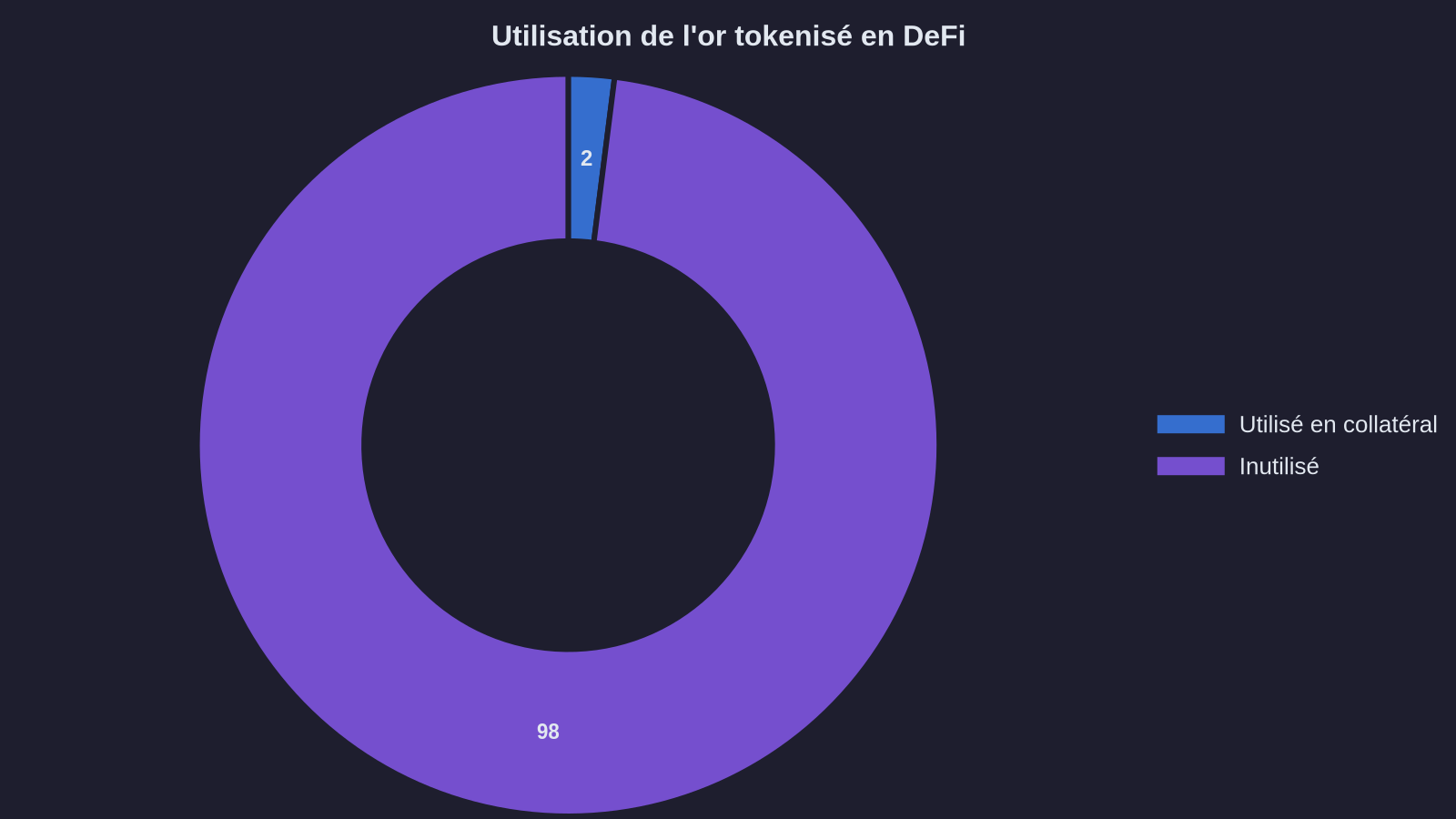
That's the promise of tokenized gold crypto-assets used as DeFi collateral, and it's working. Billions of dollars in gold are now represented on blockchain. Yet one figure stands out: barely 2% of this tokenized gold is actually used as collateral in DeFi protocols. The rest sits idle, unused.
This situation is a paradox. On one hand, tokenized gold sails through the technical stress test of DeFi: smart contracts work, price oracles are reliable, liquidity exists. On the other hand, real adoption remains niche. Why such a gap between potential and reality? And more importantly, what opportunities does this reveal for those who understand the underlying mechanisms?
Tokenized gold: just another DeFi asset?
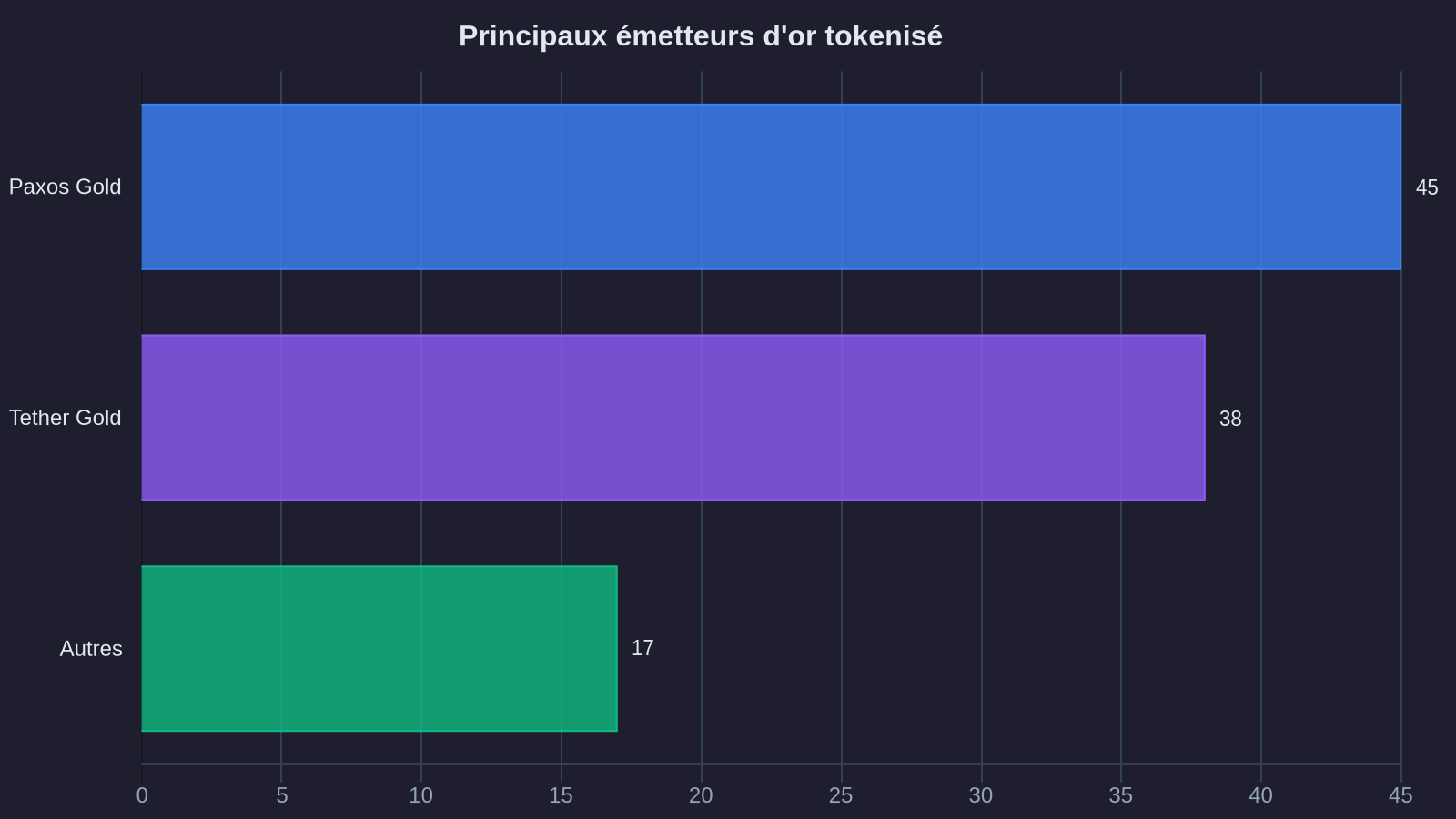
Let's start by clarifying what tokenized gold is. It's a digital token that represents a quantity of physical gold, stored in vaults verified by independent auditors. Each token typically equals one troy ounce of gold (roughly 31 grams). Leading issuers — Paxos Gold (PAXG) or Tether Gold (XAUT) — publish regular attestations proving the gold actually exists.
On paper, it's ideal collateral for DeFi. Gold is stable, globally recognized, and its value moves independently from volatile crypto-assets. Using tokenized gold as security to borrow stablecoins or ETH should be obvious. And technically, it works: protocols like Aave or Compound accept certain gold tokens, Chainlink oracles provide reliable prices, liquidations execute properly.
So why only 2% usage as collateral? Because passing the technical stress test isn't enough. The friction lies elsewhere.
The invisible friction slowing RWA crypto adoption
The first friction is regulatory. Holding tokenized gold often involves strict KYC (Know Your Customer) processes. Issuers like Paxos require identity verification before allowing purchases or redemptions of their tokens for physical gold. This isn't necessarily a problem for institutional investors, but it creates an asymmetry with DeFi's "permissionless" ethos.
As a result, many DeFi users prefer purely crypto collateral (ETH, BTC) that imposes no identity constraints. Tokenized gold becomes a niche asset, reserved for those who've already cleared regulatory hurdles.
The second friction is economic. Borrowing against tokenized gold is expensive. Not only are there annual management fees for the token itself (around 0.25% for PAXG), but DeFi protocols often apply high collateralization ratios. To borrow $1,000, you sometimes need to lock up $1,500 in tokenized gold. Add Ethereum gas fees to that, and the operation becomes unattractive for modest amounts.
Third friction: fragmented liquidity. Tokenized gold exists on multiple blockchains (Ethereum, Polygon, Arbitrum...), but liquidity pools remain scattered. Borrowing against tokenized gold on a secondary protocol can result in high spreads or difficulty exiting positions quickly. Arbitrageurs, who could theoretically bridge these gaps, don't engage heavily without sufficient volumes.
Real-world use cases: who's using tokenized gold collateral in DeFi?
Despite these frictions, some actors have found relevant use cases. We observe three main profiles.
Institutional investors seeking diversification. Some crypto funds use tokenized gold to reduce overall portfolio volatility without leaving the blockchain ecosystem. They deposit tokenized gold as collateral on Aave, borrow stablecoins, and reinvest in yield farming strategies. It's a way to generate returns on an asset traditionally passive, comparable to autonomous yield management strategies emerging in the DeFi ecosystem.
Arbitrageurs between crypto and traditional markets. When tokenized gold's price diverges slightly from physical gold's price (via ETFs or futures contracts), specialized traders borrow tokenized gold in DeFi, convert it for physical gold through the issuer, and profit from the difference. This mechanism keeps the token pegged to gold's real value.
Users avoiding capital gains taxation. In certain jurisdictions, borrowing against collateral isn't a taxable event. A tokenized gold holder can therefore access liquidity (by borrowing stablecoins) without selling their gold and triggering taxation. This is marginal but real usage, particularly for substantial wealth.
These use cases exist, but they remain niche. Most tokenized gold holders simply "hold" their asset, without seeking to optimize it through DeFi.
Yield arbitrage opportunities for real-world assets in DeFi
For a savvy investor, this situation creates opportunities. Low usage of tokenized gold in DeFi means borrowing rates are sometimes abnormally low. When demand to borrow against tokenized gold is weak, protocols offer attractive rates to incentivize usage. We've seen periods where borrowing stablecoins against PAXG cost less than 2% annually.
Combined with stablecoin yield farming strategies (which can earn 5-8% in stable periods), this opens an interesting arbitrage margin. Concrete example: you deposit $10,000 in tokenized gold, borrow $6,500 in stablecoins at 2%, deploy them on a Curve pool at 6%, and pocket the difference while maintaining your gold exposure.
The main risk? Liquidation if gold's price drops sharply. But historically, gold is less volatile than ETH or BTC, making these strategies more defensible over the medium term.
Another opportunity: price gaps between blockchains. Tokenized gold on Ethereum can be worth a few basis points more than on Polygon due to liquidity differences. Arbitrageurs use bridges to exploit these gaps, but the market remains under-exploited. There's room for more sophisticated players.
Toward broader adoption of tokenized crypto-assets?
Tokenized gold in DeFi is still in its early stages. The 2% collateral usage isn't a hard ceiling, but reflects a market still finding its balance. For broader adoption to occur, several developments are necessary.
First, regulatory clarity. If tokenized gold issuers can offer products compatible with DeFi standards while meeting KYC requirements, it will reduce a major friction point. We're beginning to see initiatives in this direction, particularly with "wrapped" tokens that separate the regulatory layer from the DeFi layer — an approach similar to what we see in Solana's infrastructure for tokenized securities.
Next, better technical integration. DeFi protocols must improve support for tokenized gold: more competitive collateralization ratios, deeper liquidity pools, seamless multi-chain integration. Some specialized protocols are beginning to emerge, specifically targeting real-world assets (RWA), of which tokenized gold is a part.
Finally, investor awareness. Many tokenized gold holders don't yet realize they can use it in DeFi. Education and interface simplification will play a key role. When borrowing against tokenized gold becomes as simple as sending an email, adoption will take off.
In the meantime, tokenized gold remains an under-exploited asset in DeFi. A paradox that, for those who can navigate the frictions, offers risk-adjusted returns often superior to classical crypto strategies. The technical stress test is passed. Now comes the real stress test: actual adoption.