
A French export company today settles its Asian suppliers in four business days, with bank fees ranging between 25 and 40 euros per international transfer. This same transaction could theoretically be completed in minutes via the Bitcoin network, for just a few euros in fees. Yet no sensible CFO would take this risk without traditional banking infrastructure backing it. This is precisely the paradox that recent partnerships between Mastercard, Binance, and PayPal are seeking to solve with integrated Bitcoin payment infrastructure and banking regulation.
These alliances between traditional financial institutions and major crypto-asset players are far more than a PR exercise. They represent a structural transformation: the emergence of a hybrid payment infrastructure where blockchain protocols and existing banking rails converge under regulatory constraints. For business leaders, understanding this evolution becomes strategic, both to anticipate new available services and to evaluate the risks associated with their adoption.
A dual-layer crypto banking infrastructure responding to real constraints
The emerging architecture rests on two layers. On one side, blockchain protocols (Bitcoin primarily, but also certain stablecoins) handle value transfer with their intrinsic characteristics: near-instant settlement, cryptographic traceability, and 24/7 accessibility. On the other, regulated actors (payment institutions, banks) provide the entry and exit points to the classical financial system, regulatory compliance, and fiat conversion.
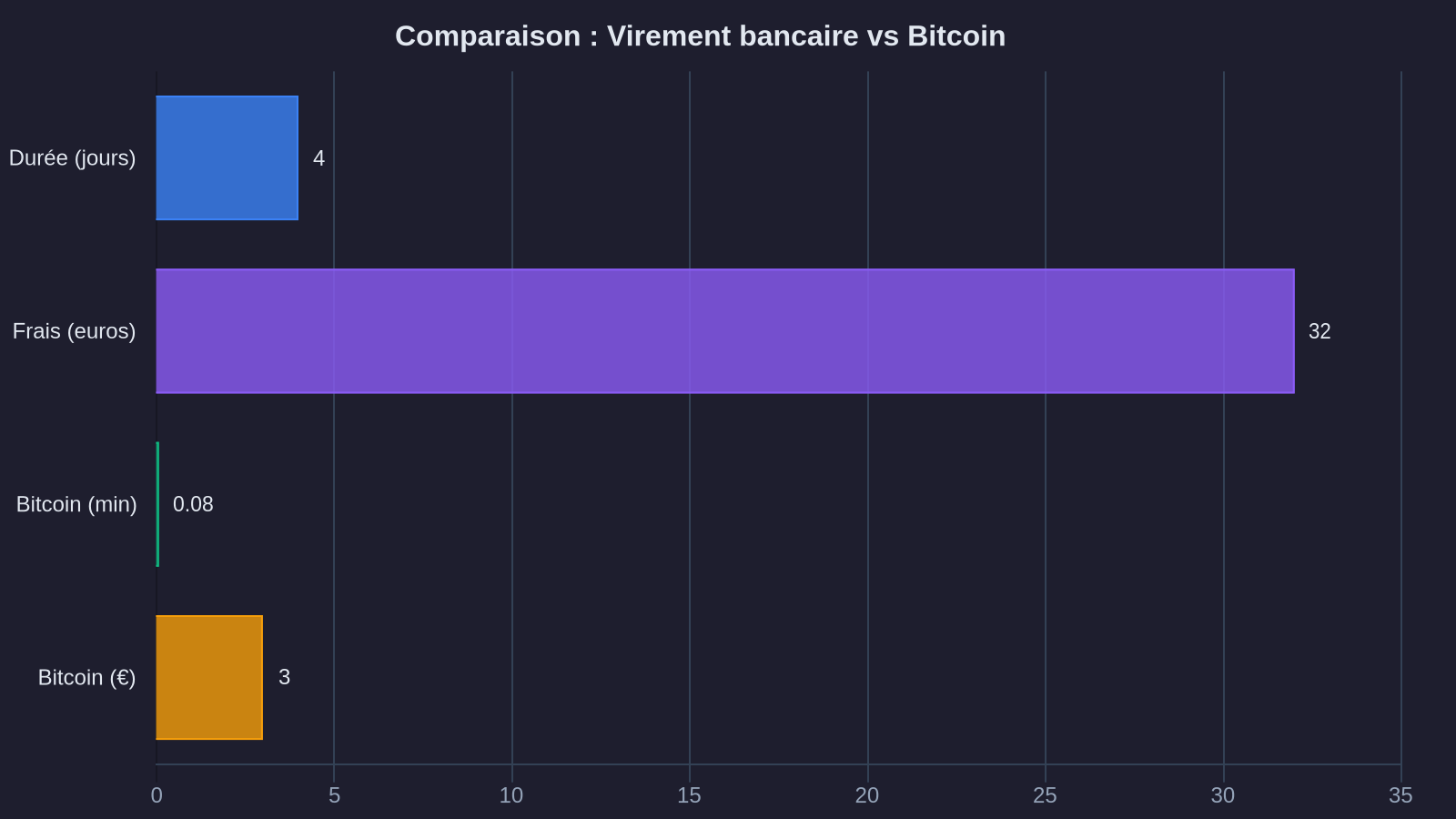
Consider a concrete example. A French SME with an account at a neobank partnered with Binance can today execute a euro transfer that will be converted to stablecoin (USDC or USDT), transferred via blockchain to the recipient, then reconverted to local currency. The complete operation takes a few hours, compared to several days via the traditional SWIFT circuit. Fees are reduced by approximately 60 to 70 percent compared to a standard international transfer.
This dual-layer infrastructure responds to a simple constraint: companies need accounting predictability and regulatory compliance, two aspects that crypto-assets alone cannot guarantee. Mastercard brings its merchant acceptance network and its capacity to handle millions of transactions per second. PayPal provides the familiar user interface and trust accumulated from hundreds of millions of accounts. Binance, for its part, offers crypto liquidity depth and blockchain technical expertise. Together, they build what crypto-only players or traditional banks alone could not construct in isolation.
The MiCA regulatory framework as a catalyst for institutional Bitcoin payment adoption
The progressive implementation of the European regulation MiCA (Markets in Crypto-Assets) since 2023 fundamentally reshapes the landscape for Bitcoin payments and regulation. Contrary to popular belief, MiCA does not aim to stifle crypto innovation, but to channel it within a prudential framework comparable to that of classical financial institutions.
For the partnerships discussed, MiCA actually acts as an accelerator. Crypto-asset service providers (CASP) must now obtain authorization from their national authority (the AMF in France), respect capital adequacy requirements, implement risk governance, and segregate client assets from their own. These constraints, onerous for an isolated crypto player, become manageable within a partnership with a financial institution that already masters these processes.
We are indeed seeing market rationalization. Many small European crypto platforms are closing or being acquired, lacking the means to comply with MiCA. Meanwhile, major players like Binance are investing heavily in compliance teams and transaction monitoring systems. Partnership with Mastercard or PayPal gives them access to decades of anti-money laundering expertise and customer due diligence competencies that would otherwise take years to build internally.
For a French company considering these services, MiCA provides substantial guarantee. Funds deposited on a MiCA-authorized platform benefit from strict accounting segregation. In case of operator insolvency, client assets cannot be seized by creditors. This protection, comparable to that of a classical bank account (outside deposit guarantee schemes), significantly reduces operational risk.
Concrete implications for corporate treasury management
These hybrid infrastructures unlock three primary use cases for companies, each with its own advantages and limitations.
First case: international supplier payments. A company regularly importing from Southeast Asia can reduce its settlement timeframes and costs. Concretely, instead of paying 35 euros in bank fees plus 0.3 percent foreign exchange commission for a 10,000 euro transfer to Thailand (totaling about 65 euros), it would pay approximately 25 euros via a hybrid Bitcoin or stablecoin solution. The unit savings may seem modest, but over a hundred annual transactions, we're talking about 4,000 euros in savings. More importantly, the timeframe drops from three to four days to just hours, which strengthens supplier relationships and can open tariff negotiation opportunities.
Second case: diversifying a portion of operating treasury. Some companies allocate a limited share (typically between 2 and 5 percent of available treasury) to crypto-assets via these regulated platforms. The objective is not speculative but patrimonial: diversifying currency devaluation risk, particularly relevant for export companies exposed to multiple currencies. This strategy remains marginal and requires rigorous governance. The board of directors or general assembly must explicitly validate this allocation, which should appear in the notes to the annual financial statements. The risk of capital loss remains substantial, with Bitcoin historically experiencing variations exceeding 50 percent over twelve-month periods.
Third case: accepting customer payments in crypto-assets. B2B or B2C companies can offer Bitcoin or stablecoins as payment methods via Mastercard or PayPal solutions. The service provider handles instantaneous euro conversion, with the company bearing no volatility risk. Transaction fees remain comparable to standard credit card rates (between 1.5 and 2.5 percent), but this option can attract an international or tech-savvy clientele. Currently, volumes remain negligible (less than 1 percent of revenue for most testing companies), but the trend warrants monitoring.
Persistent risks and trade-offs to navigate
Despite growing regulatory oversight, several risks persist and require case-by-case analysis.
First, technological risk. Blockchain infrastructures, though mature, still experience incidents. Bitcoin network congestion can multiply transaction fees tenfold in hours. A security flaw in a stablecoin smart contract can cause irreversible losses. Partnerships with Mastercard or PayPal mitigate this risk through guarantee and insurance mechanisms, but don't eliminate it entirely.
Next, counterparty risk. Binance, despite its size, remains a private company subject to varying regulatory pressures across jurisdictions. Its exit from certain markets (Canada, Netherlands) or disputes with U.S. authorities illustrate this fragility. A company externalizing part of its payment flows through such infrastructure must have a continuity plan in case of operator failure. This means never holding more than a few days of treasury on these accounts and maintaining classical banking circuits in parallel.
Finally, tax risk. Accounting for crypto-assets on a company's balance sheet falls under either financial fixed assets or inventory classification, depending on management intent. Any latent gains or losses must be provisioned. Standard corporate tax companies are taxed at the normal rate (25 or 26.5 percent depending on size) on realized gains, with no holding period abatement. This heavier taxation than for individuals reduces the appeal of crypto allocation for patrimonial purposes. It makes transactional uses (supplier payments) relatively tax-neutral, since fiat-to-crypto-to-fiat conversion happens instantaneously without generating significant gains.
What stance should a CFO adopt
Facing these developments, three positions emerge among corporate finance departments.
The first, a wait-and-see approach, involves observing without acting. It's justified for companies with marginal international flows or whose available treasury doesn't permit allocation beyond classical monetary placements. No urgency to implement crypto solutions if the business need doesn't exist. This stance requires regular monitoring, however, as regulatory and competitive changes can shift rapidly.
The second, an experimental approach, involves small-scale testing. Opening an account on a MiCA-regulated platform, executing a few supplier transfers in stablecoin, measuring actual cost and timeline gains. This approach limits risk while building competency. It requires rigorous documentation of each operation and deriving quantified learnings for senior management.
The third, an integrative approach, aims to embed these hybrid solutions in standard company processes. This primarily concerns significant export or import companies with high international transaction volumes. Economies of scale then justify organizational investment (accounting team training, IT system adaptation, renegotiating banking terms). This stance requires sponsorship at C-suite level and structured dialogue with your external auditor on control and valuation methods.
In all cases, the decision to use or not these hybrid infrastructures must stem from a documented cost-benefit-risk analysis, not from trend-chasing or technological fascination. A strong CFO evaluates these new tools with the same rigor as a bank change or ERP investment: by factually comparing operational gains against implementation constraints.
The emergence of a hybrid Bitcoin payment and banking regulation infrastructure, driven by partnerships between traditional financial giants and major crypto players, marks a normalization milestone. The MiCA framework accelerates this convergence in Europe. For companies, opportunities exist, measurable in cost and timeline reduction on international payments. But they come with technological, counterparty, and tax risks requiring adapted governance. The question for leaders is no longer whether these tools will spread, but at what pace and under what conditions they can serve their treasury management strategy without compromising the company's financial stability.