A DeFi protocol that generates 8% annual yield may look attractive on paper. But if that protocol allows sanctioned addresses to freely interact with its smart contracts, it exposes itself to considerable legal risks. The reality that developers and crypto treasury managers are facing today is unambiguous: the absence of OFAC compliance mechanisms now constitutes a material risk to project sustainability.
The Office of Foreign Assets Control (OFAC) of the U.S. Treasury Department regularly publishes a list of "Specially Designated Nationals" (SDN), which includes crypto wallet addresses associated with illicit activities. Since the Tornado Cash sanctions in August 2022, the question is no longer theoretical: decentralized protocols must integrate compliance controls without compromising their architecture.
For a company considering allocating a portion of its treasury to crypto yield strategies, understanding how underlying protocols manage this compliance is not optional. It's essential due diligence.
Why OFAC has become a technical issue for DeFi protocols
Decentralized finance relies on open and permissionless smart contracts. This architecture offers liquidity and transparency, but it also exposes protocols to interactions with sanctioned addresses. The risk is not merely reputational: it is legal and financial.
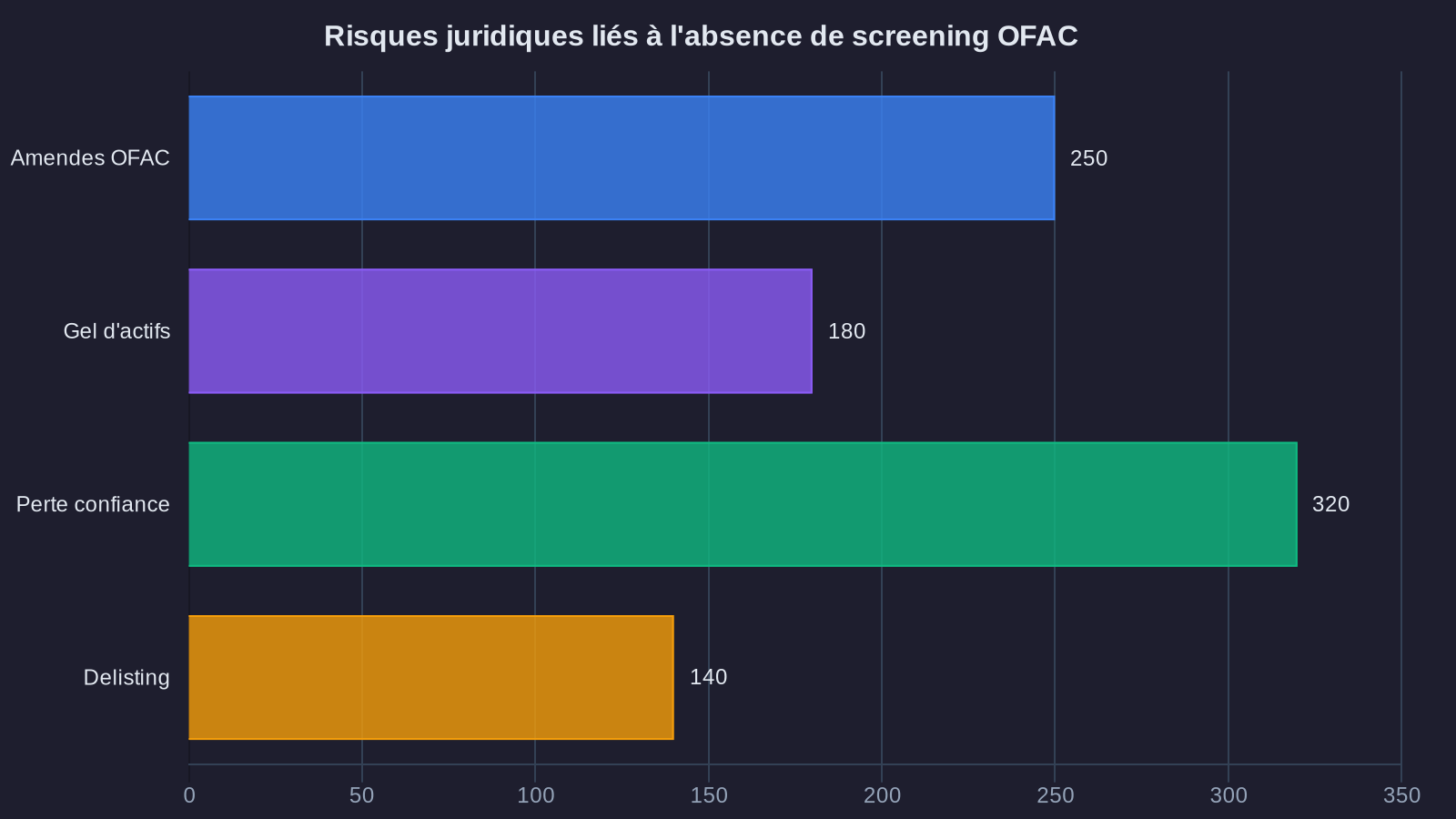
Let's take a concrete example. A decentralized lending protocol allows any Ethereum address to deposit collateral and borrow stablecoins. If an address listed on OFAC's SDN list interacts with this protocol, several consequences can follow:
- Centralized exchanges may refuse to list the protocol's governance token
- Institutional partners may withdraw from the project
- Developers and contributors face potential personal legal action
- Institutional liquidity withdraws, affecting market depth and yields
This reality creates an architectural tension. How can one maintain decentralization and censorship resistance while complying with legal obligations that apply to actual economic actors? The technical answer involves multiple levels of intervention. Some institutional firms are moreover monitoring prediction markets as a barometer of geopolitical risks that could impact regulatory compliance.
Technical approaches to integrating OFAC screening for developers
Integrating compliance controls into a DeFi protocol can be done at several levels of the technical stack. Each approach presents different trade-offs between decentralization, operational cost, and control effectiveness.
Screening at the user interface level
The first line of defense consists of blocking interface access for addresses identified as sanctioned. This method is simplest to implement: the web application queries a screening API before authorizing a wallet connection.
In practice, when a user attempts to connect their MetaMask wallet to a protocol's interface, an API call verifies the address against the SDN lists. If the address is flagged, access is denied. Services like TRM Labs, Chainalysis, or Elliptic provide real-time screening APIs.
The obvious limitation of this approach is that it only protects the official interface. A technically skilled user can interact directly with smart contracts via Etherscan or by deploying their own interface. Nevertheless, this method satisfies due diligence requirements and protects the majority of non-technical users.
Smart contracts with whitelists or blacklists
A more restrictive approach involves integrating access control logic directly into smart contracts. The contract maintains a list of authorized addresses (whitelist) or prohibited addresses (blacklist), and critical functions verify this list before each execution.
This method has an advantage: it applies regardless of which user interface is used. But it raises major governance questions. Who maintains these lists? How frequently are they updated? Which entity has the power to add or remove an address?
Some protocols have opted for multi-signature governance with a security timelock. A proposal to add addresses to the blacklist must be approved by several independent signatories, and a 48-hour delay applies before execution. This setup limits the risk of abuse while allowing reasonable responsiveness.
The gas cost of this approach is not negligible. Each transaction must query an on-chain mapping, which increases fees for all users. On Ethereum mainnet, this can represent several tens of dollars per transaction during periods of congestion.
Decentralized compliance oracles
A third approach explores using decentralized oracles to feed smart contracts with compliance data. Chainlink, for example, could theoretically provide an OFAC data stream verified by a network of independent nodes.
This architecture has the advantage of separating the data source (OFAC) from the application logic (the smart contract), while maintaining a level of decentralization. Multiple oracle nodes independently verify the SDN lists and only transmit the information to the contract if consensus is reached.
The main remaining obstacle is legal: OFAC does not offer an official API for automated use, and responsibility for interpreting the lists falls to each operator. An oracle that transmitted false information (false positives or false negatives) would expose the protocol to non-compliance risks.
Implications for crypto treasury management
For a CFO evaluating the allocation of a portion of company treasury to crypto yield strategies, these technical considerations have direct consequences on risk analysis.
A protocol that implements no OFAC screening mechanism presents a non-negligible compliance risk. This risk can materialize in several ways:
Liquidity risk: if the protocol faces regulatory action, exchanges may suspend trading of its governance token, and institutional investors may withdraw en masse. Liquidity collapses, making it difficult or impossible to exit positions under normal conditions.
Counterparty risk: DeFi protocols that attract institutional capital must demonstrate high compliance standards. A protocol that tolerates interactions with sanctioned addresses loses access to these capital sources, which affects the depth of its liquidity pools and mechanically impacts the yields it can offer.
Reputational risk: a company whose treasury is exposed to a protocol involved in an OFAC non-compliance incident faces difficult questions from its auditors, partner banks, and potentially its regulatory authorities.
Due diligence should therefore include a technical assessment of the protocol's compliance. Here are the concrete questions to ask:
- Does the protocol implement OFAC screening at its official interface level?
- Do smart contracts integrate access control logic? If so, how is it governed?
- Does the protocol work with recognized compliance solution providers (TRM Labs, Chainalysis, Elliptic)?
- Is there public documentation on the compliance procedures adopted?
- Has the protocol undergone a security audit that includes a compliance component?
These criteria do not guarantee the absence of risk entirely, but they allow you to identify protocols that take this dimension seriously. Technical security remains equally important, particularly to protect your assets against sophisticated attack vectors.
The French and European regulatory framework on crypto compliance
The MiCA regulation (Markets in Crypto-Assets), applicable in the European Union since 2024, imposes strict compliance obligations on crypto-asset service providers (CASP), including anti-money laundering and counter-terrorism financing measures. These obligations naturally extend to compliance with international sanctions, including those from OFAC.
In France, the AMF and ACPR supervise registered entities. A CASP that offered institutional clients exposure to non-compliant DeFi protocols would expose itself to administrative sanctions and potential withdrawal of its authorization.
For a French company allocating a portion of treasury to crypto yield strategies, it is therefore essential to work with regulated partners who integrate these compliance controls into their protocol selection process. Responsibility does not rest solely with the underlying protocol, but also with the intermediary structuring the exposure.
This approach makes it possible to reconcile yield-seeking and rigorous compliance risk management. A cash surplus of 500,000 euros can be allocated to DeFi protocols selected according to strict technical and regulatory criteria, without exposing the company to disproportionate legal risks. The emerging regulated tokenized products illustrate this evolution toward institutional compliance standards.
Recommendations for a pragmatic approach to DeFi compliance
OFAC compliance in DeFi is not an insurmountable obstacle, but it requires rigorous technical due diligence. For executives and CFOs considering crypto allocation, here are actionable recommendations:
Prioritize protocols transparent about their compliance. A protocol that publicly documents its screening procedures and collaborates with recognized compliance solution providers presents a lower risk profile.
Work with regulated partners. A CASP registered in France or Europe assumes a portion of compliance responsibility by selecting underlying protocols. This intermediation simplifies legal risk management.
Audit your exposure regularly. SDN lists evolve, and a protocol compliant today may be affected tomorrow by new sanctions. Quarterly review of your allocation allows you to identify early warning signals.
Document your due diligence. In the event of an audit by your auditors or regulatory authorities, the ability to demonstrate that you rigorously assessed OFAC compliance risk constitutes a strong defense.
Regulatory compliance is not an obstacle to crypto diversification of corporate treasury. It is a condition of its sustainability. Protocols that integrate these constraints from their inception are those that will durably attract institutional capital and deliver the most stable returns over the long term.