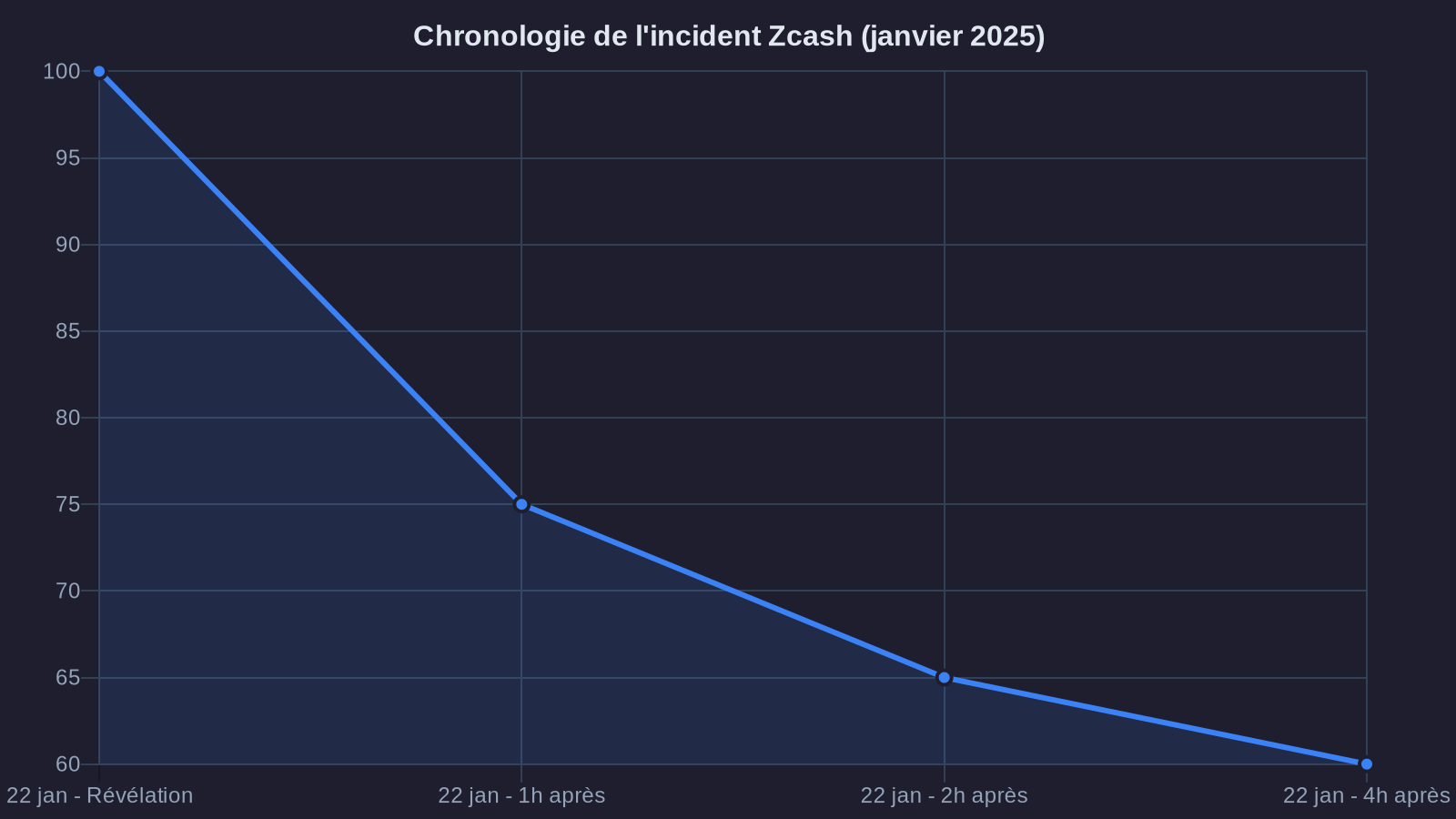
On January 22, 2025, Zcash lost 40% of its value in just a few hours. Not due to a fleeting panic or regulatory announcement. No, this time the reason was far more serious: the disclosure of a critical Zcash vulnerability that allowed tokens to be created from thin air. A bug present in the code for four years. Four years during which anyone with sufficient knowledge could have manufactured ZEC out of nothing, without anyone noticing.
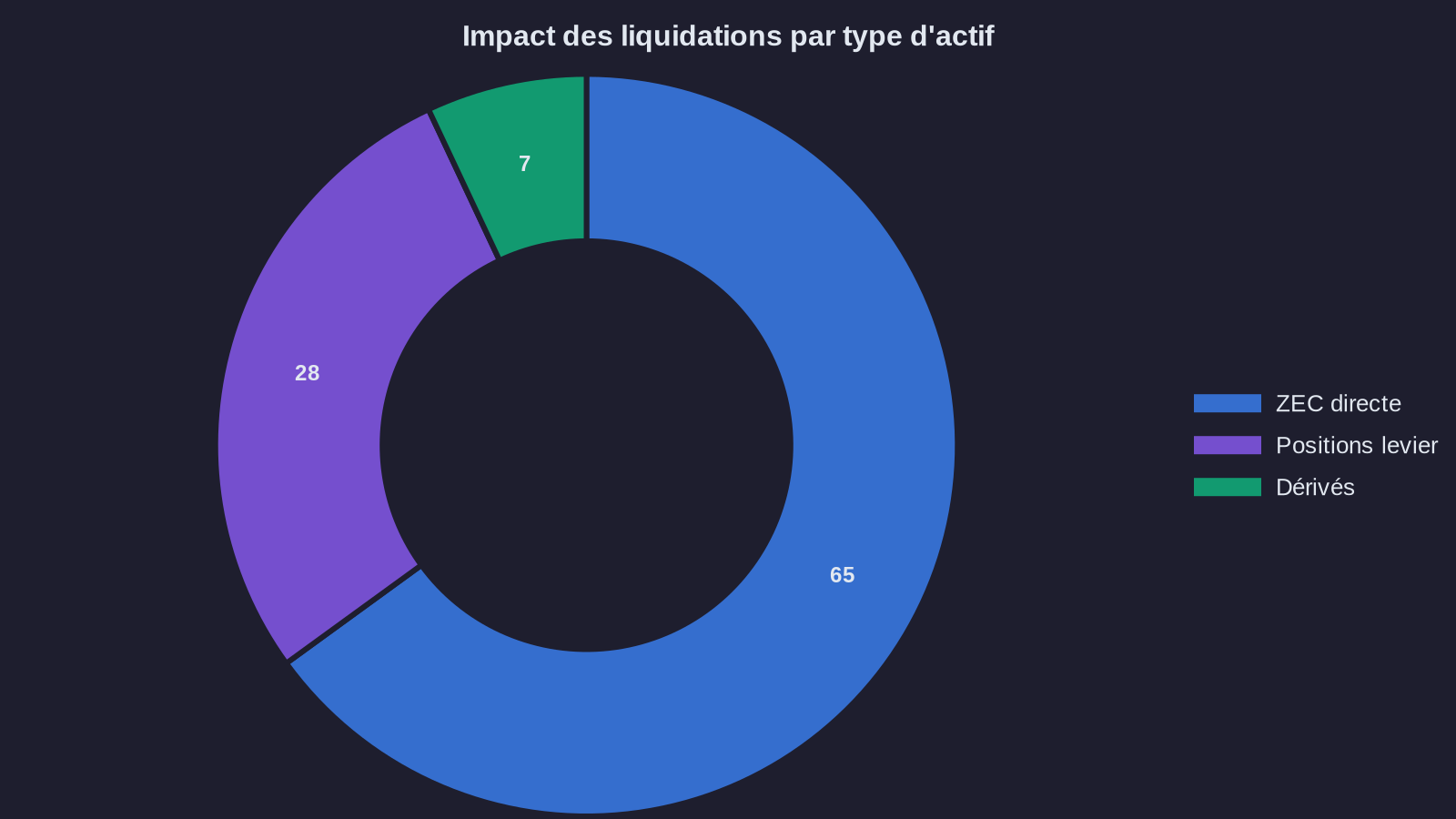
The shockwave was immediate. Over $100 million in positions liquidated on leveraged trading platforms. Investors caught in the trap, portfolios decimated, and above all one question looping endlessly: how could such a DeFi security flaw go unnoticed for so long on a protocol positioning itself as the reference for privacy?
This incident goes far beyond the Zcash case. It raises fundamental questions about the security of decentralized protocols, the trust we can place in code audits, and the real risks investors take when exposing themselves to assets whose technical complexity exceeds their understanding. A situation that echoes other major incidents, like when $292 million evaporated overnight on Kelp DAO.
Anatomy of a catastrophic vulnerability
The flaw discovered in Zcash was not a simple display bug or minor performance issue. It was a counterfeiting vulnerability, quite literally monetary counterfeiting. Concretely, the code contained an error in the verification mechanism for shielded transactions — those private transactions that are precisely what makes Zcash unique.
On a standard blockchain like Bitcoin, every transaction is transparent. You can verify that the bitcoins being spent actually exist, that they haven't been spent twice, and that the total balance of the network remains consistent. Zcash, with its zk-SNARK technology, allows masking the sender, recipient, and amount of a transaction. This privacy is precisely what makes verification infinitely more complex.
The bug resided in this complexity. An error in verifying cryptographic proofs made it possible to construct a transaction that appeared valid to the network, while actually creating tokens without any backing. Imagine an ATM that, due to a programming flaw, would let you withdraw money without debiting your account. That's exactly the mechanism that was possible on Zcash for four years.
The discovery didn't come from an external auditor or security researcher. It was identified during an internal code review, which raises another question: how many people potentially discovered and exploited this flaw before it was publicly revealed? Impossible to know for certain. That's precisely this uncertainty that triggered market panic.
Market reaction: brutal and unforgiving
When the information started circulating, the reaction was immediate. Zcash's price, which had been trading around $58, collapsed to $35 in less than six hours. A 40% drop that left no chance for investors in leveraged positions.
On decentralized trading platforms and centralized exchanges offering leverage, crypto bug liquidations cascaded. Over $100 million in positions forcefully closed. Traders who had bet on ZEC recovering found themselves with total losses. Stop-loss orders didn't even have time to execute properly, the decline was so steep and the order book so imbalanced.
This violence is explained by a simple mechanism: once a flaw of this magnitude is revealed, nobody wants to be the last one selling. Confidence evaporates instantly. Long-term holders wonder if their ZEC holdings haven't been diluted without their knowledge over the past four years. Active traders flee to assets deemed safer. And trading algorithms mechanically amplify the movement.
Some investors tried to capitalize on the drop by buying "the dip." A risky strategy in the face of such an event. Because unlike a simple technical correction, this decline reflects structural loss of confidence. Buying an asset when you don't know if the actual monetary supply matches what's displayed is taking a difficult-to-quantify risk — a risk that underscores the importance of understanding risk metrics like drawdown.
What this incident reveals about DeFi security
The Zcash incident is not an isolated case. It's part of a long series of critical vulnerabilities discovered on protocols deemed mature. In 2024 alone, Chainalysis recorded over $3.2 billion stolen through smart contract exploits, compromised bridges, and protocol flaws.
What's striking here is how long the bug remained undetected. Four years. Zcash underwent multiple security audits by reputable firms. The code is open source, accessible to thousands of developers and cryptography researchers. And yet, nobody detected this flaw before 2025.
This raises a straightforward question: if a protocol as scrutinized as Zcash can harbor a critical vulnerability for four years, what about the hundreds of DeFi protocols launched each year, with smaller teams, limited audit budgets, and sometimes even greater technical complexity?
Code audits, even conducted by recognized players, are not absolute guarantees. They certify that the code was examined at a specific point in time, according to a defined scope, by competent yet human auditors. A flaw can reside in a subtle interaction between multiple components, in an edge case never tested, or in an incorrect design assumption.
For you as an investor, this means one thing: technical risk is never zero. Even on established protocols. Even after multiple audits. The only realistic protection is to never concentrate your entire exposure on a single protocol, however solid it may seem.
Concrete implications for your strategy
Facing this type of event, several lessons can be drawn to protect your capital.
First point of vigilance: technical complexity is a risk factor in itself. The more sophisticated a protocol, the larger the attack surface, and the harder it becomes to guarantee the absence of flaws. Privacy technologies like zk-SNARKs are remarkable from a cryptographic standpoint. They're also extremely complex to implement correctly. If you invest in high-tech protocols, you must factor this risk into your allocation.
Second lesson: blockchain transparency only protects what it makes visible. On Zcash, precisely because transactions can be shielded, it was impossible to detect fraudulent token creation simply by analyzing the blockchain. Some protocols have implemented proof-of-reserves mechanisms or public monetary supply verification. Their absence is a red flag, particularly for assets intended as stores of value.
Third point: protocol governance matters as much as the code. In Zcash's case, the flaw was publicly disclosed after its correction. Some protocols might have been tempted to hide the information to avoid panic. The transparency adopted by the Zcash team deserves to be noted, even if it doesn't erase four years of vulnerability. When evaluating a protocol, ask yourself how past incidents were handled. Teams that communicate openly about their flaws are generally more reliable than those that minimize or conceal them.
Fourth lesson: leverage multiplies losses during unexpected events. The $100 million in liquidations primarily involved leveraged positions. Investors who, without leverage, would have suffered a 40% loss on their Zcash position but kept their tokens. With 3x leverage, the same decline triggered total liquidation. On volatile assets with technical risk like cryptocurrencies, leverage use must be handled with extreme caution.
Checklist for protecting against protocol risks
If you hold assets on DeFi protocols or cryptocurrencies with strong technical components, here are checks to perform regularly:
- Protocol diversification: never concentrate more than 20% of your crypto exposure on a single protocol, however audited it may be.
- Audit verification: consult public audit reports. Their existence guarantees nothing, but their absence is a dealbreaker.
- Official channel monitoring: follow security announcements from protocols you're exposed to. Vulnerabilities are often announced urgently.
- Limited leverage use: if you use leverage, set yourself a strict limit (ideally 2x maximum) and place tight stop-losses.
- Liquidity reserve: keep a portion of your portfolio in stablecoins or fiat to be able to react without being forced to sell in panic.
The key point of vigilance
The Zcash incident reminds us of a reality often downplayed: blockchain immutability doesn't protect against bugs in the code that governs it. A protocol can be decentralized, audited, open source, and still carry a critical flaw for years.
For you, this requires discipline: never invest in a protocol whose fundamental mechanisms you don't understand, and never assume a crypto asset is free from technical risk, regardless of its age or market cap.
Trust in DeFi doesn't rest on the absence of bugs — they will always exist — but on protocols' ability to detect them quickly, correct them transparently, and implement protection mechanisms to limit the impact of future flaws. Zcash failed on the first point. The question now is how the protocol and community will rebuild lost confidence.
If you hold ZEC or are exposed to similar privacy protocols, now is the time to audit your allocation and ask yourself: am I ready to assume this level of technical risk? The answer to this question should guide your decisions far more than any price forecast.
```