
On March 12, 2026, Chainalysis activated its first autonomous AI agents dedicated to detecting illicit activity on blockchain. These systems do more than analyze transactions: they trace flows in real time, anticipate money laundering patterns, and automatically generate compliance reports actionable by regulators. For exchange platforms and financial institutions integrating crypto, this evolution is a game-changer.
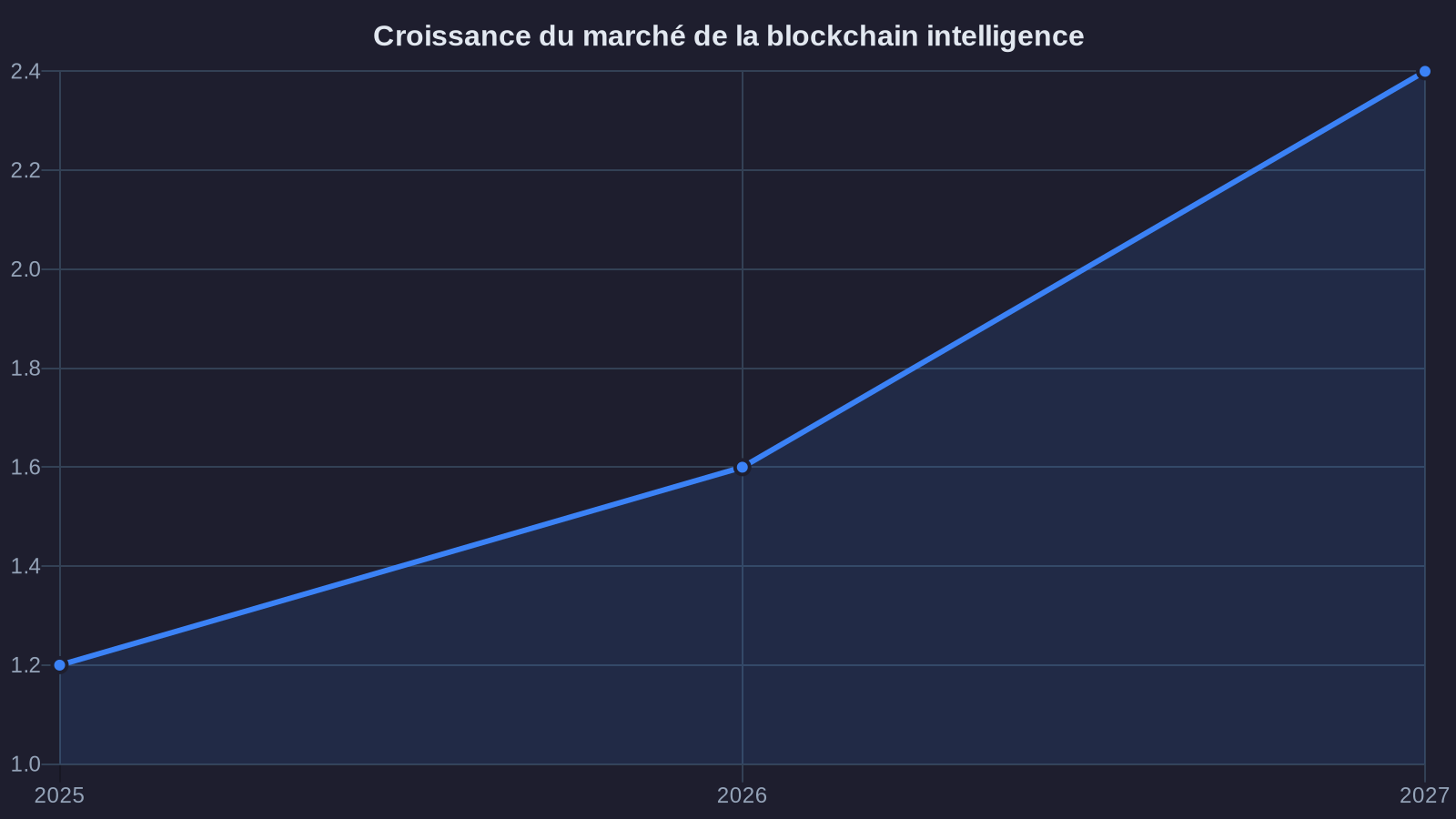
The blockchain intelligence market was worth $1.2 billion in 2025. The arrival of autonomous AI could double that figure by 2027, according to Gartner. But beyond the projections, it's the very nature of blockchain surveillance that's evolving. Crypto criminals must now contend with systems capable of learning from their evasion strategies in hours, not months.
What these blockchain compliance AI agents actually do
A blockchain compliance AI agent isn't just monitoring software. It's an autonomous system that combines multiple layers of analysis: detection of suspicious transaction patterns, correlation with risk databases, money laundering scenario simulation, and report generation compliant with local KYC/AML requirements.
Concretely, these Chainalysis AI agents continuously monitor hundreds of blockchains simultaneously. They identify wallets linked to ransomware, trace funds from exchange hacks, and spot mixers used to obscure asset origins. The difference from previous systems? Speed and adaptability.
Chainalysis reports that its agents reduced complex money laundering pattern detection time by 73% during the testing phase conducted with six major exchanges between January and February 2026. A human system typically took an average of 6 days to link a criminal wallet to its destination addresses via multi-chain mixers. The AI agent accomplishes this in 4 hours.
This performance relies on continuous learning. Every new money laundering attempt detected enriches the models. Criminals recycling their methods get caught instantly. Those who innovate leave traces that AI analyzes to anticipate future variants, echoing how North Korea had to adapt its money laundering strategies via DeFi in the face of increased surveillance.
The impact on decentralized platforms
DEXs (decentralized exchanges) and DeFi protocols find themselves in a delicate position. Their founding promise — the absence of intermediaries and transaction privacy — collides head-on with regulatory compliance requirements. Chainalysis AI agents can trace flows passing through Uniswap, Curve, or Aave as easily as on a centralized exchange.
Several DeFi protocols have already integrated verification modules powered by Chainalysis. Aave announced on March 8, 2026, the activation of an automatic blocking system for addresses flagged as high-risk. Users whose wallets appear on OFAC sanctions lists or are linked to criminal activity are denied access to liquidity pools. The measure affects approximately 0.3% of active addresses, but it marks an ideological turning point.
Decentralization purists denounce a drift toward "permissioned DeFi." Pragmatists counter that institutional adoption requires compliance guarantees. A regulated investment fund can't deploy $50 million on a protocol that also serves to launder ransomware proceeds.
Monthly volume processed by crypto mixers fell 41% between February and March 2026, according to public blockchain data. Tornado Cash, despite its official closure in 2022, continues to function via forks. But the effectiveness of these anonymization tools diminishes against AI agents capable of analyzing timing patterns, fractional amounts, and reinsertion into the legal circuit.
Regulators validate blockchain compliance automation
The French Financial Markets Authority (AMF) and the British Financial Conduct Authority (FCA) published on March 10, 2026, a joint report on the use of AI in crypto-asset supervision. The document explicitly validates the use of autonomous agents for detecting violations, provided final decisions remain made by humans.
This distinction is crucial. An AI agent can flag a suspicious wallet and temporarily block a transaction, but it cannot launch a criminal investigation or permanently freeze assets without human validation. Regulators impose a "hybrid decision circuit" where AI detects and recommends, while a compliance operator validates and initiates procedures.
The U.S. SEC has been testing since January 2026 a similar system developed by Elliptic, Chainalysis's direct competitor. The goal: automatically identify unregistered token offerings and pump-and-dump schemes on DEXs. Early results show a 280% increase in the number of cases handled compared to the previous quarter, with detection times cut by five.
For regulated exchange platforms, these crypto AML intelligence tools become indispensable. Coinbase announced on March 5, 2026, the complete integration of Chainalysis agents into its compliance infrastructure. Binance followed on March 14. Exchanges that resist this evolution risk losing their licenses in the strictest jurisdictions.
What ForYield thinks
The arrival of compliance AI agents accelerates professionalization of the crypto market. For the institutional investors we advise, this is great news. Reduced regulatory risk and strengthened flow traceability facilitate allocation of significant capital to blockchain strategies.
Our portfolios use only protocols that integrate robust compliance standards. This approach allowed us to avoid exposure to sanctioned platforms or tokens issued without a clear legal framework. The increased effectiveness of surveillance tools reinforces this strategy.
The average return of our yield farming strategies on regulated DeFi protocols stands at 8.4% APY in the first quarter of 2026, versus 12.7% on non-compliant protocols but exposed to sanction risk. The performance gap doesn't justify regulatory risk, especially in a context where authorities now have near-instantaneous detection tools at their disposal.
For retail investors, the recommendation remains the same: prioritize transparent platforms that collaborate with regulators. The exceptional returns promised by opaque protocols often hide fraudulent schemes that will ultimately end up in the sights of Chainalysis or Elliptic AI agents. When surveillance technology evolves this quickly, crypto crime becomes an activity with very short shelf-life. This evolution fits into the broader transformation of asset management through intelligent automation.
Data from March 18, 2026, shows Bitcoin holding steady at $68,200, up 3% over 7 days, while Ethereum advances 5% to $3,840. This stability partly reflects increased institutional confidence in a better-monitored ecosystem. Adoption continues, but on healthier foundations.