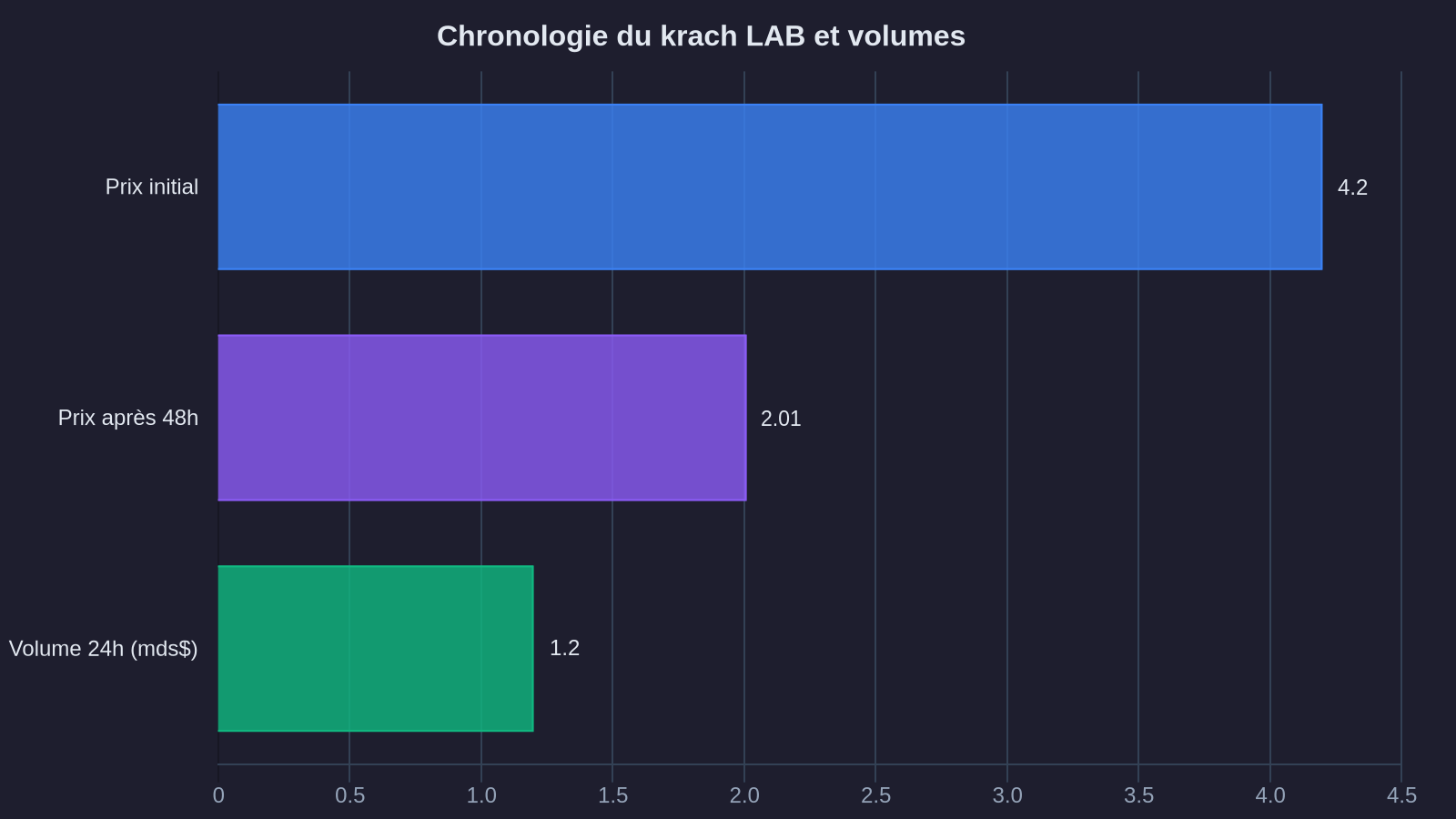
On March 17, 2026, ZachXBT published a detailed investigation accusing the team behind LAB of orchestrating a market manipulation scheme of unprecedented scale: $6 billion. Within 48 hours, the LAB token plummeted 52%, falling from $4.20 to $2.01. Trading volumes surged 380% in the 24 hours following publication, reaching $1.2 billion according to CoinGecko data.
This case raises questions that extend far beyond LAB alone. It shines a light on the manipulation mechanisms that certain players deploy on crypto markets, and the current limits of surveillance in a sector that remains largely unregulated.
What ZachXBT's investigation reveals about LAB manipulation
ZachXBT, an on-chain investigator recognized for exposing several major fraud cases, published an 87-page report tracing suspicious fund movements. The analysis covers 14 months of blockchain activity, from November 2024 to January 2026.
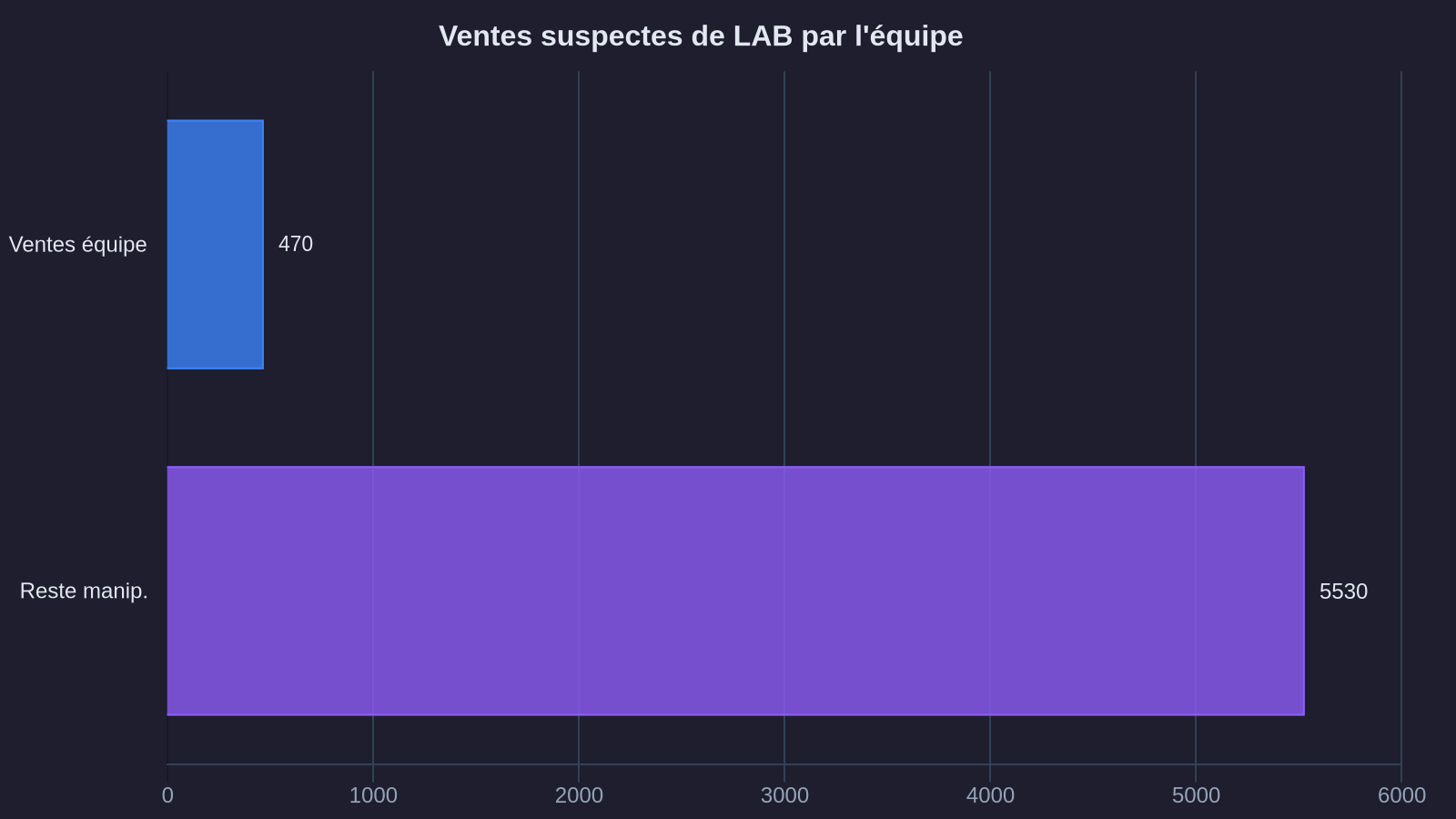
The accusations center on three primary mechanisms. First: wallets linked to the founding team allegedly sold $470 million worth of LAB tokens between March and December 2025, while official communications claimed complete token lock-up for team allocations until 2027. The transactions were fragmented across 127 different addresses, then routed through mixers before being converted to stablecoins.
Second element: apparent coordination with market makers. ZachXBT identifies repetitive trading patterns on Binance and Bybit. On 18 occasions between April and November 2025, massive purchases (between $15 and $40 million) preceded partnership announcements or technical updates by just a few hours. The token systematically surged 20 to 35% within 4 hours of these purchases, before correcting in the following days.
Third component: suspected wash trading. The investigation shows that 34% of reported volumes on decentralized exchanges came from 8 addresses controlled by the same entities. These addresses executed back-and-forth trades without significant price variation, artificially inflating the liquidity metrics displayed on aggregators. A technique reminiscent of dominant crypto scams in 2025.
Market and platform reaction
The response was immediate. Binance suspended LAB deposits on March 18 at 14:00 UTC, "pending review of the allegations." Coinbase announced "enhanced monitoring" without suspension. Gate.io and Bybit maintained trading but added warning banners on the affected pairs.
Liquidations reached $89 million in the first 12 hours. Leveraged long positions were hardest hit: on Binance Futures, 67% of liquidations involved longs with an average leverage of 8.4x. Implied volatility on LAB options jumped 140%, making any hedging strategy prohibitively expensive.
The LAB team published a statement on March 18, calling ZachXBT's investigation "speculative and misleading." The text contested the accusations point by point, claiming that the identified wallets belonged to unaffiliated early investors, and that the trading patterns reflected normal volatility in a bull market. No on-chain data was provided to support these claims.
What this means for your crypto exposure
This case illustrates a structural risk of crypto markets: the information asymmetry between insiders and retail investors. Unlike regulated markets where insider sales are publicly disclosed with mandatory delays, public blockchains technically allow traceability, but this requires technical expertise that few investors possess.
For portfolios with direct LAB exposure, the decision is binary. If you hold LAB acquired above $3, the unrealized loss is already substantial (minimum -33% at the current rate of $2.01 as of 03/18/2026). Selling now crystallizes the loss but limits downside risk if regulators launch a formal investigation. Holding implies betting on a complete invalidation of the accusations—a possible scenario but statistically unfavorable given the on-chain evidence presented.
For diversified portfolios, the impact depends on LAB's weighting. Exposure below 2% of total assets remains manageable in a balanced strategy. Beyond that, idiosyncratic risk becomes material. Correlations with the rest of the crypto market remain weak for now: Bitcoin moved +1.2% and Ethereum -0.8% over the same period, confirming that the shock remains contained.
Signals to watch in the coming weeks
Three indicators will determine how this case evolves. First: regulatory response. If the SEC or AMF opens an investigation, major exchanges will likely suspend trading to avoid any liability risk. Similar precedent: the Terraform Labs case in May 2022 led to delisting on 14 platforms within 72 hours after the SEC opened proceedings.
Second signal: on-chain movements of the identified addresses. If these wallets begin transferring funds to new addresses or exchanges, it suggests preparation for total liquidation. Conversely, prolonged immobility could indicate a waiting strategy or behind-the-scenes negotiations with regulators.
Third indicator: LAB team's technical response. If an independent audit by a recognized firm (Trail of Bits, Chainalysis, CertiK) is commissioned and published within 10 days, this will strengthen the credibility of their denials. An absence of factual response beyond generic statements would confirm suspicions.
ForYield's perspective
At ForYield, we've never integrated LAB into our yield strategies. Our due diligence process systematically eliminates tokens where more than 40% of supply remains controlled by the founding team without transparent, on-chain-verifiable vesting mechanisms. The LAB case validates this approach.
For our clients, indirect exposure through indexes or passive funds remains marginal (less than 0.3% on average). We have nonetheless strengthened our monitoring of tokens with similar distribution profiles. Six projects on our watchlist have been reclassified as "high risk" following this case, with downward adjustments to their maximum authorized weighting.
The true strategic question goes beyond LAB: how can institutional and wealth investors protect themselves from such manipulations without forgoing the return potential of crypto assets? Our answer rests on three pillars. First, systematic on-chain analysis of token flows before any allocation, like those offered by volume anomaly scanners. Second, strict diversification limiting single-asset exposure to under 5% of the crypto portfolio. Finally, continuous monitoring of actual liquidity metrics, beyond reported volumes.
Crypto markets are maturing, but unevenly. Serious players coexist with opaque projects. Professionalization of management hinges on the ability to distinguish between them, factually and methodically. The LAB case reminds us: in a market without complete regulatory safeguards, the rigor of analysis becomes the first line of defense.
```