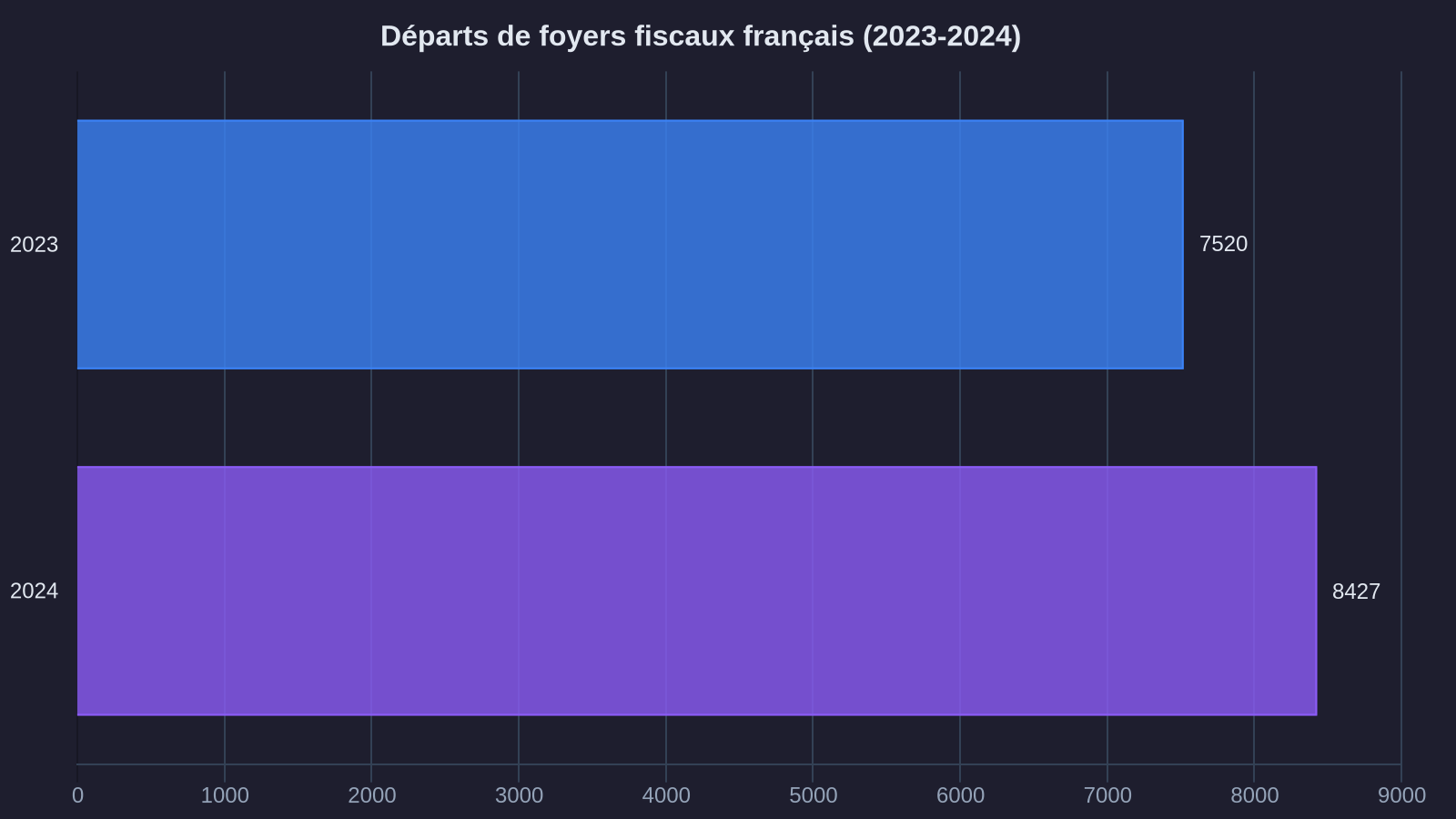
En 2024, la France a enregistré le départ de 8 427 foyers fiscaux déclarant plus de 100 000€ de revenus annuels. Un chiffre en hausse de 12% par rapport à 2023. Parmi ces départs, une catégorie émerge : les détenteurs de patrimoine décentralisé crypto qui cherchent des juridictions plus favorables à leurs actifs numériques.
Ce mouvement de fuite de capitaux France patrimoine crypto soulève une question patrimoniale légitime : faut-il vraiment quitter la France pour optimiser la gestion de ses crypto-actifs ? Et si oui, vers quelles destinations, avec quelles implications concrètes ?
Cet article ne traite pas d'évasion fiscale, mais de stratégies patrimoniales légales. Il s'adresse aux détenteurs de patrimoines significatifs (200 000€ et plus en crypto) qui s'interrogent sur leur résidence fiscale, leur diversification internationale portefeuille et l'accès aux opportunités DeFi.
L'état des lieux : pourquoi la France cristallise les tensions patrimoniales
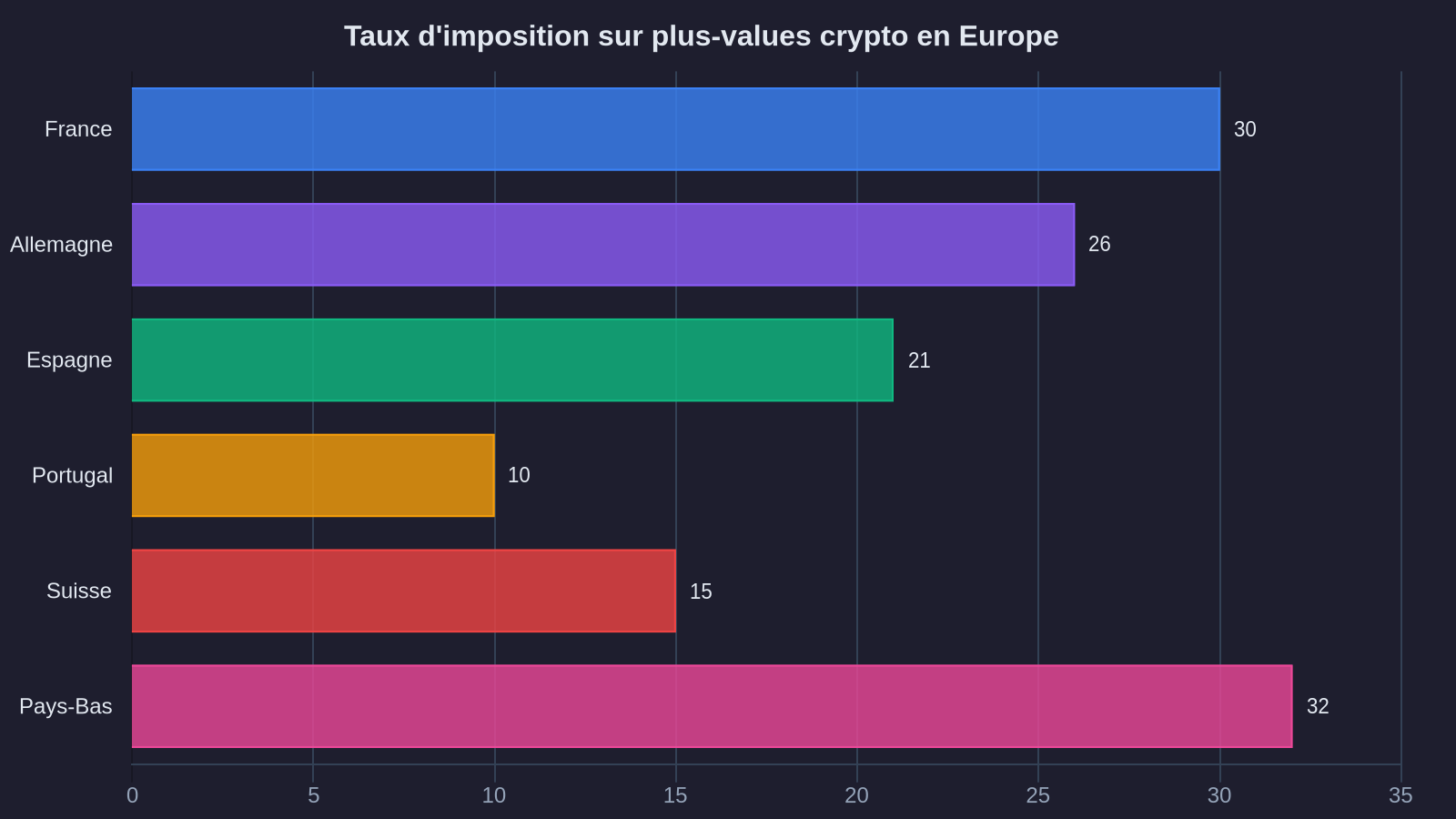
La fiscalité française sur les crypto-actifs reste l'une des plus lourdes d'Europe. Depuis 2019, les plus-values sont imposées au prélèvement forfaitaire unique de 30% (flat tax). À première vue, c'est comparable aux actions. Mais la réalité patrimoniale est différente.
Contrairement aux produits d'épargne traditionnels où vous pouvez optimiser via l'assurance-vie ou le PEA, les crypto-actifs n'offrent aucun véhicule d'optimisation fiscale actifs numériques en France. Chaque cession déclenche l'impôt. Même un simple swap entre cryptos est considéré comme un fait générateur, ce qui complexifie considérablement la gestion active d'un portefeuille.
Prenons un exemple concret. Vous détenez 500 000€ en Bitcoin depuis 2020, acquis pour 100 000€. Votre plus-value latente est de 400 000€. Si vous souhaitez diversifier vers de l'Ethereum ou accéder à des protocoles DeFi, chaque mouvement déclenche l'impôt sur la plus-value réalisée. Résultat : 30% de 400 000€ = 120 000€ à reverser au fisc, avant même d'avoir pu réinvestir.
Cette rigidité pousse certains patrimoines à l'immobilisme. D'autres choisissent de partir. Pour comprendre les dynamiques de marché qui influencent ces décisions patrimoniales, consultez notre analyse sur Bitcoin à 118 400$ et la nouvelle réalité des marchés crypto.
Les chiffres de l'expatriation crypto
Selon une étude du cabinet Henley & Partners publiée en mars 2025, la France figure dans le top 5 des pays sources de millionnaires en crypto qui relocalisent leur résidence fiscale. On estime que 2 300 détenteurs de plus de 1 million d'euros en actifs numériques ont quitté le territoire français entre 2022 et 2024.
Leur profil ? Majoritairement des entrepreneurs tech (45%), des traders professionnels (30%) et des investisseurs early-stage dans la blockchain (25%). Âge moyen : 38 ans. Patrimoine crypto médian : 1,8 million d'euros.
Ces départs représentent une perte fiscale potentielle estimée à 340 millions d'euros sur trois ans, si ces patrimoines avaient été liquidés ou réalloués en France. Ce n'est pas négligeable, mais cela reste marginal comparé aux 400 milliards d'euros de recettes fiscales annuelles.
Les destinations privilégiées : analyse comparative des juridictions crypto
Où vont ces patrimoines ? Les destinations se regroupent en trois catégories : les paradis fiscaux crypto, les pays à fiscalité nulle sur les plus-values, et les juridictions à fiscalité réduite avec infrastructure bancaire solide.
Portugal : la fin d'un eldorado
Jusqu'en 2023, le Portugal était la destination européenne de référence. Zéro impôt sur les plus-values crypto pour les particuliers. Climat agréable, proximité culturelle, régime des résidents non habituels offrant 10 ans d'exemption fiscale sur les revenus étrangers.
Tout a changé avec le budget 2024. Les plus-values crypto sont désormais imposées à 28% après un an de détention, 35% avant. Le Portugal s'aligne sur la moyenne européenne. Résultat : le flux d'arrivées de détenteurs crypto a chuté de 67% entre 2023 et 2024.
Que signifie cette évolution pour votre patrimoine ? Si vous avez obtenu votre résidence avant 2024, vous bénéficiez encore d'une période de transition jusqu'en 2026. Après, vous serez soumis au nouveau régime. Pour un patrimoine de 2 millions d'euros en crypto, cela représente une différence de 560 000€ sur une liquidation totale (28% vs 0%).
Émirats Arabes Unis : la nouvelle frontière
Dubaï est devenue en trois ans la capitale mondiale des crypto-millionnaires expatriés. Les chiffres parlent d'eux-mêmes : +214% d'arrivées de détenteurs crypto entre 2022 et 2024. Pourquoi ?
Zéro impôt sur les plus-values. Zéro impôt sur le revenu. Zéro droits de succession. Une licence VASP (Virtual Asset Service Provider) accessible en 6 semaines. Un écosystème crypto mature avec des exchanges régulés, des family offices spécialisés et une infrastructure bancaire qui accepte les fonds issus de la crypto.
Le coût d'installation est élevé mais prévisible. Comptez 150 000 à 200 000€ la première année (visa investisseur, création de société locale, appartement, conseils juridiques). Pour un patrimoine crypto de 3 millions d'euros, le ROI fiscal est atteint en moins de 18 mois comparé à la France.
Attention cependant : Dubaï impose une présence physique de 183 jours par an pour valider votre résidence fiscale. Si vous conservez des attaches en France (conjoint, enfants scolarisés, biens immobiliers), l'administration fiscale française peut contester votre expatriation.
Suisse : la stabilité a un prix
La Suisse n'est pas un paradis fiscal crypto, mais elle offre quelque chose de plus précieux : la prévisibilité. Les cantons appliquent des taux d'imposition sur les plus-values variant de 0% (pour les particuliers qui ne tradent pas professionnellement) à 22% selon votre statut et votre canton de résidence.
Genève, Zoug, Zurich : ces cantons ont développé une expertise reconnue dans la gestion de patrimoines crypto. Les banques privées suisses acceptent désormais les dépôts en stablecoins et proposent des services de custody institutionnels.
Le coût d'installation est le plus élevé d'Europe : minimum 250 000 CHF de patrimoine net pour un permis B, présence de 6 mois par an, assurance maladie obligatoire (600-800 CHF/mois). Pour un patrimoine crypto de 5 millions d'euros, la Suisse devient compétitive face aux Émirats si vous valorisez la stabilité politique et l'accès au marché européen.
| Juridiction | Impôt sur PV crypto | Coût installation (année 1) | Présence requise | Accès banking crypto |
|---|---|---|---|---|
| France | 30% | 0€ | N/A | Limité |
| Portugal (post-2024) | 28% | 50-80k€ | 183 jours | Moyen |
| Émirats (Dubaï) | 0% | 150-200k€ | 183 jours | Excellent |
| Suisse | 0-22%* | 250-300k€ | 180 jours | Excellent |
| Singapour | 0% | 200-250k€ | 183 jours | Excellent |
*selon statut et canton
Les stratégies légales d'optimisation fiscale actifs numériques sans expatriation
Partir n'est pas la seule option. Plusieurs stratégies patrimoniales permettent d'optimiser légalement votre situation sans quitter la France. Elles sont moins spectaculaires que Dubaï, mais souvent plus adaptées aux patrimoines familiaux enracinés.
La holding luxembourgeoise
Le Luxembourg autorise les sociétés à détenir et gérer des crypto-actifs avec une fiscalité sur les plus-values de 24,94%. C'est moins avantageux que les Émirats, mais cela reste inférieur à la flat tax française. Surtout, cette structure permet de réinvestir les plus-values sans taxation immédiate.
Concrètement : vous apportez vos crypto-actifs à une holding luxembourgeoise. Vous restez résident fiscal français, mais vos actifs numériques sont gérés par une structure européenne. Lorsque la holding réalise des plus-values, elle peut les réinvestir sans déclencher la flat tax française. Vous ne serez imposé en France que lors du versement de dividendes à votre personne physique.
Cette stratégie convient aux patrimoines de 1 million d'euros minimum en crypto. En dessous, les frais de structure (15 000 à 25 000€ par an) dépassent les gains fiscaux.
L'assurance-vie luxembourgeoise nouvelle génération
Certains assureurs luxembourgeois proposent désormais des contrats permettant d'investir dans des fonds exposés aux crypto-actifs. Ce n'est pas de la détention directe, mais cela offre l'avantage de l'enveloppe assurance-vie : pas d'imposition sur les plus-values latentes, taxation uniquement lors des rachats, abattement après 8 ans.
L'offre reste limitée et les frais sont élevés (2 à 3% par an tout compris). Mais pour un patrimoine familial qui cherche une exposition crypto sans la complexité de la gestion directe, c'est une piste à explorer. Ticket d'entrée : 250 000€ minimum.
La donation avant liquidation
Si vous envisagez de transmettre une partie de votre patrimoine crypto à vos enfants, la donation peut être fiscalement intéressante. En France, vous pouvez donner 100 000€ par enfant tous les 15 ans sans droits de donation (abattement parent-enfant).
Stratégie concrète : vous donnez vos crypto-actifs à vos enfants majeurs avant liquidation. Eux réalisent la vente et paient la flat tax de 30% sur leur propre déclaration. Si vos enfants ont des revenus faibles, ils peuvent bénéficier du barème progressif de l'impôt sur le revenu plutôt que de la flat tax, ce qui réduit la charge fiscale globale.
Cette approche fonctionne pour des transmissions anticipées de 200 000 à 500 000€. Au-delà, elle nécessite un montage plus complexe avec un family office. Pour sécuriser ces transferts patrimoniaux, découvrez comment l'IA détecte les arnaques crypto avant qu'il ne soit trop tard.
Ce que cela signifie pour votre diversification internationale portefeuille
La question n'est pas de savoir si la fiscalité française sur la crypto est lourde — elle l'est. La vraie question patrimoniale est : votre situation justifie-t-elle une expatriation ?
Si votre patrimoine crypto dépasse 3 millions d'euros, que vous êtes mobile professionnellement, que vous n'avez pas d'attaches familiales fortes en France et que vous envisagez des rotations fréquentes de portefeuille ou un accès poussé à la DeFi, alors oui, une relocalisation à Dubaï ou Singapour peut se justifier financièrement.
Le gain fiscal sur 5 ans pour un patrimoine de 3 millions d'euros avec une rotation annuelle de 30% représente environ 1,35 million d'euros nets (France vs Dubaï). Même en déduisant les coûts d'installation et de vie, vous dégagez 800 000 à 900 000€ d'économie nette.
Si votre patrimoine crypto se situe entre 500 000€ et 2 millions d'euros, que vous avez une famille établie en France et une activité professionnelle locale, les solutions intermédiaires (holding luxembourgeoise, optimisation par donation, assurance-vie Luxembourg) sont probablement plus adaptées. Elles génèrent moins de gains fiscaux, mais préservent votre qualité de vie et votre ancrage familial.
En dessous de 500 000€, l'expatriation pour raisons fiscales crypto n'a généralement pas de sens économique. Les coûts d'installation dépassent les gains fiscaux potentiels sur un horizon de 5 ans.
Un dernier point, rarement abordé : la fiscalité n'est qu'un paramètre patrimonial parmi d'autres. Dubaï offre un impôt à 0%, mais expose votre patrimoine à une juridiction où l'État de droit est moins protecteur qu'en Europe. La Suisse taxe vos plus-values, mais vous offre une stabilité institutionnelle inégalée. Le Portugal s'est aligné fiscalement, mais reste une porte d'entrée accessible à l'écosystème européen.
Votre décision doit intégrer votre horizon de détention (5, 10, 20 ans ?), votre tolérance au risque juridique, vos projets familiaux et votre vision à long terme. Un patrimoine bien géré n'est pas celui qui paie le moins d'impôts, mais celui qui traverse les cycles en préservant sa valeur et sa transmissibilité.
Votre patrimoine mérite mieux qu'un livret A. Je vous montre le chemin, chiffres à l'appui.