In September 2022, Revolut discovered that an external contractor had accessed personal data belonging to 50,150 customers. Contact details, transaction information, partial card numbers: a substantial volume of sensitive information ended up in the hands of cybercriminals. Days later, the demand arrived: a ransom in Monero (XMR) to prevent the data from being disclosed. The incident revealed not only the persistent vulnerability of exchange platforms to social engineering, but also the strategic role that Monero plays in the underground economy of cybercrime.
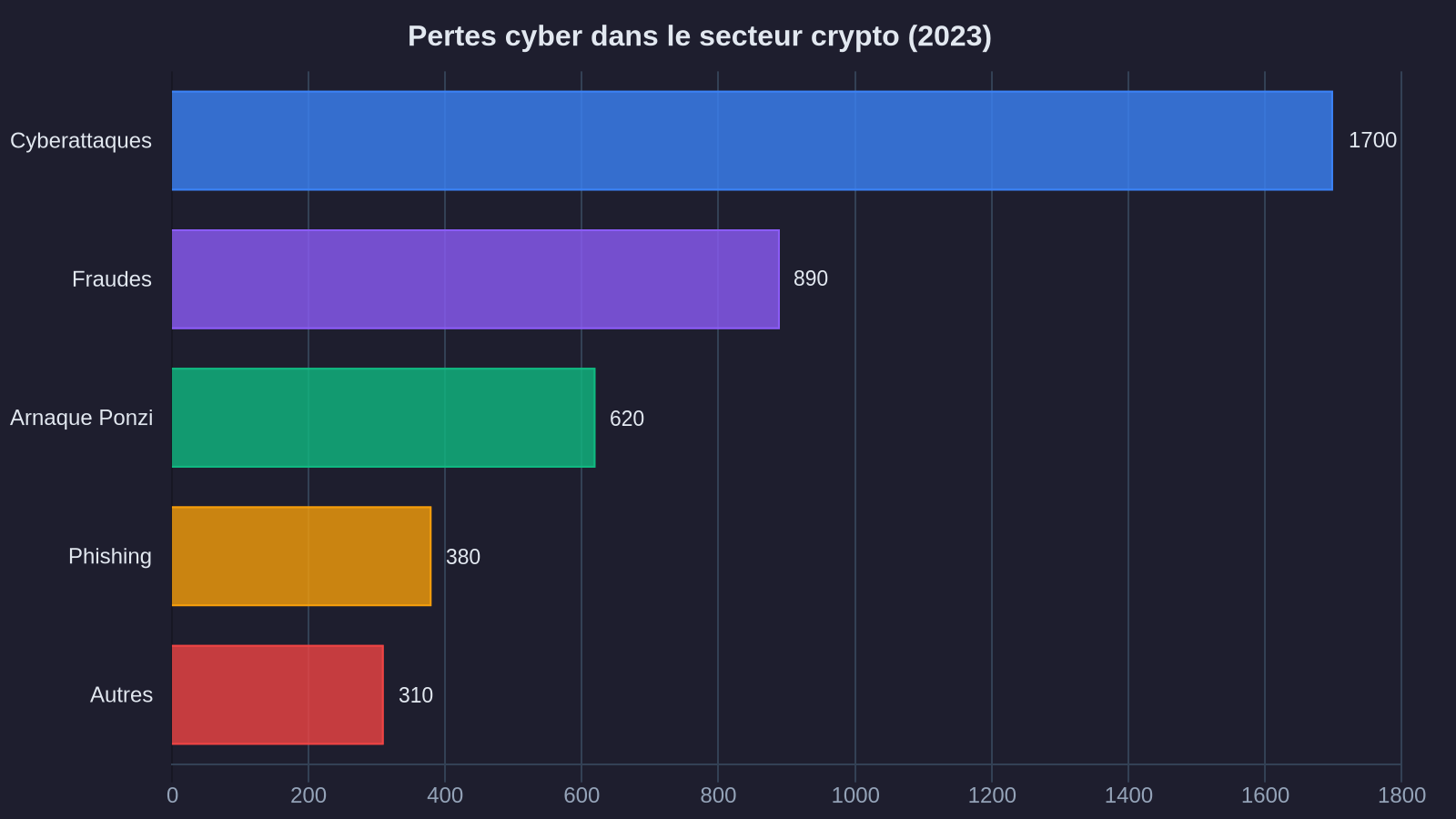
This data breach at Revolut is not an isolated case. It reflects a broader trend: in 2023, losses from cyberattacks in the crypto sector exceeded $1.7 billion according to Chainalysis. What distinguishes this incident is the method employed and the deliberate choice of Monero as the extortion vector. Understanding this attack helps shed light on the current cybersecurity challenges facing all players in the digital financial sector. Other platforms have recently faced similar situations, as illustrated by CoinEx's closure, which reveals the fragility of certain exchanges.
The Revolut Attack: When Human Error Becomes the Weak Link
Contrary to popular belief, the security breach at Revolut did not result from a sophisticated technical flaw in the company's computer systems. The attacker used social engineering techniques to deceive an external provider with access to customer databases. By impersonating a legitimate member of the Revolut team, the cybercriminal obtained the credentials needed to extract information from tens of thousands of users.
This method, technically called "social engineering," exploits trust and internal communication protocols rather than software vulnerabilities. It serves as a reminder that even the most robust technical infrastructure remains vulnerable if human processes aren't locked down with equal rigor. In Revolut's case, the access was detected and cut off within hours, but the damage was done: the data had already been exfiltrated.
Compromised information included names, email addresses, phone numbers, transaction details, and partially masked card numbers. No passwords or PIN codes, according to Revolut, but enough to enable targeted phishing attacks or identity theft. For 20,687 customers based in the European Economic Area, the potential damage was even greater, as more transaction details had been exposed.
Why Monero? The Cybercriminal's Preferred Crypto for Ransom Demands
Facing this breach, the hackers didn't demand payment in Bitcoin or Ethereum. Instead, they turned to Monero, a cryptocurrency specifically designed to guarantee complete transaction anonymity. This choice is far from trivial: it reflects a strategic evolution in digital extortion and cryptocurrency ransomware practices.
Bitcoin, often presented as anonymous to the general public, is actually pseudonymous. Every transaction is permanently and publicly recorded on the blockchain, allowing specialized investigators to trace financial flows. Authorities have developed remarkably effective chain analysis tools to track stolen funds, identify the exchanges used to launder money, and sometimes trace back to the individuals behind the attacks.
Monero works differently. This cryptocurrency natively integrates three technologies that make tracking extremely difficult: ring signatures (which mix transactions to obscure the actual sender), stealth addresses (which generate unique addresses for each transaction), and confidential amounts (which hide the transferred volume). The result: even if you know a Monero user's wallet address, you can't see their balance, identify their past transactions, or follow where their payments go.
This complete opacity explains why Monero has become the preferred currency for ransomware, dark web markets, and extortion operations like the one targeting Revolut. According to a report from cybersecurity firm Coveware, 12% of ransom demands in 2023 specified Monero as the preferred payment method, compared to less than 3% in 2020. This trend is accelerating as law enforcement improves its Bitcoin tracing capabilities.
Revolut's Response and Its Regulatory Limitations
Revolut publicly refused to give in to the blackmail. The company notified the breach to the UK Financial Conduct Authority and relevant data protection authorities, in compliance with GDPR obligations. Affected customers were contacted individually with security recommendations: increased vigilance against phishing attempts, monitoring of bank accounts, activation of two-factor authentication.
This transparent crisis management deserves to be highlighted. Too many organizations, including in the crypto sector, downplay the scale of breaches or delay notifications to limit reputational damage. Revolut complied with the legal framework by alerting authorities within 72 hours, as required by GDPR Article 33. For the 20,687 EEA customers affected, this swift notification was all the more crucial as it enables protective measures to be activated before data is exploited.
One essential question remains: what concrete protection for users who fall victim? Unlike traditional banking systems, crypto platforms don't systematically benefit from standardized insurance mechanisms. Revolut has insurance for its traditional banking activities, but coverage for data breaches falls under specific cyber insurance, whose scope varies considerably from one contract to another.
The MiCA Regulation (Markets in Crypto-Assets), which came into gradual application from 2023 and is fully effective in 2024, now imposes strict requirements on digital asset service providers. Article 67 notably stipulates the obligation to implement robust IT security systems and incident management procedures. However, MiCA doesn't resolve the question of customer compensation in case of breach: this responsibility remains largely determined by each platform's terms and conditions and by general civil liability law.
Lessons for Users and Platforms: Strengthening Crypto Wallet Security
The Revolut incident illustrates a troubling reality: even reputable players in the digital financial sector remain vulnerable to exchange data breaches. A platform's security depends not only on its investments in technical infrastructure, but also on the robustness of its organizational processes and the reliability of its supply chain.
For users, several protective measures are essential. Two-factor authentication (2FA) remains the absolute minimum, preferably through a dedicated application rather than SMS, which is more vulnerable to interception attacks. Suspicion of unsolicited communications should become second nature: no legitimate platform will ever ask for your credentials, PIN codes, or recovery phrases via email or phone. Spreading your assets across multiple platforms reduces risk exposure: keep on exchanges only the amounts needed for your current operations. To delve deeper into best practices, consult our analysis of emerging deepfake threats.
For platforms, the Revolut incident underscores the urgency of strengthening access controls. External providers often represent the weakest link in the security chain. A "zero trust" approach (systematic verification of every access request, even from apparently legitimate users) would likely have prevented this intrusion. Strict database segmentation also limits the scope of breaches: why would a provider need simultaneous access to 50,000 customers' data?
Cyber insurance is also becoming a strategic issue. Contracts must cover not only crisis management costs (notification, communication, forensics), but also civil liability toward customers and losses from service interruptions. The crypto insurance market remains emerging, and coverage varies considerably. Savvy users can legitimately question their platform about the existence and scope of these protections before depositing significant funds there. S&P Global's acquisition of OpenZeppelin moreover testifies to the growing importance of blockchain security for traditional financial players.
The Critical Point
Your data is worth gold on the dark web. A breach like Revolut's doesn't necessarily result in immediate financial loss, but it durably exposes you to identity theft and targeted phishing risks. After such a notification, stay extra vigilant for at least 12 months: be suspicious of emails or texts mentioning specific transaction details (a sign the sender has stolen data), never click links in such messages, contact your platform directly via official channels if in doubt. Systematically enable two-factor authentication and consider a dark web monitoring service to quickly detect if your information is circulating.
Toward Strengthened Crypto Cybersecurity Regulation
The Revolut-Monero incident marks a turning point in collective awareness of the crypto sector's vulnerabilities. European and international regulators are accelerating the implementation of binding frameworks. Beyond MiCA, the NIS2 Directive (Network and Information Security), applicable since October 2024, imposes strict cybersecurity obligations on financial entities, including managing risks related to supply chains and third-party providers.
These regulatory developments are moving in the right direction, but they alone cannot eliminate risk. Social engineering will always remain a threat as long as humans are involved in data access processes. As for Monero and privacy-focused cryptocurrencies, they pose a fundamental dilemma for authorities: how to balance legitimate privacy protection and the fight against criminal uses?
Several jurisdictions, including South Korea and Australia, have already banned or heavily restricted Monero trading on regulated platforms. The European Union adopts a more nuanced approach through MiCA, imposing traceability obligations without banning these assets, but regulatory pressure is intensifying. For platforms like Revolut, the question becomes strategic: continue offering high-privacy assets by accepting reputational and regulatory risk, or stick to traceable cryptocurrencies to simplify compliance?
For you, as a user, the lesson remains clear: the security of your digital assets relies on dual vigilance. That of the platform you choose, whose certifications, insurance, and security practices you must verify. And your own discipline in managing access, protecting your credentials, and maintaining systematic distrust of unsolicited requests. In an ecosystem where transaction irreversibility combines with potential attacker anonymity, prevention remains your best protection.