
Imagine if someone could break into your building's safe by buying three apartments in the residence. That's exactly what nearly happened on Moonwell, a DeFi protocol on Base, in January 2024.
An attacker managed to seize temporary control of the protocol's governance with an investment of just $1,800. Their goal: drain over a million dollars. The DeFi governance attack failed, but it exposed a fundamental vulnerability in many decentralized protocols: the voting system meant to protect them can become their greatest weakness.
Here's what actually happened, and what it teaches us about DeFi security.
The anatomy of an $1,800 DeFi governance attack
On January 15, 2024, a malicious user spots an opportunity on Moonwell. The protocol operates on a simple principle: the more governance tokens (WELL) you hold, the more say you have in collective decisions. It's like a homeowners' association meeting: each share grants one vote.
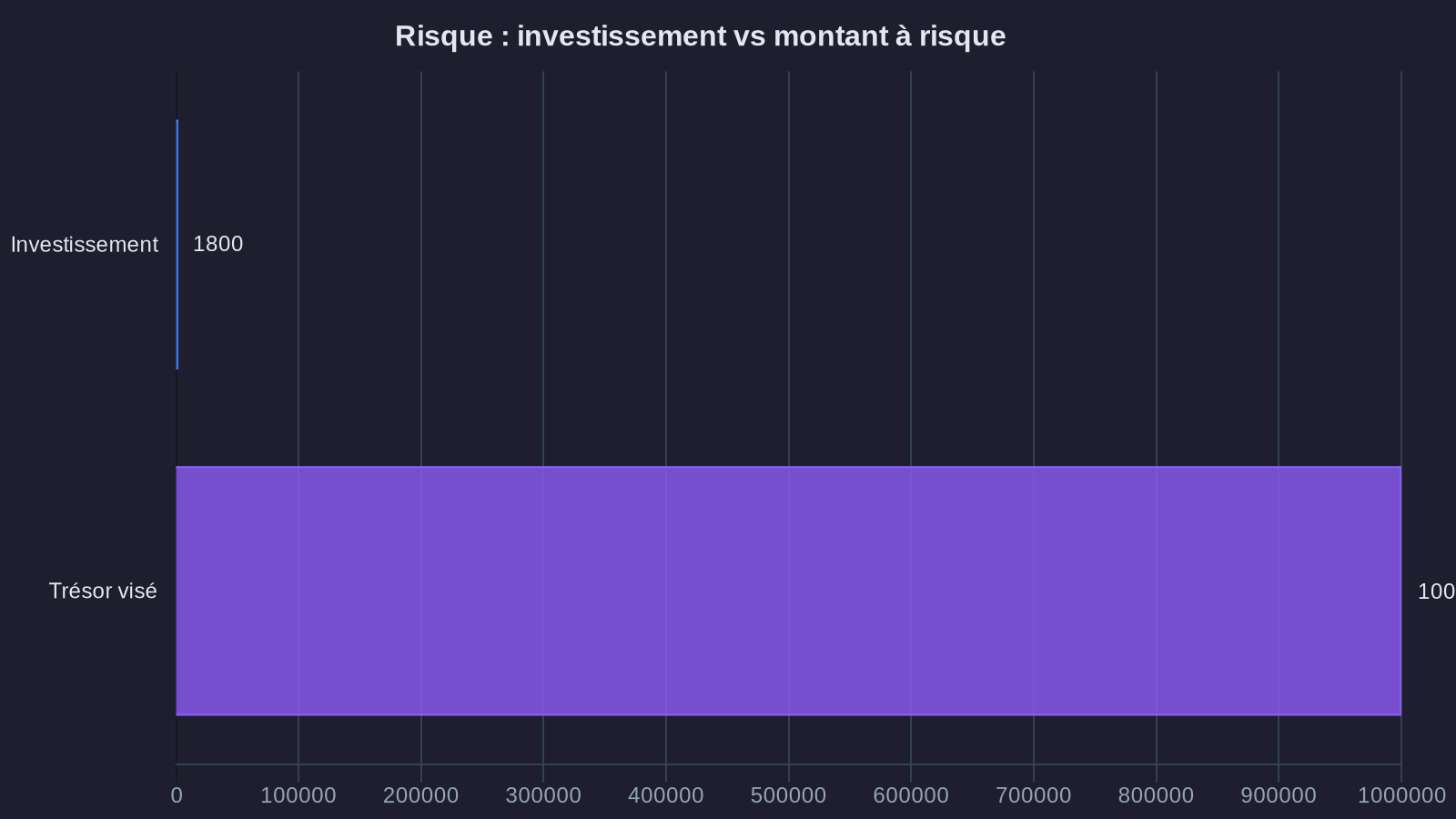
The attacker notices that very few users actually participate in votes. Participation is so low that a handful of tokens would be enough to push through any proposal. So they buy $1,800 worth of WELL tokens on the market.
With these tokens in hand, they submit an ostensibly technical proposal: modify the parameters of a "price oracle" (the tool that tells the protocol the price of assets). In reality, this modification would manipulate prices and drain the protocol's reserves.
The proposal goes to vote. The voting begins. And for a few hours, it looks like it might pass.
The problem of dormant participation in DeFi protocols
Decentralized governance rests on an appealing idea: important decisions are made collectively by those with a stake in the protocol. No boss, no opaque board of directors. Just the community.
But here's the paradox: in practice, very few token holders actually participate in votes. On Moonwell, as on many other protocols, participation rates often hover between 1% and 5% of tokens in circulation.
It's as if, during your homeowners' association elections, only three owners out of a hundred showed up. Then anyone could buy four apartments and control every decision: sell common areas, raid the renovation budget, change the bylaws.
This apathy creates a window of opportunity for attackers. They don't need to hold the majority of tokens, just enough to exceed the small number of active voters. This reality exposes a major DeFi protocol risk: power concentration through participation default.
In Moonwell's case, the attacker had perfectly understood this mechanism. With their $1,800 in tokens, they temporarily wielded outsized influence.
How the attack was thwarted
Fortunately, someone noticed the suspicious proposal. A vigilant community member analyzed the proposed code and raised the alarm on the protocol's forums and social networks.
Within hours, the "whales" (large token holders) mobilized. They voted overwhelmingly against the malicious proposal, which was ultimately rejected by a wide majority. The attacker lost their $1,800 investment with nothing to show for it.
But this victory masks a structural fragility. The protocol was saved by human vigilance and the quick response of a few major holders, not by automatic security mechanisms.
That's precisely the problem: the protocol's security depended on someone, somewhere, watching at the right moment, understanding what was at stake, and mobilizing enough votes. That's not a robust system, that's luck. To understand how other protocols manage these risks, check out our analysis on DeFi circuit breakers and their protective mechanisms.
Lessons for DeFi protocols
The Moonwell incident highlights several vulnerabilities common to many decentralized protocols.
Quorum, the critical threshold. Many protocols require a minimum number of tokens to participate in a vote for a proposal to be valid (the quorum). Moonwell had a quorum, but it was too low relative to actual participation. Following the attack, the protocol significantly raised this threshold.
Voting delay, a double-edged sword. Proposals remain open for voting during a set period (typically 3 to 7 days). The idea is to give the community time to react. But if no one is actively watching, this delay becomes a countdown to danger. Some protocols have introduced additional "timelock" periods: even after validation, a proposal takes several days to execute, leaving one last chance to block it.
Delegation, an underutilized solution. Most protocols allow token holders to "delegate" their voting power to people they trust, often experts or active community members. It's like granting a proxy at an assembly meeting. This practice remains marginal, yet it could increase effective participation without requiring everyone to analyze every technical proposal.
Alert systems, still too manual. Moonwell was saved because a vigilant human spotted the anomaly. But what if no one was looking? Some protocols now develop bots that automatically analyze proposals and alert the community about suspicious parameters. It's a start, but these tools remain imperfect.
What this means for you
If you use DeFi protocols or hold governance tokens, this story carries several practical lessons.
First, check the governance health of the protocols you use. A protocol with a vote participation rate below 5% is potentially vulnerable. Look at the proposal history: are there regular votes? Are quorums easily reached or just barely met?
Next, if you hold governance tokens, consider delegation. Don't have the time or expertise to analyze every proposal? Delegate your voting power to someone who will. It's free and revocable at any time. Many protocols publish a list of "recognized delegates" on their forums.
Finally, diversify. A protocol with weak governance isn't necessarily doomed, but it presents additional risk. Don't concentrate all your assets on a single platform, especially if its governance seems dormant. The recent Resolv hack that exposed $23 million is a reminder of how important diversification is.
The illusion of decentralization
The Moonwell attack raises a bigger question: what does decentralization really mean?
A protocol can be technically decentralized (no central server, no company controlling the code), but if 95% of decisions are made by three large token holders, is it really decentralized in practice?
DeFi promises to replace intermediaries with code and collective votes. But in practice, we often see de facto recentralization: a few whales, a few influential developers, a few hyperactive community members. They're the ones actually steering the protocol.
That's not necessarily a problem if these actors are well-intentioned and competent. Moonwell was saved precisely thanks to this vigilant elite. But it means the protocol's security rests on trusting a few people, which oddly resembles the traditional system DeFi wanted to replace.
Toward more robust governance
The DeFi ecosystem learns from its mistakes. Since the Moonwell incident and similar ones, several avenues for improvement are emerging.
Some protocols are experimenting with "quadratic voting" systems: instead of each token granting one vote, voting power increases by the square root of tokens held. This limits whales' outsized influence and makes DeFi governance attacks more costly.
Others are establishing "security councils": a small elected group that can veto dangerous proposals, even if they passed a vote. It's an intentional form of centralization, but it adds a layer of protection. Established protocols like Aave with its V4 version now integrate these advanced governance mechanisms.
Automatic analysis tools are also developing. Services like OpenZeppelin Defender or Forta allow scanning governance proposals and alerting in real-time if something looks suspect.
Finally, some protocols are thinking about "participation rewards": distributing additional tokens to those who vote regularly, to encourage engagement. The idea is appealing, but it risks creating opportunistic voters who validate everything without thinking, just to collect the reward.
The key takeaways
Decentralized governance isn't automatically secure. A voting system can become a vulnerability if participation is too low. On Moonwell, $1,800 was enough to threaten a million dollars, simply because no one was voting.
Protocols are gradually protecting themselves. Higher quorums, timelock periods, encouraged delegation, automatic alert tools: the ecosystem is learning and adapting. But these protections aren't universal. Each protocol has its maturity level.
Vigilance remains human. Despite all possible automation, final security often rests on attentive individuals who spot anomalies and mobilize the community. It's both reassuring (there are guardians) and concerning (what if they're asleep?).
Nora's analogy: DeFi governance is like a homeowners' meeting where only three out of a hundred owners show up. If you don't participate, someone else will decide for you—and that someone doesn't necessarily have your interests at heart.
The Moonwell story isn't one of failure, but of warning. DeFi gives us powerful tools to collectively manage complex financial systems. We just have to use them. Decentralization without participation is a wide-open door.