
On March 17, 2026, JPMorgan announced its entry into prediction markets via a regulated platform. Two days later, Polymarket — the decentralized platform that processed 10 billion dollars in bets on the US presidential election — confirmed a 600 million dollar funding round from Intercontinental Exchange (ICE), the operator of the New York Stock Exchange.
This is no coincidence. It signals that traditional finance has recognized that an entire market segment has been built outside its walls, with its own rules, its own liquidity, and its own users. The question is no longer whether prediction markets will grow, but who will control that growth.
Polymarket: how a crypto startup captured 600 million from a Wall Street giant
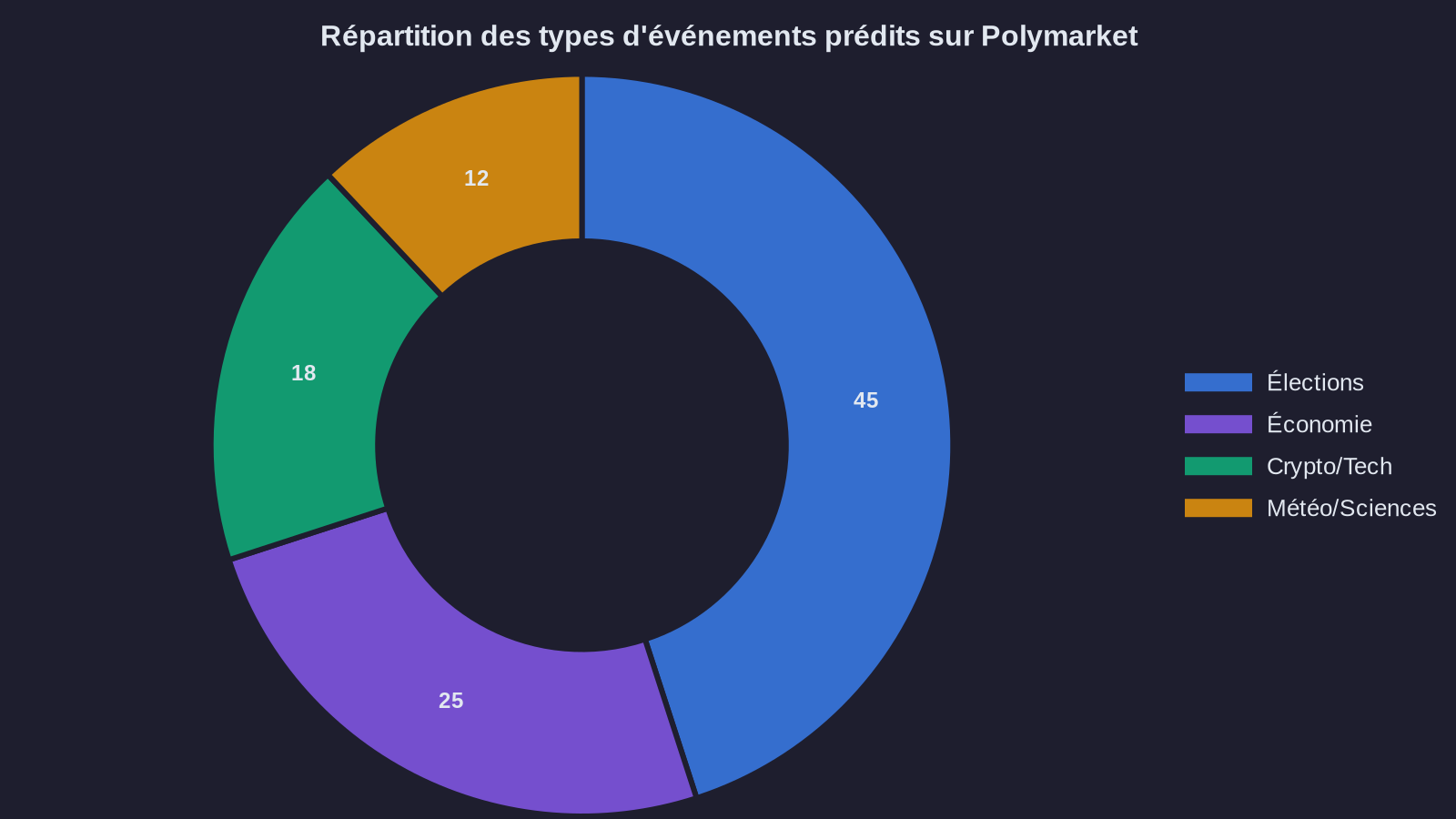
Polymarket is the story of a platform launched in 2020 that lets you bet on any future event: elections, weather, sports results, Federal Reserve decisions. The principle is straightforward: you buy "Yes" or "No" shares whose price reflects the collective probability of an event. If you're right, you earn 1 dollar per share. If you're wrong, you lose your stake.
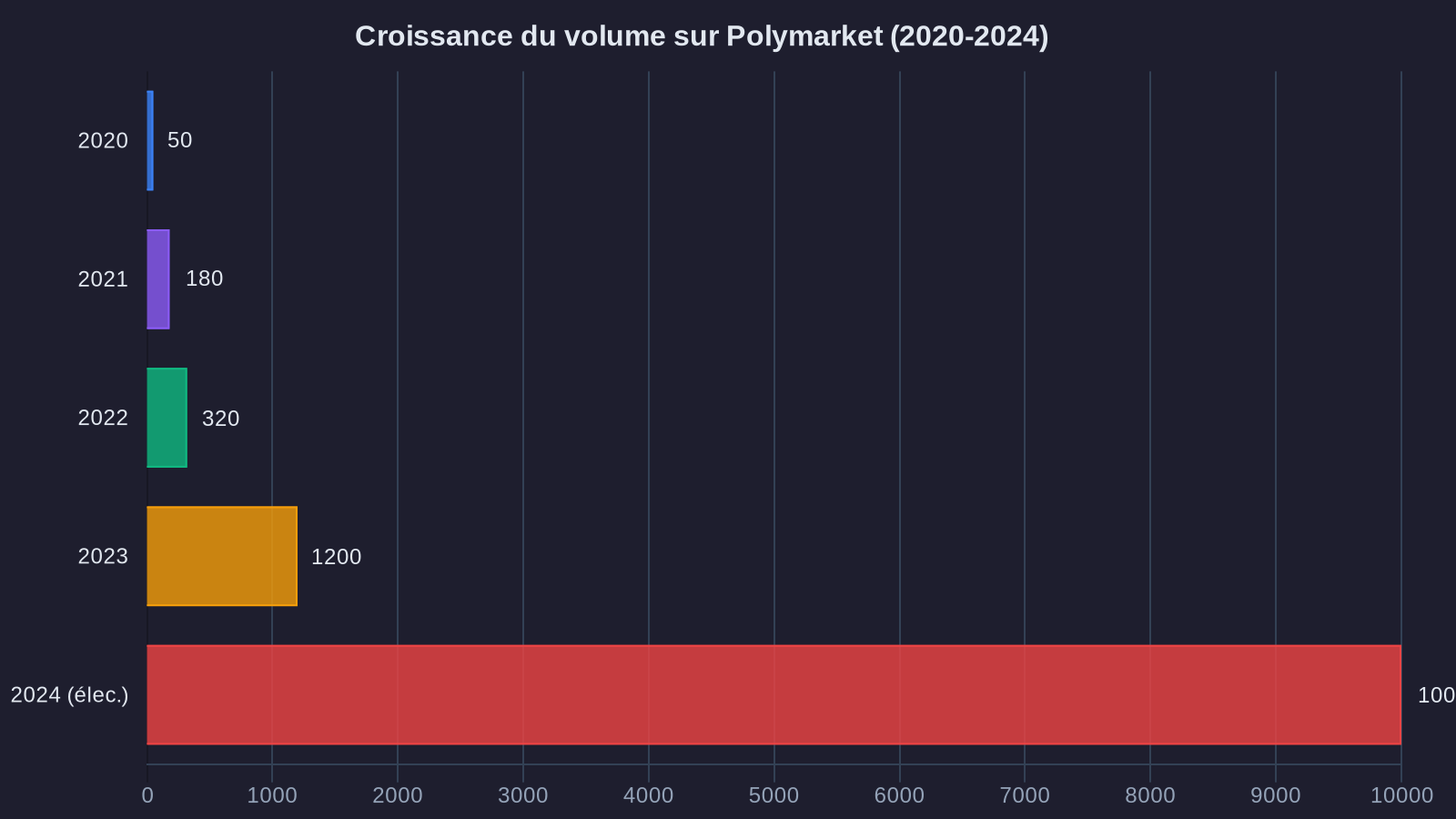
For years, Polymarket remained a niche product, used primarily by crypto early adopters. Until the 2024 US presidential election. The platform processed 10 billion dollars in volume on the race, becoming the de facto most reliable barometer of the election — often more accurate than traditional polls. The "Trump wins" market alone captured 4.2 billion dollars in bets.
This success caught ICE's attention. Not to shut Polymarket down, but to invest massively in it. On March 19, 2026, ICE confirmed a 600 million dollar stake in the startup, valuing Polymarket at 2.4 billion. The stated objective: integrate prediction markets into ICE's regulated ecosystem while preserving Polymarket's decentralized infrastructure, built on Polygon.
It's a strategic paradox. ICE is acquiring technology that thrived precisely because it escaped the regulations ICE applies to its own markets. But it's also a rational bet: rather than fighting Polymarket or building a competitor from scratch, ICE prefers to absorb the innovation and adapt it to its regulatory framework.
JPMorgan enters prediction markets: with what tools?
JPMorgan's announcement, three days before ICE's, didn't go unnoticed. The bank is launching JPM Predictions, a prediction market platform regulated by the CFTC (Commodity Futures Trading Commission), initially accessible only to US institutional clients. Unlike Polymarket, JPM Predictions operates entirely off-blockchain, with a centralized clearing system and standard banking guarantees.
Markets available at launch: Federal Reserve monetary policy, S&P 500 quarterly results, unemployment rate, CPI inflation. No presidential elections, no weather, no sports results. JPMorgan is initially targeting hedge funds and family offices that want to hedge their macro positions without using complex derivatives.
JPMorgan's advantage: complete regulatory compliance, banking liquidity, and direct access to institutional clients. The limitations: a restricted catalog of events, rigid infrastructure, and a captive user base (only JPMorgan clients can access the platform in its initial phase).
Polymarket, meanwhile, remains open to all, processes billions of dollars monthly, and offers markets on just about anything. But Polymarket operates in legal gray area in the US: the CFTC already sanctioned the platform in 2022 for offering unlicensed bets, as explained in our analysis on the regulatory challenges facing prediction markets, forcing Polymarket to block US users (which hasn't prevented millions of dollars from circumventing this restriction via VPNs).
Regulation vs decentralization: who will win this struggle?
The real battle isn't between JPMorgan and Polymarket. It's between two models: regulated prediction markets, controlled by traditional financial institutions, and decentralized markets, built on blockchain and accessible to all.
US, European, and Asian regulators all face the same problem: Polymarket and its competitors (Augur, Gnosis) operate without intermediaries, without strict KYC, and without effective blocking mechanisms. These platforms allow betting on sensitive events (election results, geopolitical decisions, natural disasters) with volumes that sometimes reach tens of millions of dollars within hours. This creates systemic risk: bad actors could manipulate prediction markets to influence perceptions of an event, or worse, to hedge positions taken on actual financial markets.
The CFTC views prediction markets as falling under its jurisdiction when they involve bets on economic events. The problem is that a decentralized platform has no headquarters to sue, no servers to seize, no CEO to subpoena. Polymarket may have a corporate entity based in New York, but its infrastructure runs on Polygon, a decentralized network that no one really controls.
ICE's investment in Polymarket changes the game. By taking a 600 million dollar stake, ICE gets a foot in the regulatory door: if Polymarket agrees to collaborate with the CFTC, implement enhanced KYC controls, and restrict certain sensitive markets, the platform could become the bridge between the crypto world and the regulated world. This is exactly what ICE achieved with Bakkt, its crypto platform launched in 2019.
JPMorgan, meanwhile, is playing the total compliance card from the start. No blockchain, no pseudonymity, no politically sensitive markets. This approach fits the broader trend of traditional institutions integrating digital assets, as illustrated by the recent authorization of tokenized stocks on the Nasdaq. But this cautious approach could also limit adoption: crypto users who've tasted Polymarket's freedom won't go back to using a restricted banking platform.
What ForYield thinks
At ForYield, we've been monitoring this segment closely since 2023. Prediction markets aren't a gimmick: they're financial instruments that allow you to hedge macro risks, diversify portfolios, and access price inefficiencies that traditional markets don't capture.
Our institutional clients regularly ask us about the opportunity to integrate Polymarket positions into their crypto allocations. Our answer is twofold. First, regulatory risk remains high as long as the US legal framework remains unclear. Second, the liquidity and market depth on certain events (elections, Fed decisions, macro results) justify moderate exposure, with a risk budget limited to 2-5% of overall crypto allocation.
ICE's entry into Polymarket changes our analysis. If ICE succeeds in launching a regulated version of Polymarket while preserving the platform's liquidity and accessibility, we could significantly increase our exposure. JPMorgan, meanwhile, will be relevant for clients who prioritize absolute regulatory compliance, but its ability to capture liquidity remains to be proven.
Our current recommendation: monitor the coming quarters. If JPM Predictions reaches 500 million dollars in monthly volume by end-2026, that validates the regulated model. If Polymarket surpasses 20 billion dollars in annual volume despite restrictions, that confirms the market prefers decentralization. Either way, this segment becomes a structuring element of the crypto ecosystem.
This week's action item: open a Polymarket account (with a VPN if you're in the US, though we don't recommend circumventing regulatory restrictions) and watch how prices move on markets linked to Federal Reserve monetary policy. Compare these probabilities to futures market expectations (CME FedWatch). You'll quickly see where the price inefficiencies are. It's a real-time macro trading school, without the textbook.