
On March 14, 2026, Major League Baseball (MLB) announced a partnership with Polymarket to integrate prediction market data into its sports betting surveillance system. The goal: detect volume anomalies and price movements that could signal match-fixing or information leaks. A decision that marks a turning point for the onchain prediction sector and the regulation of prediction markets.
For the first time, a professional sports league is not simply tolerating decentralized prediction markets. It's integrating them as an official component of its regulatory framework. What many considered a legal gray area is becoming a governance tool. The implications extend far beyond sports.
Why MLB is leveraging Polymarket for sports integrity
MLB has been monitoring betting for years, especially following match-fixing scandals in the 2010s. But data from traditional bookmakers often arrives too late, once bets are locked in and odds are frozen. Polymarket works differently: positions are taken continuously, liquidity is visible in real-time, and capital movements leave an onchain trace.
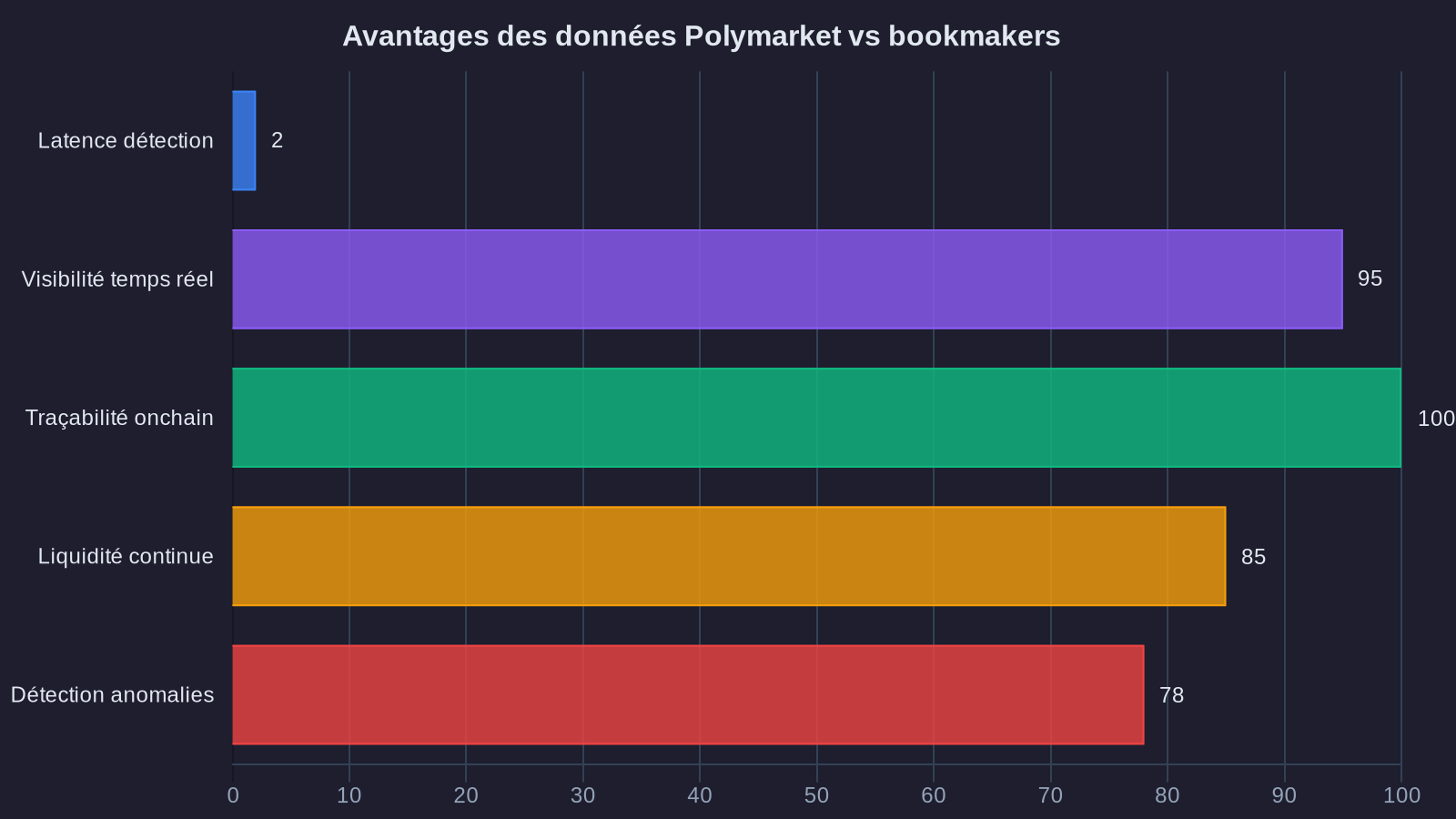
The advantage for MLB is clear. An unusual movement on a Polymarket related to a game — a sharp drop in a favorite team's odds for no apparent reason, or a massive influx of capital on an unlikely outcome — can be detected before the first pitch. The league's compliance teams now have access to a dashboard that aggregates these signals and cross-references them with other sources: Twitter volume, offshore bookmaker data, historical betting patterns.
Shayne Coplan, Polymarket's founder, released a statement on announcement day:
"We've always maintained that prediction markets are information sensors. When an institution like the MLB chooses to rely on our data to protect the integrity of its sport, it validates our thesis: information aggregated by open and transparent markets is more reliable than any poll or centralized analysis."
This partnership comes after Polymarket surpassed $8 billion in cumulative volume since its launch. The platform has gained credibility after correctly anticipating several major political events, including the 2024 U.S. presidential election and the 2025 British referendum. MLB isn't betting on a marginal player, but on infrastructure that has proven its ability to capture relevant market signals.
What this changes for prediction market regulation
This partnership opens a door. If a sports league can rely on onchain data to regulate its activities, other institutions could follow suit. Think of financial regulators, who are already scrutinizing transaction volumes on DEXs to detect price manipulation. Or election authorities, who could use prediction markets as a supplementary indicator for campaign monitoring.
Polymarket's model is built on radical transparency: all transactions are recorded on Polygon, and market data is publicly accessible via API. This openness contrasts with traditional bookmaker systems, where betting flows remain opaque. For a regulator, having complete and verifiable position history is a significant advantage.
But this institutional recognition also raises questions. Polymarket remains subject to a 2022 CFTC (Commodity Futures Trading Commission) order that restricts its access to U.S. users. The platform paid a $1.4 million fine for operating without a derivatives license. Since then, it blocks U.S. IP addresses, though VPN workarounds are technically possible. The MLB partnership doesn't resolve this paradox: an American institution is relying on a platform its own citizens cannot legally use.
The regulatory question becomes even more complex when considering that Polymarket offers markets on non-sporting events: elections, monetary policy decisions, corporate outcomes. If MLB validates the use of Polymarket data to monitor its games, it strengthens the legitimacy of these markets, even in jurisdictions that still consider them illegal gambling. A situation reminiscent of the regulatory clash between Polymarket, Kalshi, and U.S. authorities.
Implications for ForYield and onchain strategies
At ForYield, we're closely watching Polymarket's evolution, not as an entertainment product, but as a sentiment analysis and signal-detection tool. Prediction markets aggregate dispersed information and transform it into quantified probabilities. When a macroeconomic event approaches — a Fed rate decision, a vote on crypto regulatory legislation — Polymarket markets provide a real-time view of what the market anticipates.
This partnership with MLB confirms a trend we've been observing for several quarters: onchain data is no longer just a trading tool—it's becoming a governance instrument. Regulators who once ignored DEXs and prediction protocols are starting to take notice, not to shut them down, but to extract information from them.
For our yield strategies, this means two things. First, we need to integrate these sources into our risk analysis processes. An unusual movement on a Polymarket related to a regulatory decision could signal imminent volatility in certain assets. Second, we need to anticipate that the growing legitimacy of prediction markets will accelerate their adoption by other institutions. More liquidity, more participants, more exploitable data.
Polymarket volumes grew 340% in 2025, driven by expanding market categories and improved UX. The platform launched an automated market-making feature in January 2026 that allows any user to provide liquidity on a market in exchange for fees. Result: spreads tightened, and market depth tripled on major events. This increased liquidity makes the data even more reliable, which strengthens its appeal to institutional partners like MLB.
Limitations and risks to watch
This partnership doesn't solve all problems. The main risk remains manipulation. If bad actors know MLB is monitoring Polymarket, they could attempt to create false signals by taking massive positions on certain markets to mislead detection systems. Polymarket has implemented safeguards: bet caps per account, KYC mechanisms for large traders, monitoring of addresses linked to suspicious activity. But no system is foolproof.
Another limitation concerns regulation. The MLB partnership doesn't mean Polymarket will get a CFTC license in the coming months. The platform remains in legal limbo in the United States. For institutional investors wanting exposure to this sector, that ambiguity is a barrier. Until Polymarket's regulatory status is clarified, capital flows will remain constrained.
Finally, there's the question of decentralization. Polymarket operates on a partially decentralized architecture: contracts are on Polygon, but platform governance remains centralized. If a regulator imposes restrictions on certain market types tomorrow, Polymarket will have to comply. This centralization limits the model's resilience to regulatory pressures. Other projects, like Gnosis Prediction Markets or Augur, offer more decentralized models, but with far less liquidity. A vulnerability that echoes the systemic risks facing centralized DeFi protocols.
ForYield's take
The Polymarket × MLB partnership is not just a business deal. It's a signal that onchain prediction markets are crossing a maturity threshold. They're no longer confined to crypto early adopters. They're becoming information infrastructure that traditional institutions consider robust enough to rely on in their decision-making processes.
For investors building yield strategies on crypto-assets, this evolution is worth monitoring closely. Prediction market data can improve the quality of risk analysis, especially during periods of high regulatory or macroeconomic uncertainty. At ForYield, we've integrated Polymarket data into our monitoring tools for several months. It doesn't replace fundamental analysis, but it complements our vision by capturing real-time market sentiment.
The next step will be seeing whether other sports leagues — NBA, NFL, UEFA — follow suit. And most importantly, whether this institutional recognition pushes U.S. regulators to clarify the legal framework for prediction markets. The sector needs that clarity to unlock its full potential.
```