The Securities and Exchange Commission (SEC) published a regulatory framework on March 14, 2026 authorizing the tokenization of stocks listed in the United States. Not a flashy press release, but a 47-page document laying out the technical and legal groundwork to migrate part of the stock market infrastructure to blockchain. This decision marks a turning point for American financial markets, after years of regulatory waiting.
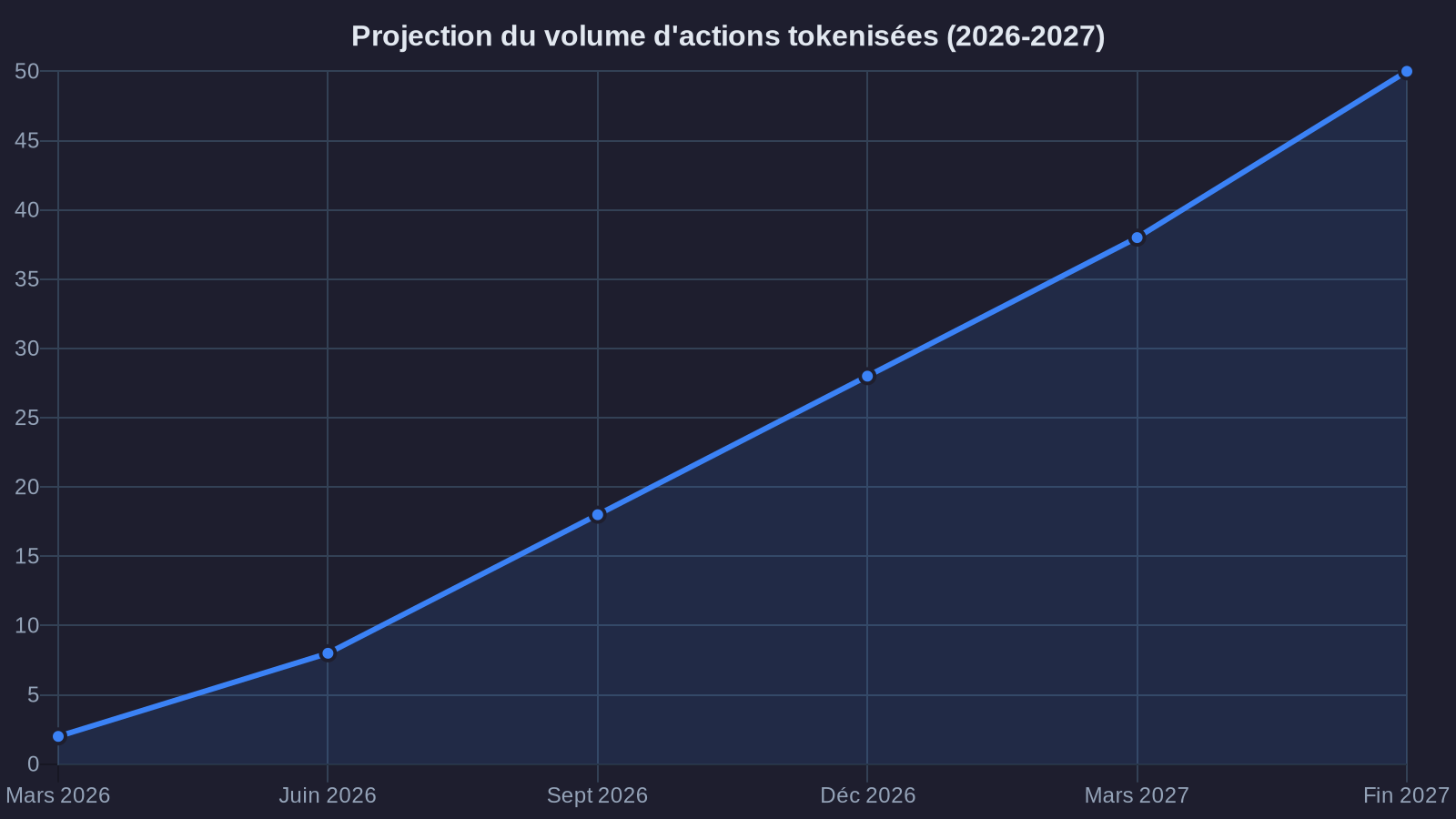
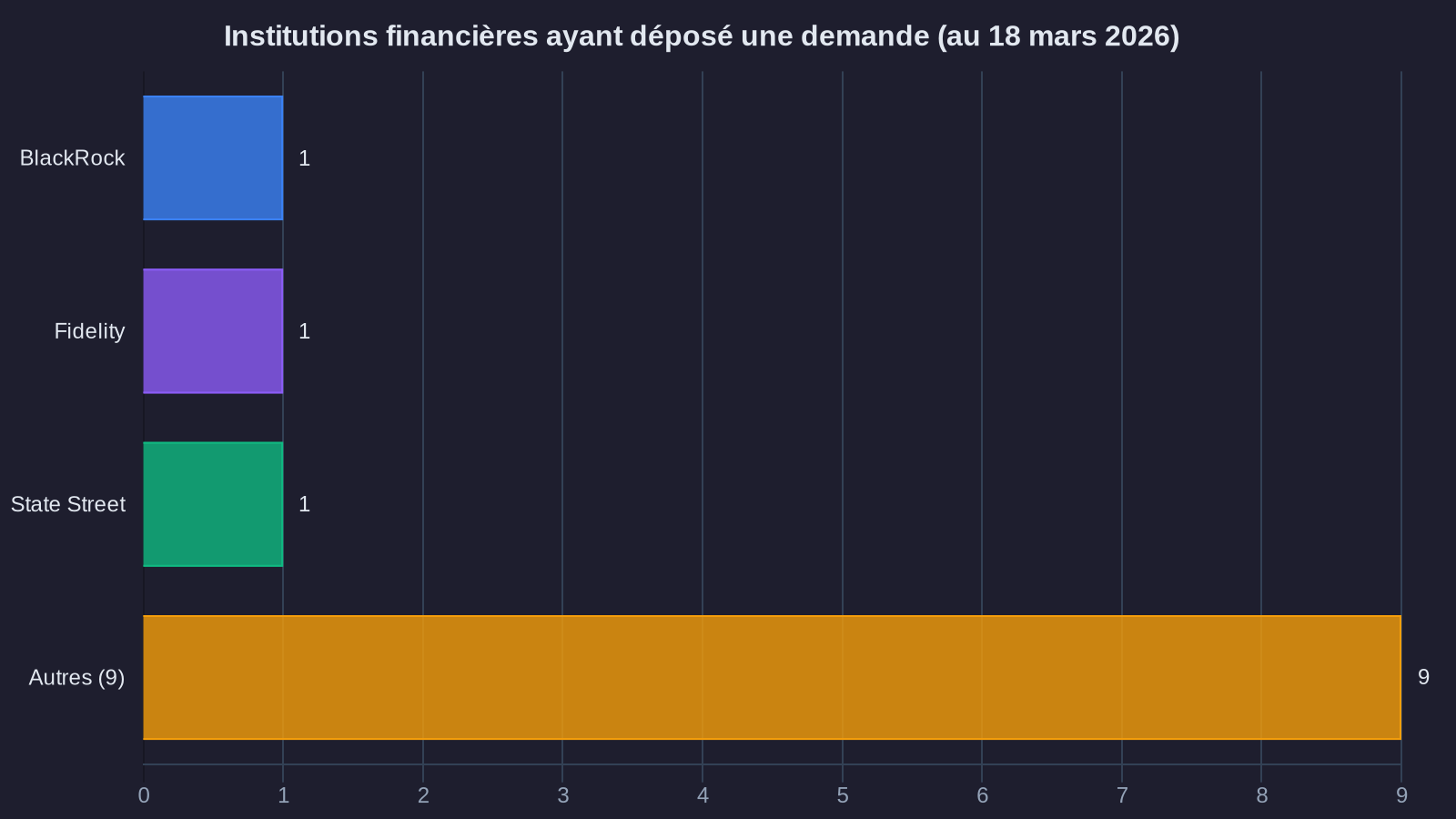
The numbers speak for themselves: as of March 18, 2026, 12 financial institutions have already filed applications to launch tokenized stock trading platforms. BlackRock, Fidelity, and State Street are among the first movers. The market anticipates $50 billion in tokenized stock volume by end of 2027, according to Goldman Sachs estimates.
This isn't marketing hype. It's an infrastructure shift that changes the rules of the game for all investors, including those managing crypto portfolios.
What exactly the SEC is authorizing for tokenized stocks
The regulatory framework defines three types of actors authorized to issue and trade tokenized stocks: registered brokers, alternative trading systems (ATS), and qualified custodians. Each actor must meet strict capitalization criteria (minimum $100 million) and enhanced KYC/AML compliance.
Tokenized stocks remain financial securities in legal terms. They confer the same voting and dividend rights as traditional stocks. The difference: they're recorded on blockchain, with instant settlement and complete transaction traceability.
Critical point: the SEC mandates a clear separation between crypto trading platforms and tokenized stock platforms. No fungibility, no automatic bridges. Investors wanting access to both universes must go through separate channels, with differentiated KYC processes.
The technical constraint: all transactions must pass through a two-level validation system. On-chain validation via smart contract, then off-chain validation by an approved custodian verifying regulatory compliance. Settlement time: under 10 seconds versus 2 business days under the current system (T+2).
Why now: three converging factors
First factor: pressure from institutional players. Between January 2025 and February 2026, 47 major institutions asked the SEC to accelerate the regulatory framework. Their argument: current clearing and settlement costs represent $4.2 billion annually in the United States, according to a Deloitte study. Blockchain can cut these costs by a factor of ten.
Second factor: international competition. Singapore launched its tokenized stock platform in June 2025. Switzerland authorized tokenized bond trading on SIX Digital Exchange in November 2024. The United States faced a regulatory lag that was starting to weigh on its markets' competitiveness.
Third factor: technical maturity. Blockchain infrastructure has crossed a critical threshold for stability and scalability. Ethereum after the Pectra upgrade (March 2025) processes 100,000 transactions per second with average fees of $0.02. Layer 2 solutions like Arbitrum and Optimism have proven their reliability on institutional volumes.
The SEC also learned lessons from the FTX collapse in 2022 and the stablecoin crisis of 2023. The regulatory framework imposes strict separation between client funds and platforms' own assets, with mandatory quarterly audits by independent firms.
What tokenization changes for your portfolio
Immediate impact: liquidity. Tokenized stocks can be traded 24/7, unlike traditional markets limited to business hours. This reduces opening spreads after major after-hours announcements. Investors holding positions in U.S. equities can now arbitrage in real time, including on weekends.
Second change: fees. Traditional brokers charge between $5 and $15 per order, plus currency exchange fees for international investors. Tokenized stock platforms are announcing fees of 0.1% to 0.3% of transaction amount, with no fixed fees. For an active portfolio executing 50 trades per month, annual savings could exceed $3,000.
Third aspect: collateralization. Tokenized stocks can be used as collateral in DeFi protocols, without leaving your portfolio. You can deposit your tokenized Apple shares on Aave or Compound and borrow stablecoins at 4% to 6% rates, while keeping stock price exposure and receiving dividends. This feature transforms institutional yield strategies and was impossible with traditional stocks locked at your broker.
Watch out for specific risks. Smart contracts managing tokenized stocks can contain bugs. Multiple security audits identified vulnerabilities in early versions deployed in February 2026. Platforms certified by the SEC must publish their audit reports, but technical risk exists.
Another point to watch: taxes. U.S. tax authorities (IRS) and European authorities haven't yet published clear guidance on the tax treatment of tokenized stocks. Does each on-chain movement constitute a taxable event? The question remains open. Prudent investors are waiting for clarifications before migrating significant positions.
ForYield's take
We're closely monitoring this regulatory evolution. The tokenization of American stocks opens yield opportunities that would be unwise to ignore, but timing remains critical.
Our current position: no rush. The first three months (March to May 2026) will serve as real-world testing. We're particularly monitoring two indicators: average daily volume on tokenized platforms (currently $340 million as of March 18) and average bid-ask spread (currently 0.18%, versus 0.05% on traditional markets).
When these two metrics converge toward traditional market standards, which our projections suggest will happen by Q3 2026, we'll progressively integrate tokenized stocks into our strategies. The objective: combine exposure to major U.S. equities with blockchain's liquidity and collateralization benefits.
For clients wishing to get ahead, we recommend a limited test allocation of 5% of total portfolio, on liquid names (Apple, Microsoft, Nvidia) via platforms that have obtained full SEC certification. No exposure to platforms awaiting approval or operating in regulatory gray areas.
The real shift will come when ETFs can incorporate tokenized stocks into their holdings. BlackRock filed an application in that direction on March 12. If the SEC approves it by summer 2026, the tokenized stock market could reach $200 billion before end of 2027. At that point, the infrastructure will have shifted, and it will be too late to build an advantaged position.
```