
The Linux security mailing list receives so many messages that it's become virtually unusable. This observation, shared by several project maintainers, reveals a problem that goes much deeper than simple email management. We're witnessing a governance crisis in one of the world's most critical open source projects.
This phenomenon is far from trivial. Linux powers the vast majority of global digital infrastructure: cloud servers, embedded systems, supercomputers, Android. When its secure communication pipeline breaks down, the entire ecosystem becomes fragile.
A communication infrastructure at the breaking point
The kernel-hardening mailing list, meant to centralize discussions about kernel security, is drowning under a message volume that vastly exceeds human processing capacity. Maintainers report hundreds of simultaneous discussion threads, critical alerts buried in the noise, serious vulnerabilities going unnoticed for weeks.
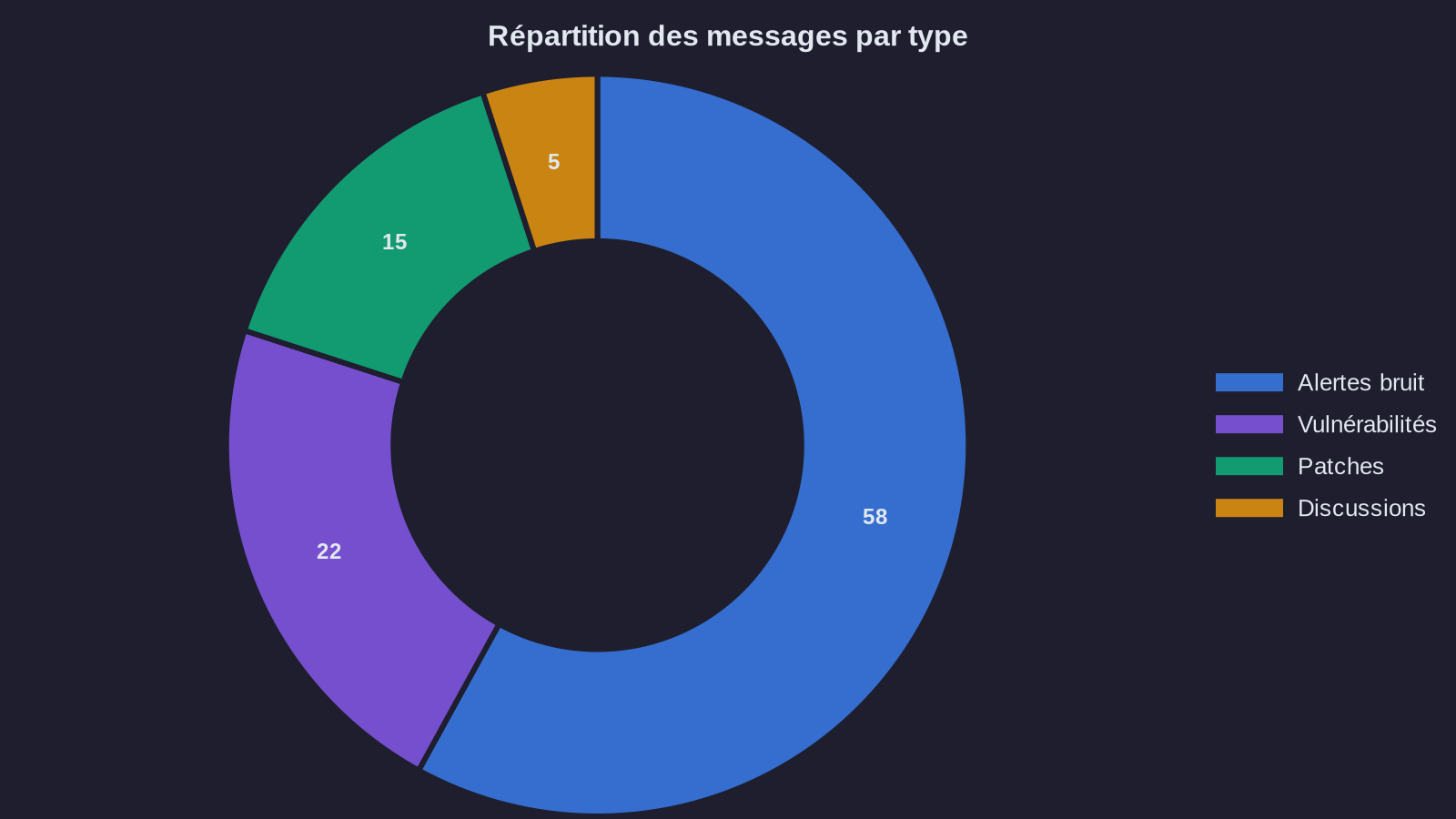
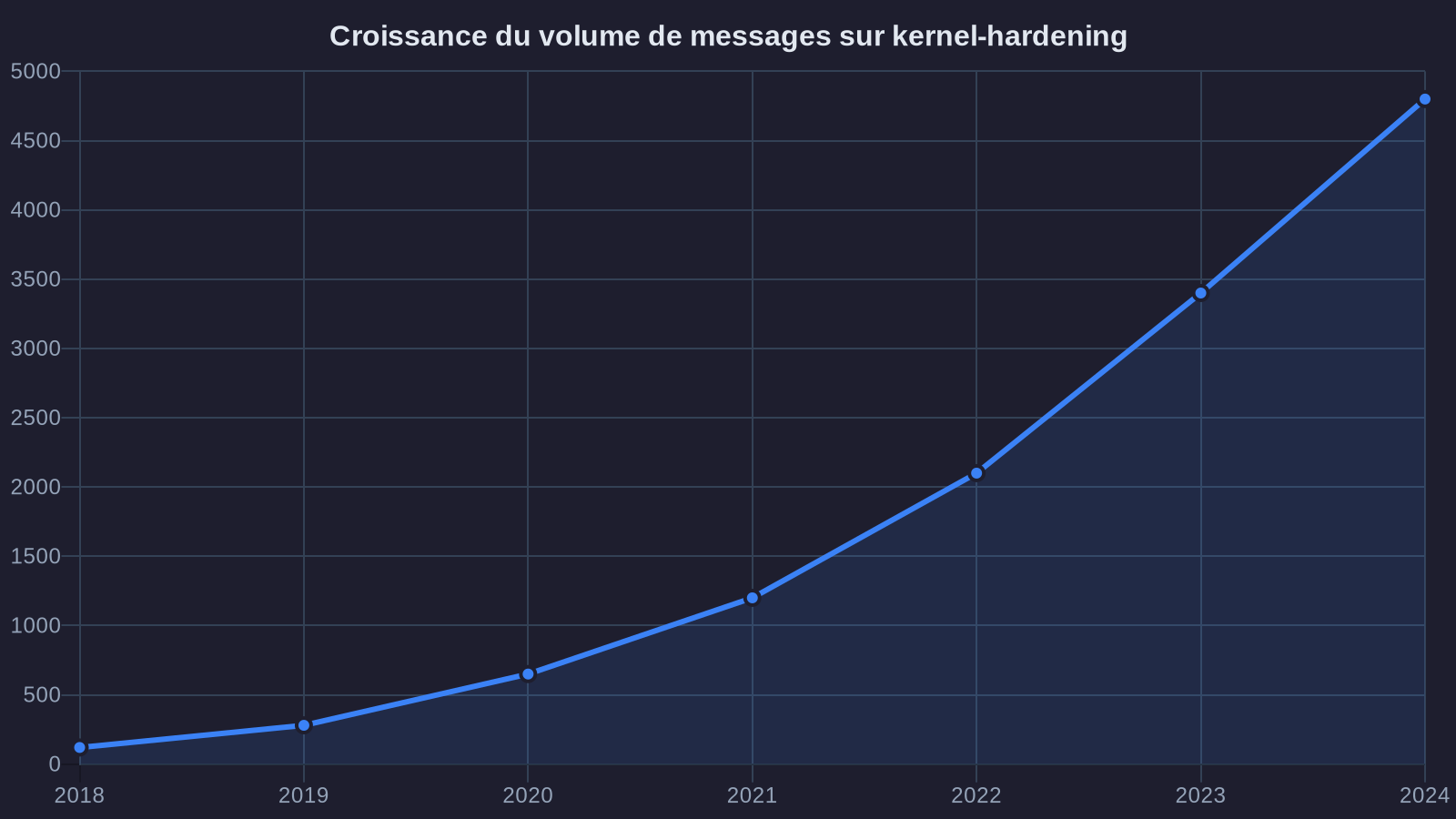
This problem illustrates a well-known paradox of complex systems: the more security channels you multiply, the more you fragment attention. Security teams find themselves facing an endless stream of information with criticality levels ranging from trivial to urgent, without effective prioritization.
The mailing list model, inherited from the early days of the internet, is showing its limitations. Designed for communities of dozens of experts, it struggles to handle the massive influx of contributions, automated bug reports, and technical discussions that now characterize Linux kernel development.
The root causes of congestion
Several factors explain this saturation. First, the growing professionalization of security research. Thousands of researchers—academic and industrial alike—now scrutinize Linux code searching for vulnerabilities. Each discovery generates its share of messages, patches, and technical debates.
Then there's the automation of detection tools. Static and dynamic security scanners run continuously on the source code, automatically surfacing their findings. Many of these alerts correspond to false positives or minor issues, but they still clutter communication channels.
The fragmentation of responsibilities also plays a major role. Linux comprises hundreds of subsystems, each with its own maintainers, processes, and priorities. When a vulnerability spans multiple subsystems, coordination becomes an administrative nightmare that generates dozens of exchanges.
We're also witnessing a dilution of expertise. Faced with the volume, genuine security experts spend more time sorting messages than analyzing fundamental problems. This inversion of priorities weakens precisely what makes the open source model strong: review by qualified peers.
Risks for the open source ecosystem
This situation has concrete consequences. Several recent vulnerabilities slipped through the cracks for months simply because initial alerts got lost in the flow. Some critical reports were handled with delays of several weeks, leaving exploitation windows wide open. A scenario that underscores the importance of rigorous vulnerability management in critical infrastructure.
More concerning still is the phenomenon of maintainer burnout. Several key developers have publicly expressed frustration with a workload that has become unsustainable. The risk of burnout in this community isn't theoretical—it directly threatens the project's operational continuity.
Confidence in Linux's security process is beginning to erode. Enterprises that heavily rely on the kernel are questioning the reliability of the current alert system. Some are developing their own parallel communication channels, creating additional fragmentation that makes the original problem worse.
This crisis also reveals the limits of the informal governance model that has long characterized Linux. What worked with a few hundred contributors doesn't scale with tens of thousands of active participants and massive economic stakes.
Toward necessary overhaul
Solutions are gradually emerging. Several major players in the Linux ecosystem are exploring alternative approaches: dedicated vulnerability management platforms, automated triage systems, reorganized communication channels by criticality level.
The Linux Foundation is investing in modern collaboration tools that could replace or complement traditional mailing lists. The idea isn't to abandon the openness that makes the project strong, but to introduce more effective filtering and prioritization mechanisms.
Some Linux distributions are developing their own vulnerability management processes, with dedicated teams that bridge the gap between the upstream community and their users' needs. Red Hat, Canonical, and SUSE have significantly strengthened their capabilities in this area.
We're also seeing the emergence of standardization initiatives for vulnerability report formats, facilitating automated processing and prioritization. The OpenSSF (Open Source Security Foundation) project is working on guidelines that could apply well beyond Linux.
The funding question becomes central. Maintaining robust security infrastructure for a project of this scale requires significant human and technical resources. The pure volunteer model shows its limits when it comes to ensuring the security of critical systems.
What this means for organizations
For enterprises relying on Linux, this situation requires a reassessment of risk management strategies. You can no longer assume that the open source community will automatically handle all security issues with the required responsiveness.
Critical organizations must invest in their own monitoring and analysis capabilities. This means maintaining internal expertise on the Linux kernel, actively participating in security discussions, and not settling for a passive consumer stance on patches. An approach that echoes the best practices for responding to security incidents in modern technology environments.
The relationship with commercial distributions also becomes more strategic. Vendors like Red Hat or SUSE provide precisely this filtering and prioritization layer that the upstream community struggles to deliver. Their added value has never been clearer.
This crisis also reminds us of the importance of diversifying security information sources. Relying solely on official Linux channels exposes you to significant blind spots. Threat intelligence feeds, third-party vulnerability databases, and expert networks usefully complement community sources.
Finally, this phenomenon illustrates a broader issue of critical open source governance. Projects underlying global digital infrastructure can no longer function on organizational models designed for niche communities. They require professional structures, proper funding, with clearly defined responsibilities.
The Linux security mailing list crisis isn't an isolated incident. It reveals the structural tensions of a mature open source ecosystem confronting security and reliability challenges that far exceed what its initial architectures could have anticipated. Resolving this problem will determine the credibility and sustainability of the open source model for critical infrastructure.
```