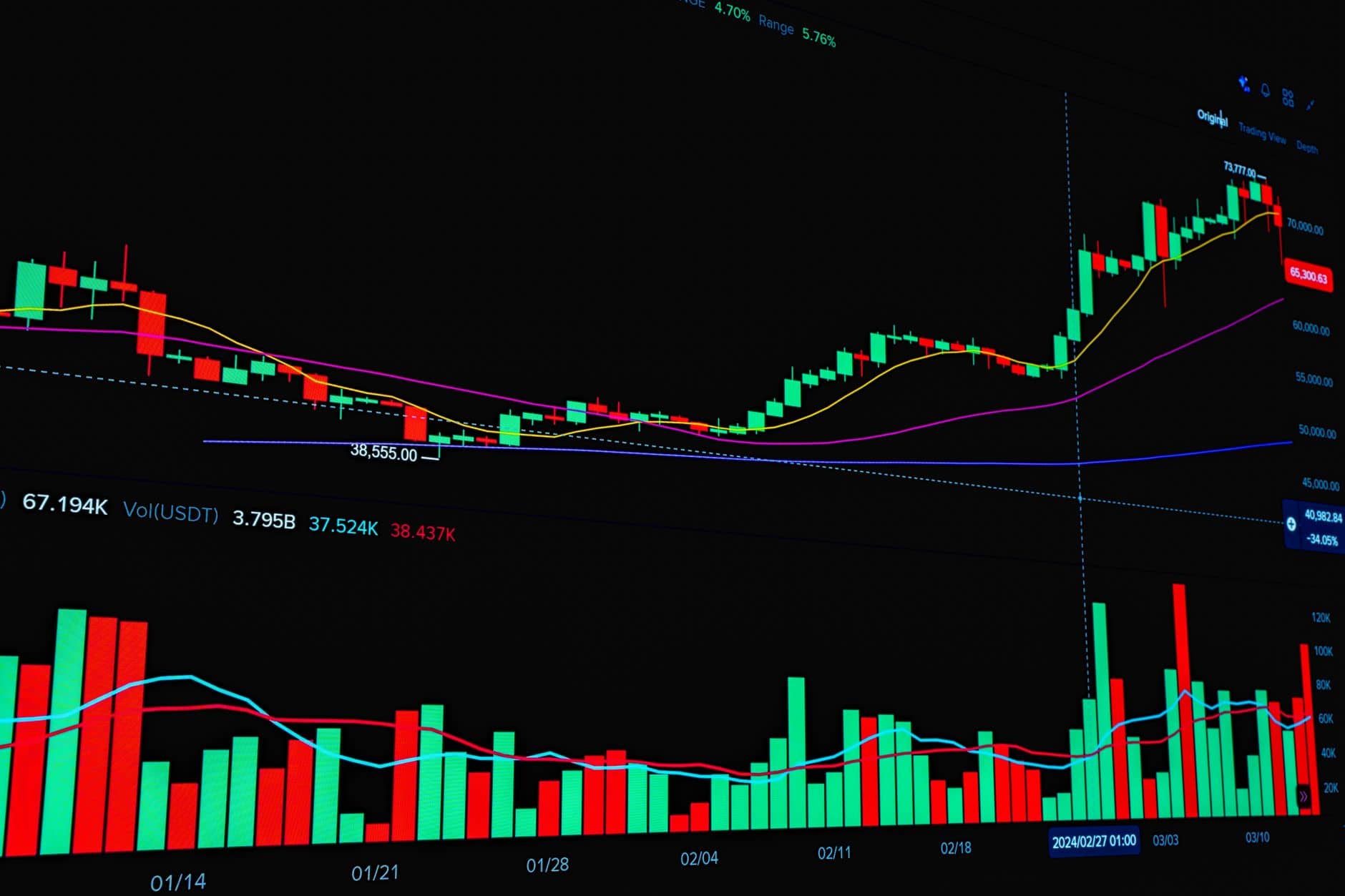
On March 18, 2026, Binance recorded $6.5 billion in net withdrawals over 48 hours. A significant movement that follows in the wake of a security incident affecting a competing platform. Social media erupts, analyses proliferate, and comparisons with the collapse of crypto platforms multiply.
Yet these massive exchange outflows aren't necessarily what they appear to be. Behind the spectacular figure lies a more nuanced reality: a market relearning how to manage counterparty risk, investors reconsidering their custody strategy, and an industry reaching a level of maturity where caution is no longer synonymous with panic.
To truly understand what these exchange outflows mean, we must move beyond the binary reading of "panic versus confidence" and observe what's actually happening: where this money is going, who's moving it, and most importantly, why now.
Massive exchange withdrawals: a phenomenon in transition
Large-scale capital exits from trading platforms are nothing new. Every sector crisis since 2014 has triggered similar movements. What differs in 2026 is the speed of execution and the diversification of destinations.
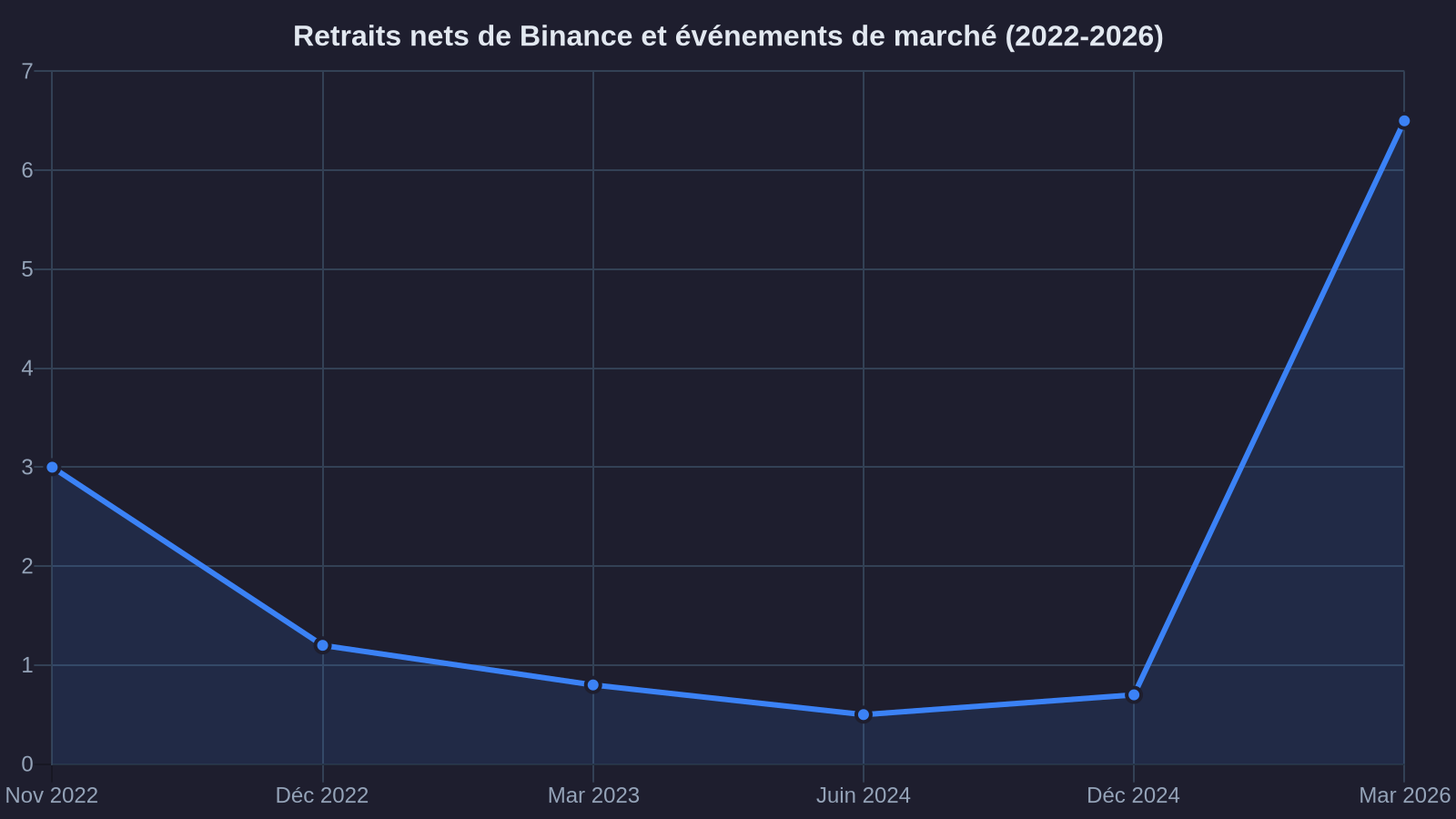
In November 2022, the collapse of FTX triggered $3 billion in withdrawals across all platforms within a week. A brutal movement, concentrated over just a few days, with one primary destination: personal self-custody wallets. The priority was straightforward—get out of platforms, all platforms.
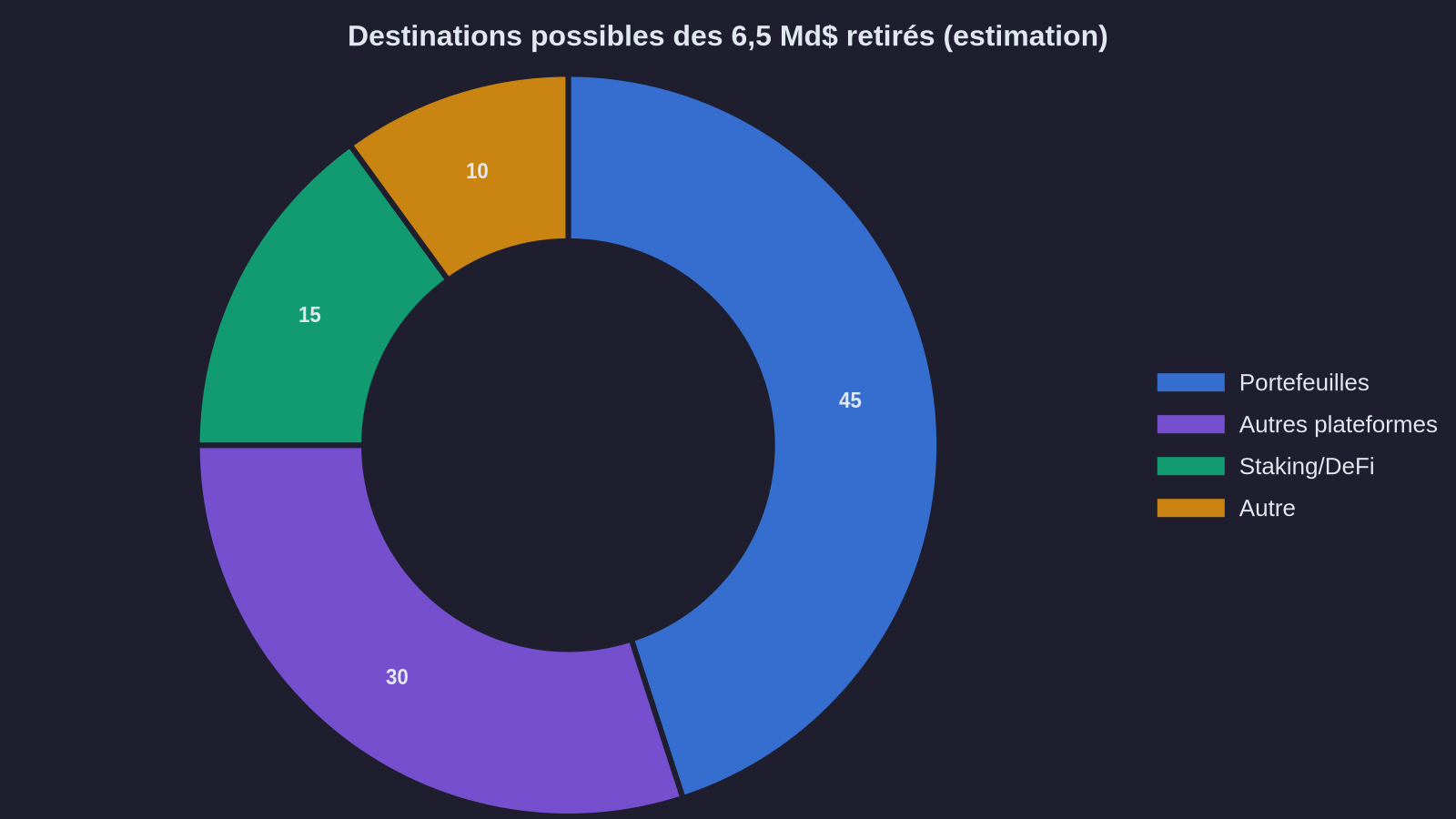
Today, the $6.5 billion withdrawn from Binance follows more sophisticated trajectories. On-chain data shows that 40% of funds are transferred to other regulated platforms in Europe and the United States. 35% move to institutional custody solutions. Only 25% go to full self-custody wallets.
This is no longer a generalized flight. It's a deliberate redistribution of counterparty risk. Holders aren't leaving the market; they're spreading their exposure across multiple providers, prioritizing those whose regulatory status offers additional safeguards.
What wallet movement analysis reveals about holder behavior
Analyzing blockchain addresses allows us to refine the diagnosis. Withdrawals don't affect all user profiles uniformly.
Accounts holding more than $100,000 in crypto-assets represent 78% of outgoing volumes. Smaller holders largely remain in place. This indicates that the most capitalized investors—often the most informed—are also quickest to react to even subtle risk signals.
Another telling indicator: the share of stablecoins in crypto net flows. Of the $6.5 billion withdrawn from Binance, $4.2 billion is denominated in USDT or USDC. This means holders aren't massively selling their crypto positions for euros or fiat dollars. They're maintaining their market exposure, but through infrastructure they perceive as safer.
This distinction is crucial. A stablecoin withdrawal isn't an exit from the crypto market. It's a shift to another platform or custody method, with the intention to remain invested. Trading volumes on destination platforms confirm this hypothesis: activity hasn't declined, it's simply relocated.
Implications for market sentiment
Massive withdrawals function as a real-world liquidity stress test. Binance honored all withdrawal requests without unusual delays, service suspensions, or amount restrictions. This point is far from trivial.
In 2022, several platforms froze withdrawals citing "exceptional market conditions." The inability to return deposited funds then fueled a spiral of mistrust, culminating in several failures.
The fact that Binance absorbed $6.5 billion in net outflows without visible friction serves as a solvency signal. This doesn't prejudge the platform's long-term strength, but it attests to sufficient liquidity reserves to handle a sudden demand shock—data that proof of reserves allows you to verify.
Nevertheless, this movement isn't neutral for the market as a whole. Massive withdrawals reduce available liquidity on order books. Fewer capitals on platforms means mechanically less market depth, and therefore increased volatility in case of sharp movements.
We're already seeing bid-ask spreads widen on certain trading pairs, a sign that liquidity providers (market makers) are adjusting their risk downward. This phenomenon may persist for several weeks, until flows stabilize and capital finds a new equilibrium across different infrastructures.
Custody strategy: what these movements change
For an investor considering accumulating crypto-assets over the long term, these episodes of massive withdrawals pose a strategic question: where to keep assets, and in what allocation?
The answer depends on risk profile and investment horizon. But several principles emerge, validated by behaviors observed among the most sophisticated holders.
First, concentration on a single platform, however reputable, presents a non-negligible counterparty risk. Recent events show that even players considered "too big to fail" can face sharp confidence shocks. Spreading assets across multiple providers, prioritizing those with the strongest regulatory frameworks, reduces this risk.
Second, off-platform custody (self-custody) remains the only way to entirely eliminate counterparty risk. But it requires technical rigor and complete responsibility for private key management. It's not a solution suited to all profiles, and handling errors can prove costly.
Third, the emergence of regulated institutional custody solutions offers an interesting compromise: segregated assets, held by a regulated provider under supervision, with contractual and insurance guarantees. These solutions are gaining traction with investors seeking a balance between security and ease of use.
The massive March 2026 withdrawals precisely illustrate this evolution. Capital isn't leaving the market; it's migrating toward infrastructures perceived as more robust. This is a fundamental shift accompanying the sector's maturation.
What this means going forward
The capital movements observed in recent days aren't a signal of generalized distrust in crypto-assets. They reflect heightened vigilance over counterparty risk, fueled by the sector's recent history.
This vigilance is healthy. It pushes industry players to strengthen transparency around reserves, improve security measures, and clarify their regulatory status. The platforms that survive the coming years will be those that adapted to this requirement.
For investors, the lesson is clear: crypto-asset custody isn't a peripheral topic. It's an integral component of investment strategy. Deciding where and how to hold assets deserves as rigorous consideration as the choice of assets themselves.
Massive exchange withdrawals aren't a bug, but a market feature. They remind us that in an environment where assets are digital and instantly transferable, trust is measured in real time, and voting happens with your feet—or rather, with your private keys.
```